

Blackout, Done Right
The best blackout blinds for bedrooms, edges included.
Blackout fabric is easy. Dark rooms are about the edges, the measure, and the build — here’s how the four real options compare for Canadian bedrooms.
If you’ve ever woken up at 5:30 a.m. in June because the sun was already streaming through your bedroom window, or had a partner who works night shifts trying to sleep at noon, you already know why blackout blinds matter. Sleep quality, room temperature, screen glare, even how well your kids nap: all of it improves dramatically when you can actually control the light in a bedroom.
Blackout is one piece of the puzzle. Our honest guide to the best blinds in Edmonton covers where it wins and where it’s overkill.
But “blackout” gets thrown around loosely in window covering marketing. Some products labelled blackout still leak meaningful light around the edges. Others are technically room-darkening but not true blackout. And the right product for one bedroom isn’t always the right product for another.
This guide breaks down what actually qualifies as blackout, the four product categories that deliver it, what they cost in Canada in 2026, and how to choose the right one for your bedroom, whether you’re outfitting a primary suite, a kid’s room, a basement guest room, or a south-facing condo.
The short answer
A blackout roller with side channels is the best bedroom blind for most Canadian homes: total fabric block, sealed edges, starting around $75 plus the channel upcharge. Go blackout honeycomb if the window also runs cold, dual-fabric if the room doubles as an office, and add a motor (about $210) if the schedule matters more than the switch.
What “blackout” actually means
A true blackout window covering blocks 100% of light coming through the fabric itself. That’s the easy part; most blackout fabrics achieve this through a triple-weave construction or a polyester backing that light can’t penetrate.
The harder part is what happens at the edges. Light leaks around the sides, top, and bottom of most window coverings, and that leak is where “blackout” claims fall apart. A shade that blocks 100% of light through the fabric but leaves a 1-inch gap on each side is still going to wake you up at sunrise.
For a bedroom that’s truly dark at any hour, you need to think about both:
- Fabric opacity: the material itself blocks all light
- Edge sealing: how the product is mounted and finished to minimize light leak around the perimeter
The products below are ranked by how well they handle both, not just fabric.
The four blackout options for Canadian bedrooms
| Option | Darkness | Bonus | From |
|---|---|---|---|
| Blackout roller + channels | Total | Simplest, most affordable | ~$75 + channels |
| Blackout honeycomb | Total with channels | Insulation on cold windows | ~$120 |
| Zebra + blackout pair | Total at night | Daytime light flexibility | Sum of both |
| Dual-fabric | Total at night | Two jobs, one cassette | Just under two blinds |
1. Blackout roller shades
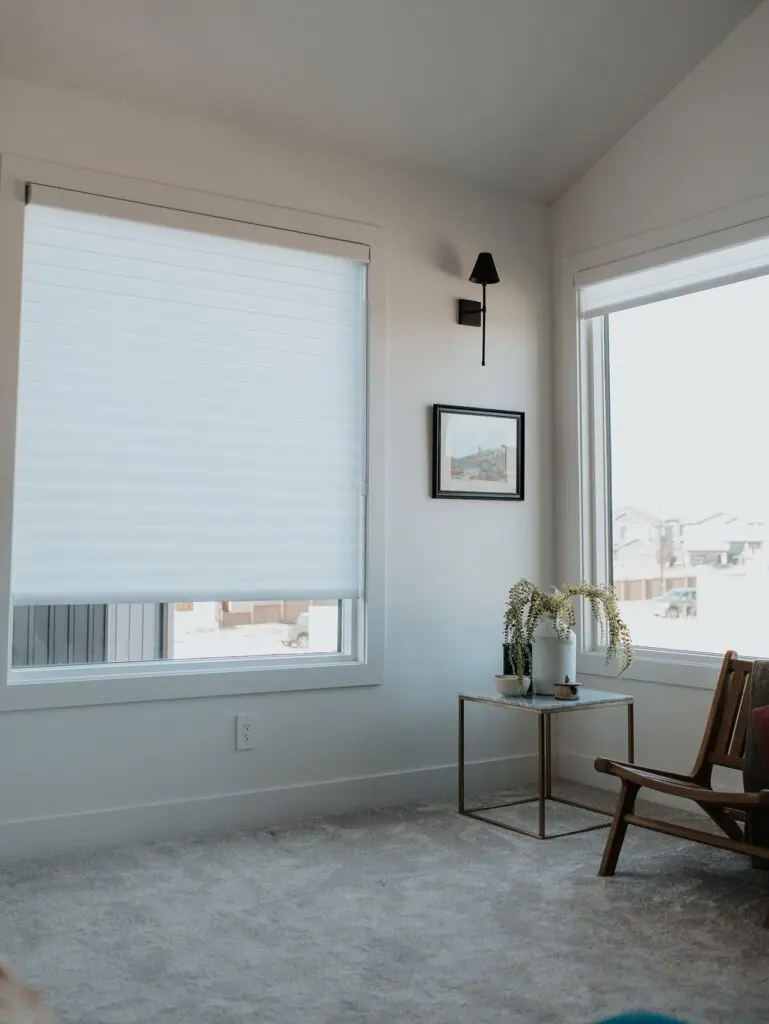
The most popular choice in Canadian bedrooms in 2026, and for good reason. Blackout roller shades use a single panel of opaque fabric that rolls down over the window. Clean, modern, and the most affordable true-blackout option.
When mounted inside the window frame with side channels (also called light-blocking tracks), they get genuinely close to total darkness: the shade rides in a U-shaped channel on each side, sealing the gap. Without side channels, expect some edge leak, especially on east and west exposures where morning and evening sun comes in at sharp angles.
Best for: primary bedrooms, kid’s rooms where minimalist design works, anyone who wants the cleanest look. Pricing in Canada starts in the entry-level custom range and climbs with side channels and motorization.
2. Cellular blackout shades (honeycomb)
Cellular shades are made of pleated fabric folded into a honeycomb cross-section. The blackout version uses an opaque liner inside the cells. They give you the same light blocking as a blackout roller plus a meaningful insulation bonus; the air pockets in the cells slow heat transfer through the window.
That insulation matters in Canadian bedrooms. Blackout cellular shades on a cold north-facing window can noticeably reduce that chilly feeling near the glass in winter, and on a south-facing summer window they can keep the room cooler by blocking radiant heat.
Best for: bedrooms where you want both blackout and energy performance. Mid-range pricing, double-cell or premium fabric versions sit at the higher end of mid-range. Pairs well with our south-facing window guide if your bedroom faces south.
3. Zebra blinds with a paired blackout layer
A zebra blind alone is not a blackout product; the alternating sheer and solid bands always let some light through. But zebra blinds layered with a separate blackout roller in the same window opening is one of the most flexible bedroom setups available.
During the day, you use the zebra for filtered daylight and privacy. At night, you pull down the blackout roller behind it for full darkness. This dual setup gives you everything: morning soft light when you want it, hotel-grade darkness when you need it.
It costs more (you’re buying two products per window) but it solves two different problems on the same window. Worth it on the windows you’ll use most. For more on zebras specifically, see our zebra blinds vs. roller shades guide.
Best for: primary bedrooms in main living areas where daytime flexibility matters as much as night-time blackout.
4. Dual-fabric blinds (day sheer and night blackout in one)
A dual-fabric blind runs two independent fabrics in a single cassette: a light-filtering or sheer layer for the day and a blackout layer for the night. It solves the bedroom that has two jobs, sleep after dark and office light before it, without stacking two products on the window. The blackout layer behaves exactly like a blackout roller, so the same side-channel rule applies if you want true darkness.
Best for: bedrooms that double as offices, street-facing bedrooms that want daytime softness, and anyone who wants the layered look in one clean unit.
Our Work
Dark rooms, done properly.
Build details that decide the darkness
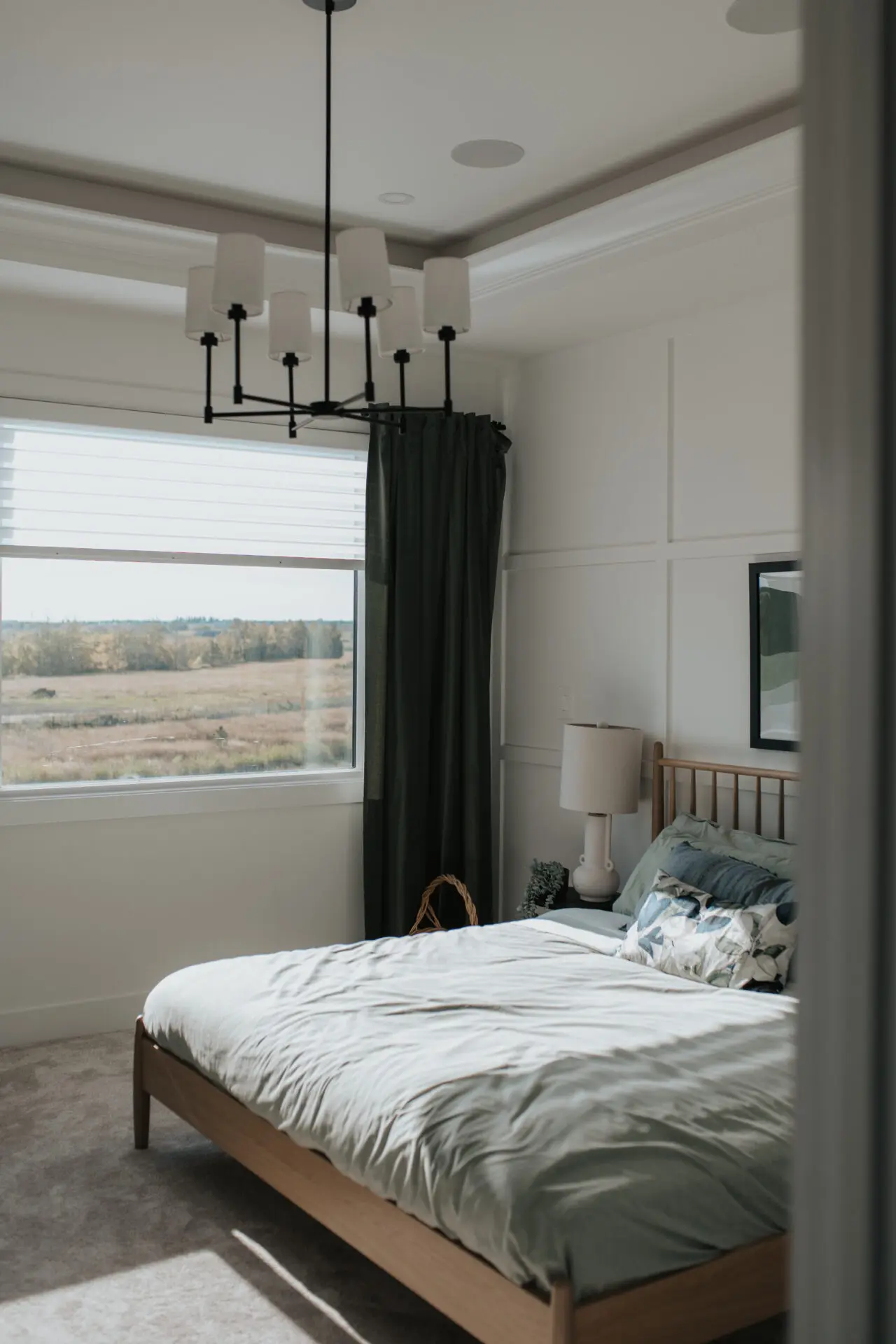
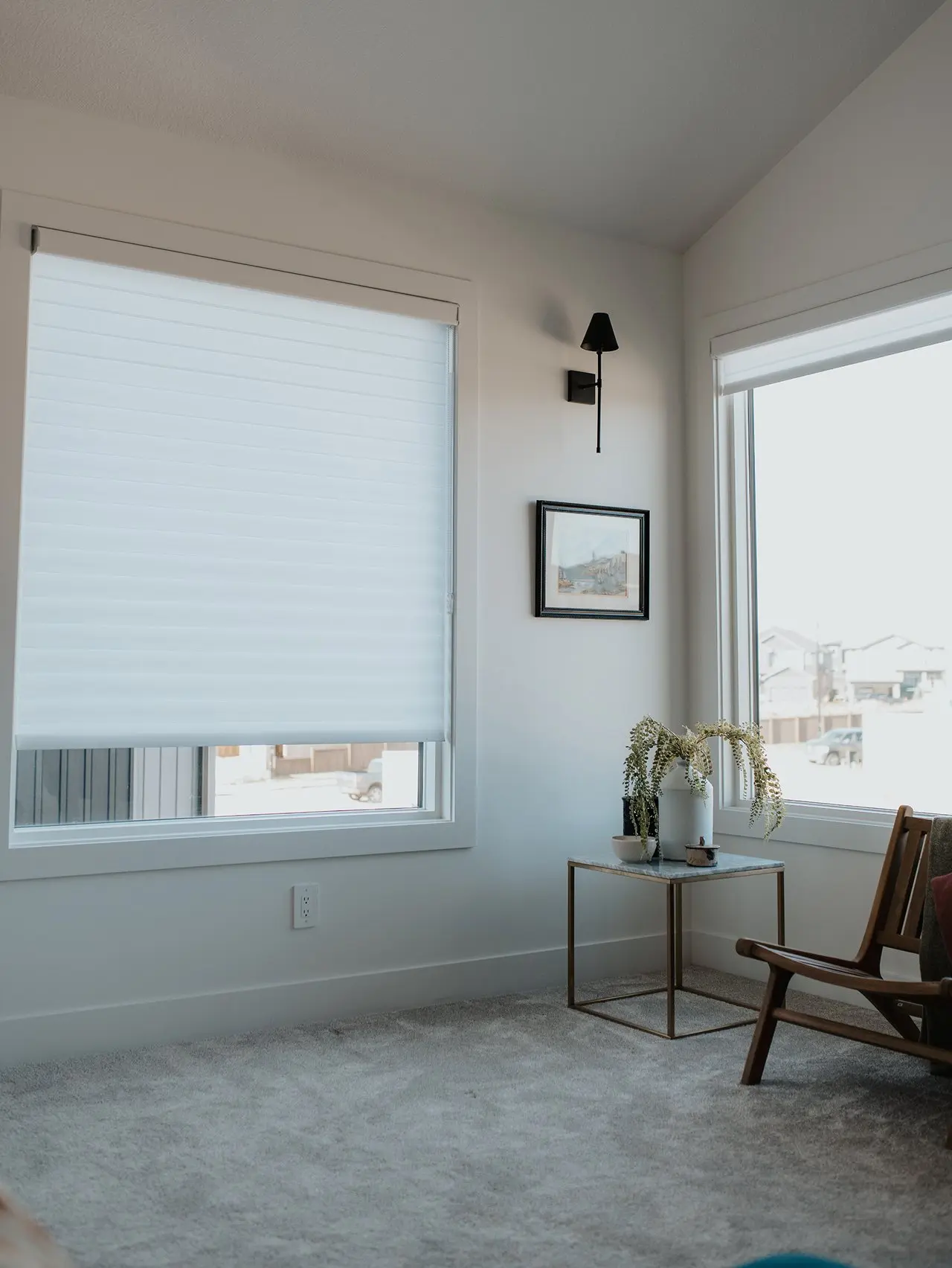
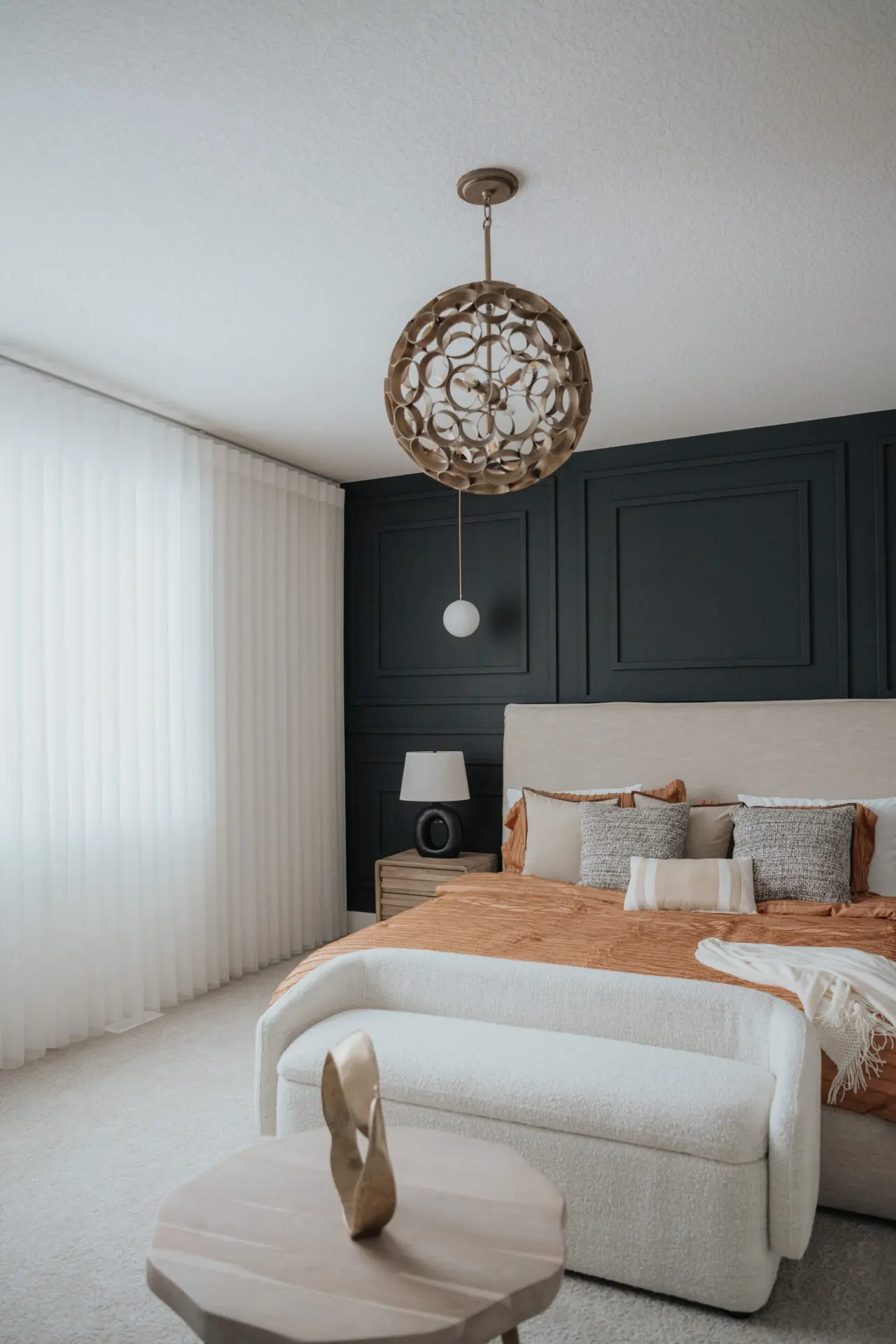
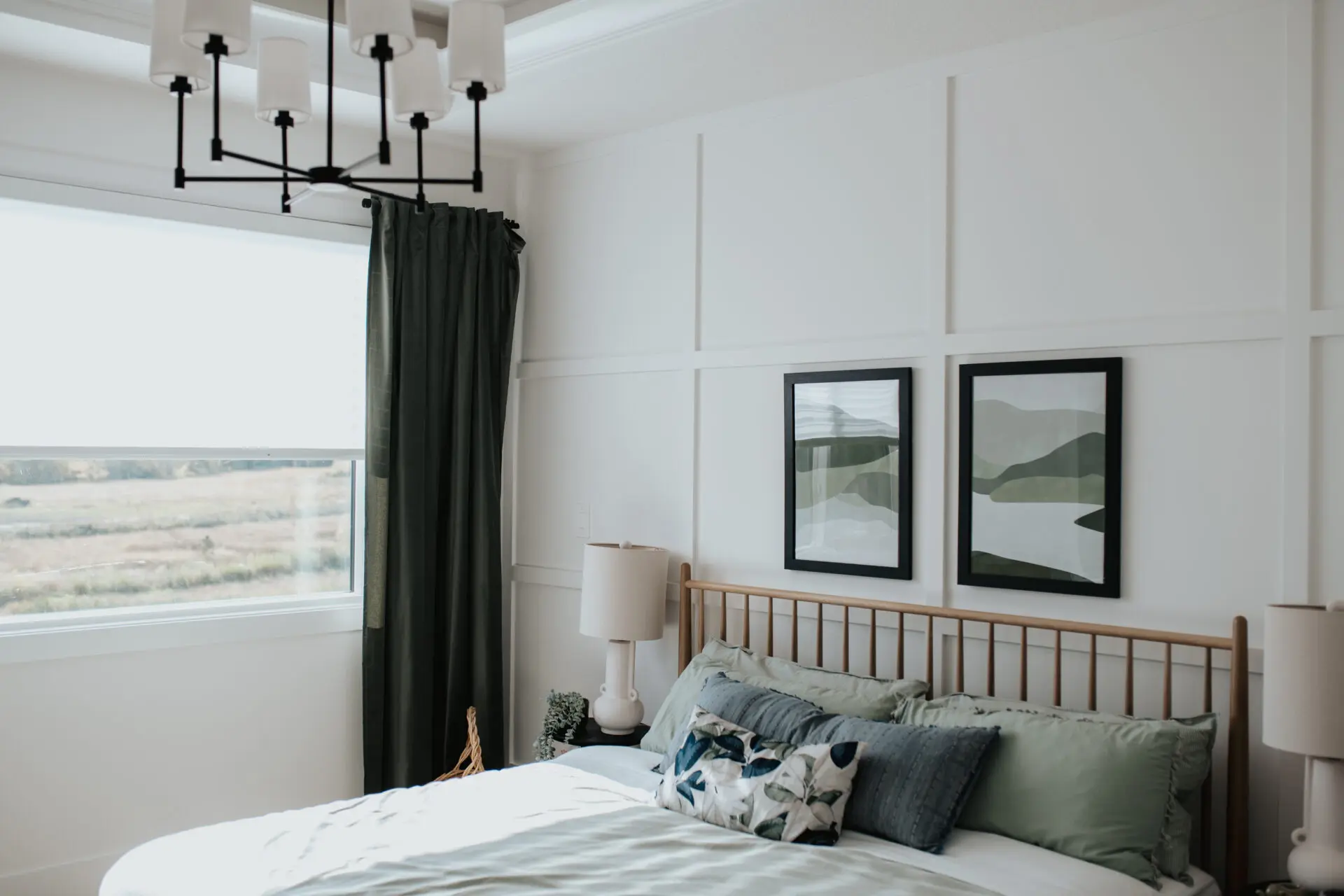
The fabric is the easy part; the edges decide the outcome. An inside-mounted blind always has a small gap at each side, and in June that gap glows by 5 a.m. Side channels close it, which is why we treat them as part of the product on bedroom orders rather than an accessory. The other decider is the measure: older Edmonton bedrooms are routinely out of square by a centimetre, and a blind cut to the wrong diagonal binds or gaps forever. We measure top, middle, and bottom and cut to the tightest.
Fabric grade matters more here than anywhere else in the house because bedroom blinds get operated daily. The difference between 99% and true 100% block is covered in our light-blocking breakdown, nursery-specific picks in the nursery guide, and reversed-schedule setups in our shift-worker guide.
How to choose: a quick decision framework
Which blackout blind is right for your bedroom comes down to four questions:
- How dark do you need it, really? If you sleep light or have a shift worker in the household, prioritize side channels. If you’re a heavy sleeper who just wants the morning sun toned down, a standard blackout roller is plenty.
- What direction does the window face? East and south windows get the harshest direct sun and benefit most from edge sealing or layered solutions. North windows are easier; a basic blackout shade usually does the job.
- Does the room get used during the day? If yes (primary bedroom you nap in, home office that doubles as a guest room), zebra-plus-blackout layering or a dual-fabric blind gives you daytime flexibility. If no, a single blackout roller is simpler and cheaper.
- What’s your budget per window? Roller shades are the most affordable true-blackout option. Layered solutions roughly double the per-window cost.
What blackout blinds cost in Canada in 2026
Factory-direct from our Edmonton facility, the working ranges for a typical bedroom window:
- Blackout roller shade: rollers start around $75 per blind, blackout fabrics sit modestly above light-filtering, and side channels add a moderate upcharge that is worth it if darkness is the whole point
- Blackout cellular shade: honeycombs start around $120 per blind, with double-cell and premium fabrics at the upper end
- Dual-fabric blind: priced like a bit less than two blinds on one window, depending on both fabric picks
- Zebra paired with a blackout roller: two-product cost, roughly the sum of both blinds per window
A typical bedroom with two windows lands in the few-hundred-dollar range for blackout rollers and climbs with channels, honeycomb construction, or motorization (about $210 per blind). The full picture is in our 2026 Edmonton cost guide.
Common mistakes to avoid
Buying “room darkening” thinking it means blackout. Room darkening fabric reduces light significantly but does not block 100% of it. If you want true darkness, the spec sheet should say “blackout” or “opaque,” not “room darkening.”
Skipping side channels on east-facing windows. East-facing bedrooms get direct horizontal sun at sunrise. That low-angle light shoots straight through any side gap. Side channels (or a generous outside mount that fully overlaps the trim) are worth the upcharge here.
Mounting blackout shades inside a frame that’s too shallow. Inside-mount blackout shades need at least 2-3 inches of frame depth to clear the fabric roll and any side channels. If your frame is shallower, an outside mount that overlaps the trim by a few inches will perform better.
Forgetting about the top. Most light-leak conversations focus on the sides, but cassette headrails (a fabric or metal cover over the top of the roller) are equally important on bedrooms with sun coming in from above (high windows, transoms).
Why locally manufactured matters for bedroom blinds
For bedroom installations especially, custom manufacturing makes a measurable difference. Off-the-shelf blackout shades from big-box retailers come in standard sizes that almost never match your window perfectly. The result: gaps at the side, fabric that doesn’t reach the bottom of the sill, or a roller that’s too wide and doesn’t fit properly.
Locally manufactured custom blinds are cut to your exact opening, with the right mounting hardware for your frame depth, and the right fabric and mechanism for your room’s exposure and how you actually use it. For Edmonton homeowners, that also means fast turnaround and someone local to call if anything ever goes wrong.
How to get the right blackout blind for your bedroom
The biggest variable in blackout performance is mounting and edge sealing, things that depend on the specific window, not the product. The fastest way to get this right is a free in-home consultation: someone measures the window, looks at the frame depth and exposure, and recommends the product and mount type that will actually deliver the level of darkness you want.
At Novo Blinds, we manufacture custom blackout rollers, cellular shades, zebra blinds, and dual-fabric blinds in our 15,000 sq ft Edmonton facility, and we’ll come measure your bedrooms and show you fabric samples in your actual room lighting. Book a free in-home consultation or request an online quote to get started.
Frequently asked questions
What’s the best blackout blind for a bedroom?
For most Canadian bedrooms, a custom blackout roller shade with side channels is the best balance of price, performance, and clean modern look. If energy efficiency matters too, blackout cellular shades are a strong upgrade. For maximum darkness, add side channels; the blackout roller underneath is what does the real work.
Do blackout blinds block 100% of light?
The fabric itself blocks 100% of light, but light still leaks around the edges of most installations. To get genuinely close to total darkness, you need side channels, or an outside mount that overlaps the window opening generously.
Are blackout cellular shades worth the extra cost over blackout rollers?
If you want both blackout and energy efficiency, especially in cold Canadian winters or hot south-facing summers: yes. The honeycomb cell structure adds meaningful insulation that a single-layer roller shade can’t match. If you only care about light blocking, a blackout roller with side channels does the job for less.
Can I get blackout zebra blinds?
No. Zebra blinds always let some light through because of the alternating sheer bands. The closest equivalent is a zebra blind paired with a separate blackout roller behind it, giving you daytime sheer/privacy flexibility plus full blackout for sleep. It’s a common setup in primary bedrooms.
What’s the difference between blackout and room-darkening blinds?
Blackout fabrics block 100% of light through the material; room-darkening fabrics significantly reduce but don’t fully block light. Room-darkening shades are fine for nurseries or media rooms where some ambient light is OK, but for true sleep darkness, you want blackout.
Do I need blackout blinds in a north-facing bedroom?
North-facing bedrooms get the least direct sunlight, so a basic blackout shade without side channels will usually be enough. East-facing rooms (sunrise) and south-facing rooms (all-day light) benefit much more from premium edge-sealing solutions.
Blackout blinds or blackout curtains: which is better for a bedroom?
The blind does the technical work: fitted to the glass, sealed with channels, operated daily without wear. Curtains layered over top are a style choice, and they work fine over a blackout roller. Buy the blind for the darkness and add fabric on top if you love the look.
Actually dark, guaranteed by the build.
Free in-home consultation across Edmonton, the metro region, and BC’s Lower Mainland: side channels measured with the blind, written quote within 48 hours.
Book free consultationServing