

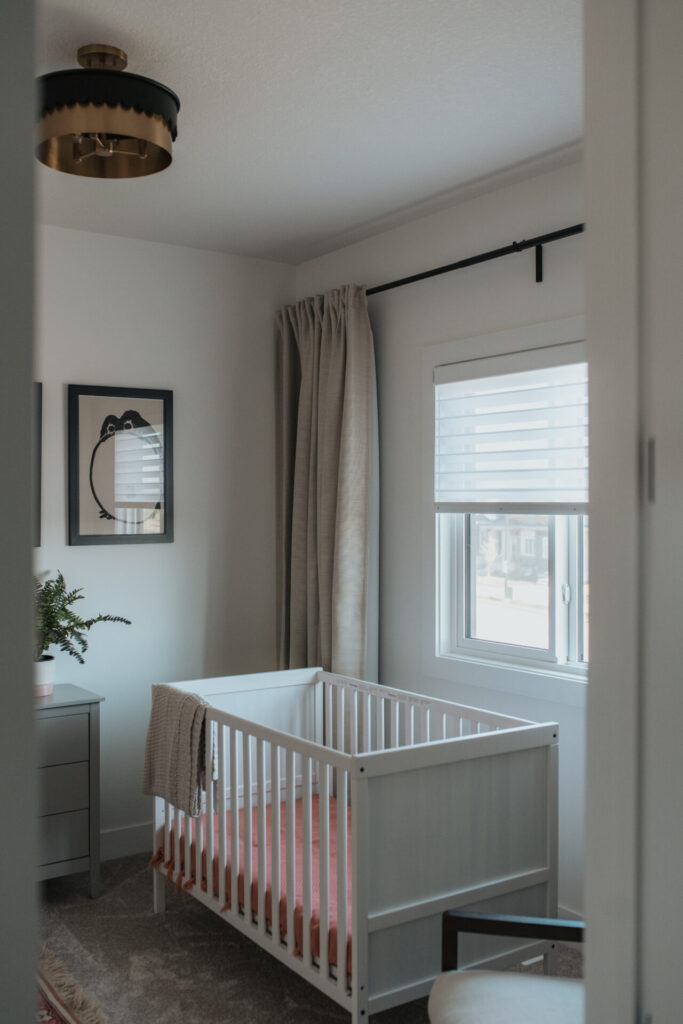
For Canadian Parents
Child-safe window coverings, from the people who build them.
Cordless spring, motorized, or a tension-secured chain — every blind we make in our Edmonton factory can be built kid-safe. Here’s how to choose.
Every parent who walks into our showroom with a toddler does the same thing: they grab the blind cords and lift them out of reach without even noticing they’re doing it. That instinct is correct. Long, reachable cords and young kids don’t belong in the same room. The good news: in 2026, they don’t have to be.
The short answer
For homes with young kids: cordless spring-lift or motorized, full stop. In nurseries, pair either one with blackout fabric. If a room keeps a chain for budget reasons, it gets a tension device and chain cover so there’s no free-hanging loop. All three builds come out of our Edmonton factory.
What child-safe means on our order sheet
The hazard has always been the same thing: a long cord or loop a child can reach. Since 2021, every window covering sold in Canada — custom-made or off the shelf — has to meet federal requirements that are the strictest in the world, and everything we manufacture is built to them. If you want the official guidance, Health Canada’s window covering safety page covers it well. We’ll leave the regulation to them and stick to what we know: how the blinds are actually built.
Because here’s the practical truth from the factory floor: “meets the rules” is the minimum. With kids in the house, some builds are simply better than others. These are the three we make, in the order we’d recommend them.
The three child-safe builds we make
Cordless spring-lift — the default for kids’ rooms
No cords, no chain, nothing hanging. You raise and lower the blind by the bottom rail, and a spring system holds it wherever you leave it. We build our roller, zebra, and honeycomb blinds this way, and it’s what we’d put in almost every kid’s bedroom and playroom.
The honest limit: on very large or heavy blinds, a spring lift takes more muscle, and on tall windows the bottom rail is simply out of reach. That isn’t a reason to accept cords; it’s motor territory.
Motorized — zero cords, plus a bedtime trick
Motorization removes the question entirely: there is no cord, no chain, no loop, nothing to secure. It runs on our own motorization program on the blinds we manufacture, battery or hardwired, and it adds something parents didn’t know they wanted: motorized blackout blinds that drop for nap time from your phone, on a schedule, every single day. In Edmonton’s bright summer evenings, that schedule does more for bedtime than any lullaby.
The honest limit: motors add a real per-window premium. Put them where they earn it — nurseries, tall stairwell glass, wide living-room spans — and use cordless spring on the easy-reach windows.
Tension-secured chain — when a chain stays
Some rooms keep a chain drive. It’s the budget option, and it handles big, heavy blinds easily. Child-safe chain builds pair a wall-anchored tension device with a chain cover, so the loop stays taut, shielded, and impossible to pull free. We install both as part of every chain install.
The honest limit: a tension device and cover only work while they’re attached. If they come loose or get removed, the room is back to having a reachable loop. That’s why, in rooms where kids sleep and play, we’d still steer you cordless or motorized first.
Our Work
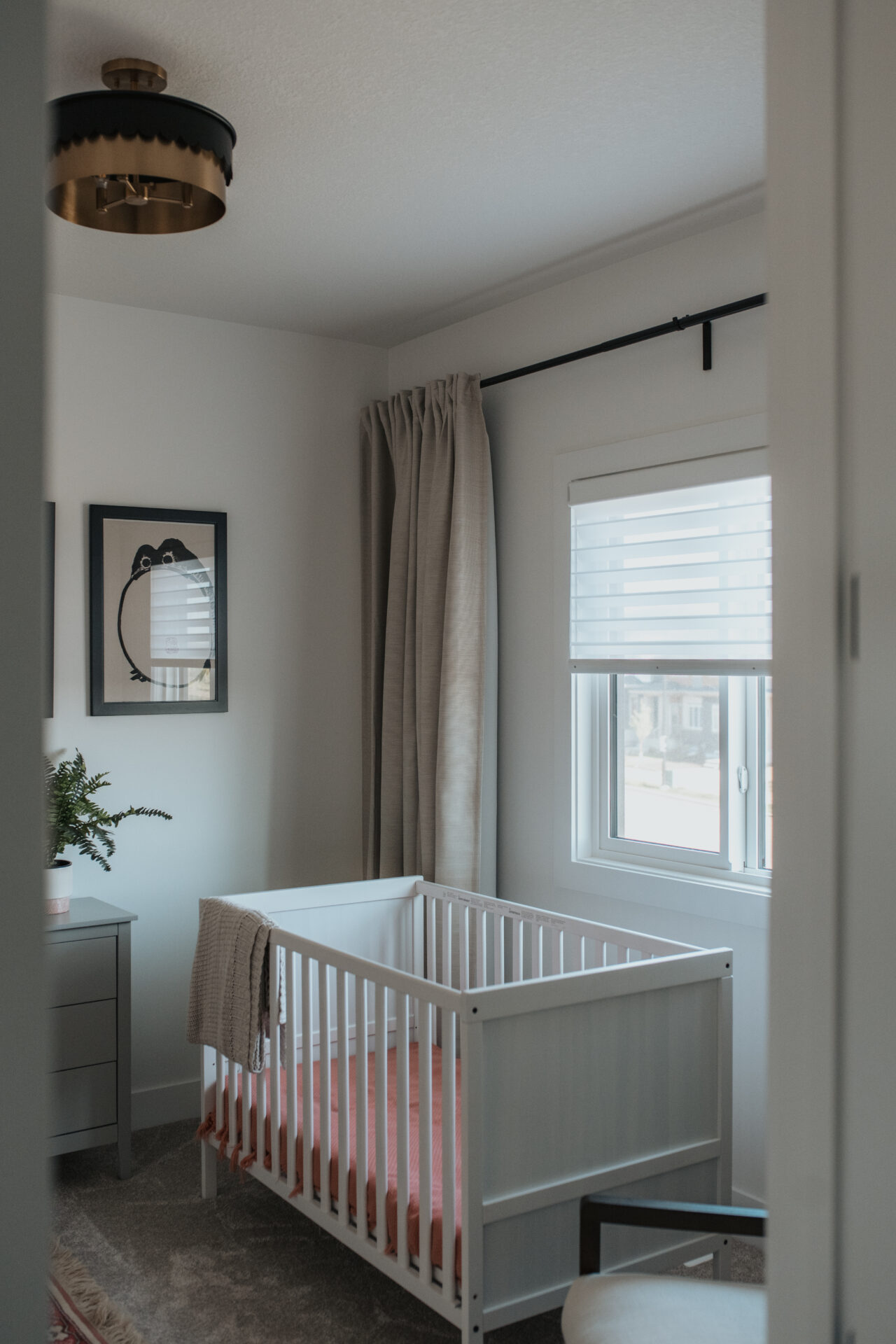
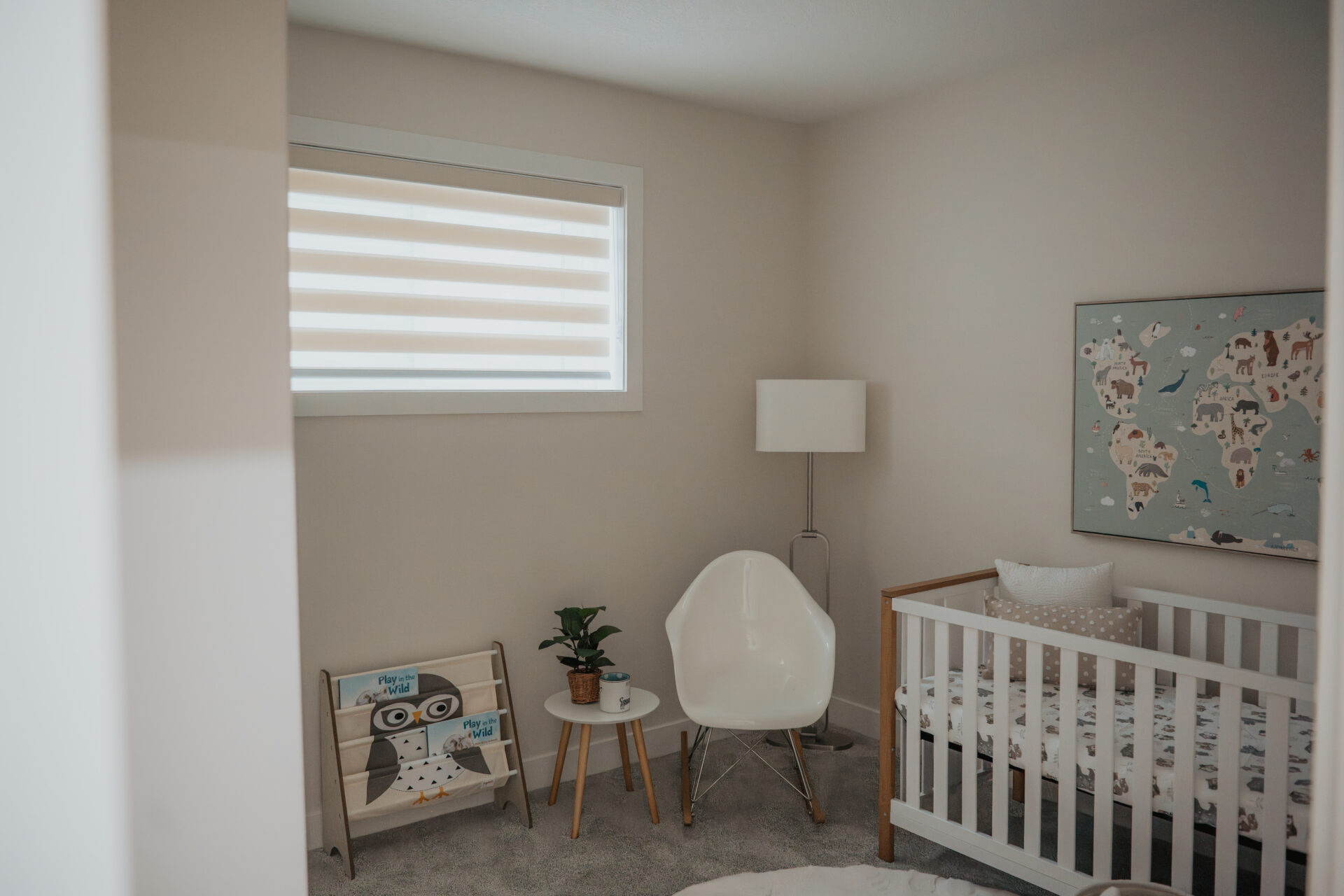
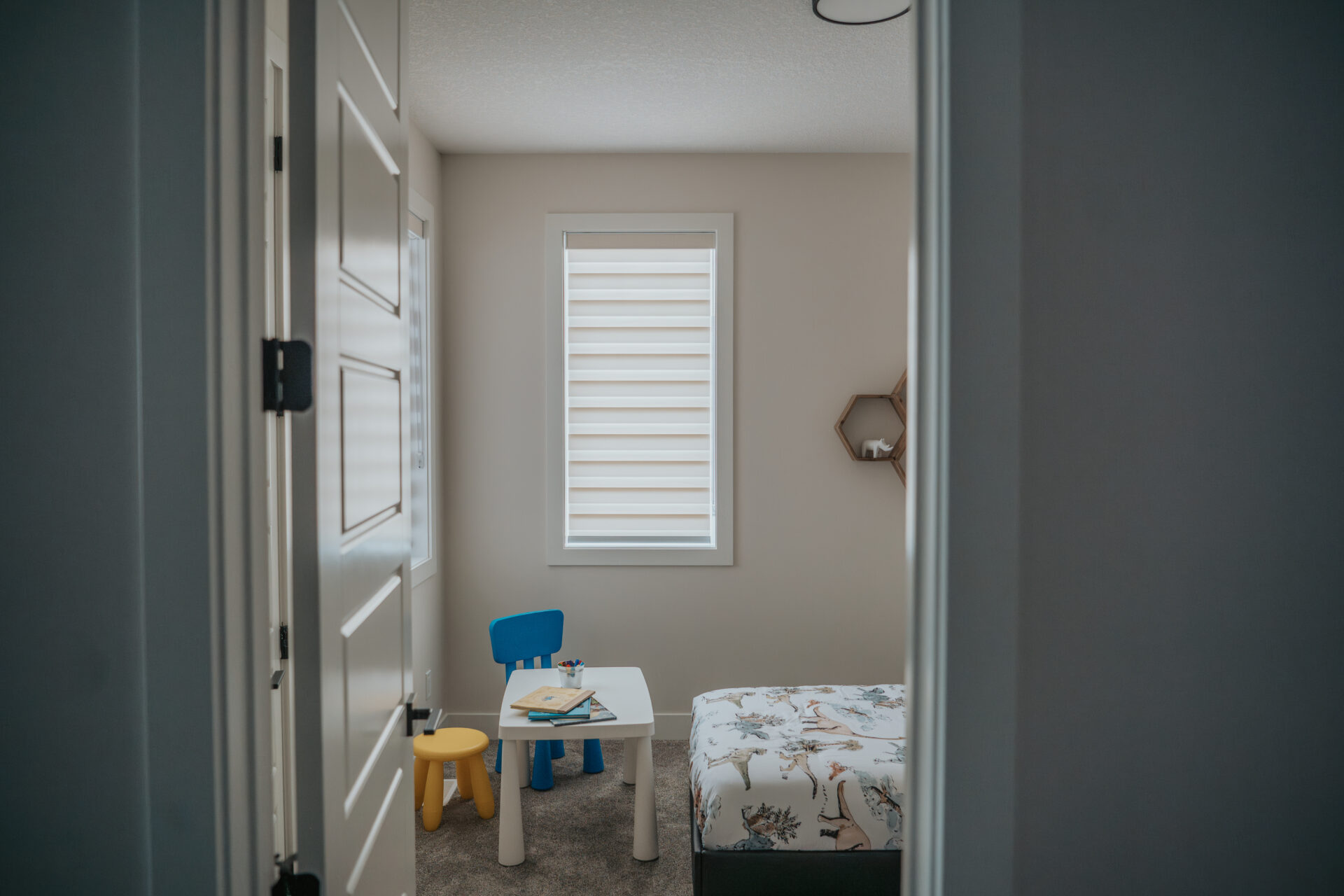
Kid-safe installs across Edmonton.
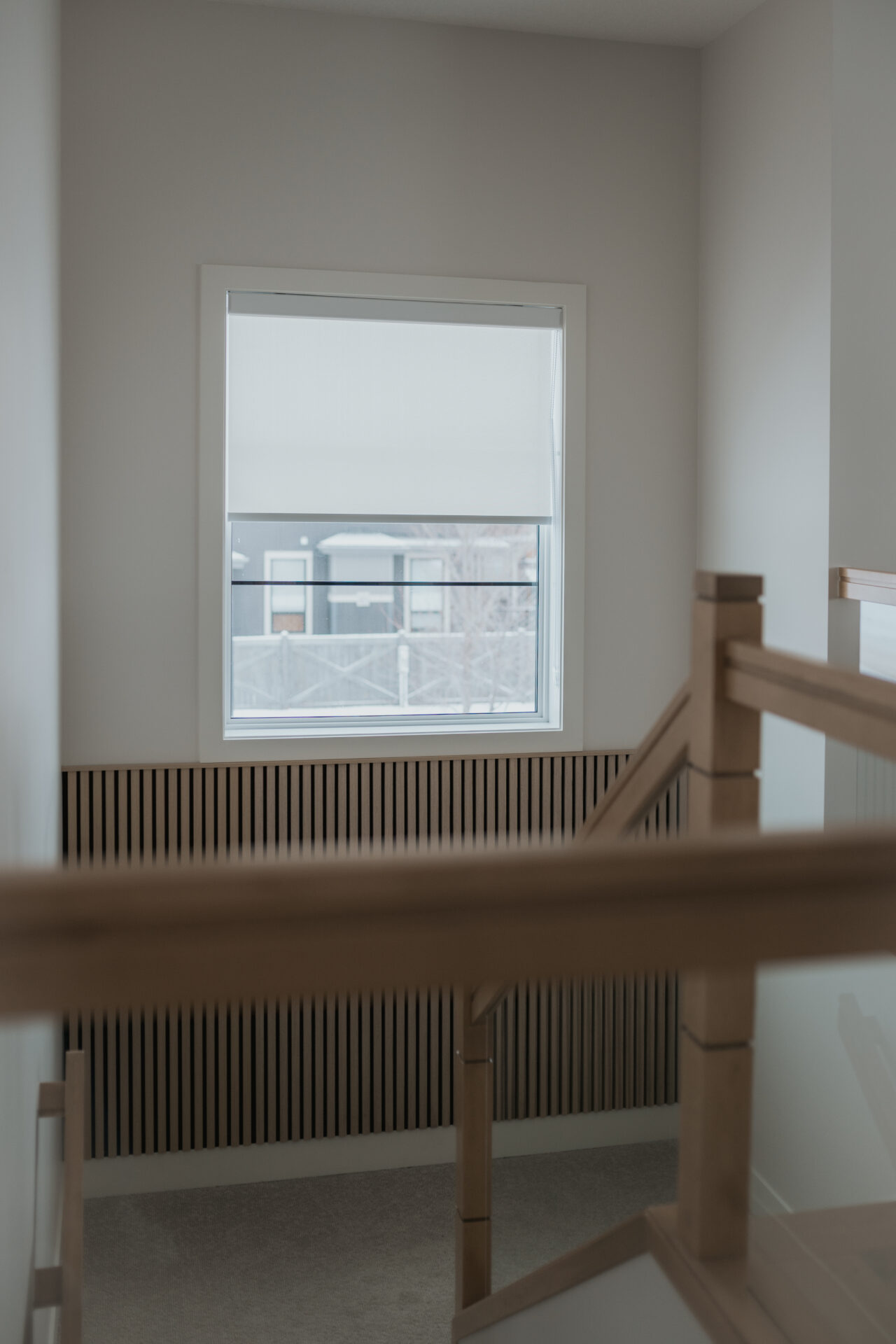
Room-by-room with kids in the house
- Nursery: blackout, cordless or motorized. No exceptions on the cord question. Our nursery blackout guide covers fabric choices in detail.
- Toddler and kids’ bedrooms: cordless spring roller or zebra. If the room fights Edmonton’s 5 a.m. summer light, our kids’ rooms guide has the full setup.
- Playrooms and basements: cordless roller: durable fabric, nothing to grab, wipes clean.
- Bunk beds near a window: treat the top bunk as ground level. Nothing corded within reach of it, ever. Cordless or motorized only.
- Living and dining rooms: cordless zebra for light control, or motorize the big spans.
- Stairwells and tall glass: motorize. Nobody should be leaning over a stairwell to reach a blind anyway.
Already have corded blinds? The 60-second check
If replacing everything at once isn’t in the budget, do this today: walk the house and look for any cord a child can reach: dangling pull cords, looped chains without a tensioner, or inner cords a child could pull free. Keep cribs, beds, and anything climbable away from windows with cords. Then, when you do start replacing, start with the rooms where kids sleep and play.
We do free in-home consultations across Edmonton and the metro area, and across BC’s Lower Mainland from our Surrey location. Part of that visit is exactly this walk-through — we’ll tell you which windows genuinely need replacing and which are fine as they are. Custom cordless starts around $75 per blind factory-direct; the full picture is in our 2026 cost guide.
Final take
Cordless spring for the everyday windows, motors where reach or routine make them worth it, and a properly anchored tensioner anywhere a chain stays. That combination, plus blackout in the sleep rooms, is what we’d put in our own kids’ rooms, and it’s all made here in Edmonton with a 3–4 week lead time. Choosing products beyond the safety question? Our honest guide to the best blinds in Edmonton covers the whole lineup, and the free room visualizer shows any of them on a photo of your room.
Frequently asked questions
Are corded blinds illegal in Canada?
No. But since 2021, all window coverings sold in Canada must meet strict federal requirements limiting accessible cords, and that applies to custom and off-the-shelf products alike. Older corded blinds already in homes aren’t banned; Health Canada recommends replacing them, starting with kids’ rooms.
What are the safest blinds for a nursery?
A cordless spring or motorized blackout blind. No accessible cords of any kind, and blackout fabric for sleep; Edmonton’s summer sunrises land right around 5 a.m. Keep the crib away from the window regardless of what’s on it.
Are cordless blinds more expensive than corded?
Modestly. The spring system is a step up from a basic chain, but it’s a small step compared to motorization. Custom cordless rollers still start near the entry point of custom pricing, around $75 per blind factory-direct.
Can you make my existing blinds child-safe?
Sometimes. A missing tension device or chain cover can often be added to a chain-drive blind. But older corded products with free cords are usually better replaced than retrofitted, and we’ll tell you honestly which is which during a free consultation.
Are motorized blinds safe for kids?
They’re the safest build we make: no cords, no chain, nothing to reach. Battery motors also mean no wiring in the room. See our battery-life-in-Alberta-cold guide if you’re weighing battery vs. hardwired.
Kid-proof the windows, properly.
Free in-home consultation across Edmonton, the metro region, and BC’s Lower Mainland — we’ll walk the house with you and flag exactly which windows need attention. Written quote within 48 hours.
Book free consultationServing