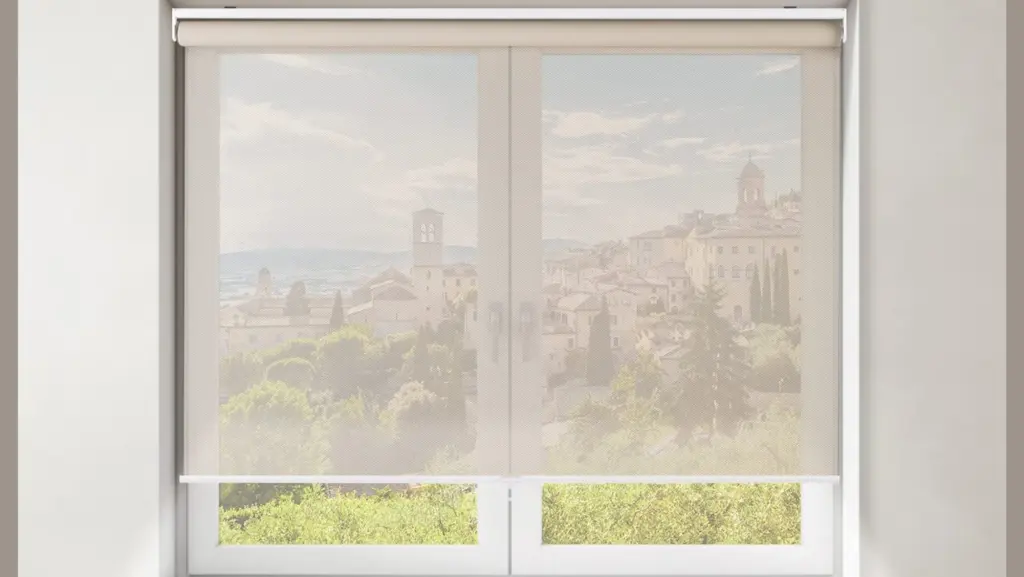
South-facing windows are a mixed blessing. They deliver the best natural light in any Canadian home, free solar heat in winter, and the mountain-view glazing that sells so many homes in the first place. They’re also the windows that fade your furniture, cook your living room in July, create unbearable screen glare, and drive up your summer cooling bills if you have AC. Treating a south-facing window the same way you treat a north-facing one is one of the most common mistakes we see in Alberta homes. The right window covering on a south-facing window solves a specific set of problems — glare, heat gain, UV damage, and still preserving the view — that other windows simply don’t face. This guide walks through the best blinds for south-facing windows in 2026, how to choose fabric openness, why layering usually wins on the hardest-hit windows, and the mistakes to avoid.
Why south-facing windows need different treatment
Three things make south-facing windows a special problem in Canada:
- Angle and duration of sun. South-facing glass gets direct sunlight most of the day from roughly October through March when the sun is low. In summer, when the sun rides higher, it hits south-facing windows less directly but for longer total hours.
- Heat gain. A large south-facing window can add significant heat to a room on a sunny July afternoon. Without the right covering, your AC (or your patience) does extra work.
- UV damage. UV rays fade hardwood floors, carpets, leather, fabric upholstery, and artwork. South-facing rooms show the damage first and worst. Within a few years of no protection, sun-bleached lines under furniture are unmistakable.
The two problems you’re solving
Before picking a product, get clear on what you actually want the blind to do. South-facing windows typically need to solve:
- Glare and heat during the day — while still keeping some natural light and ideally the view
- UV protection for your interior finishes — all day, even when you’re not in the room
Sometimes also privacy and night-time light blocking, but those are secondary on most south-facing rooms. Your design choice should optimize for the first two first.
The best blinds for south-facing windows, ranked
1. Solar roller shades — the top pick
Solar shades are
roller shades made from a specialized mesh fabric rather than solid textile. The mesh has a defined “openness factor” that tells you exactly how much light passes through. They’re specifically engineered for glare and heat reduction while preserving the view. Why they win on south-facing windows:
- Block UV rays (commonly 85-95% blocking depending on fabric)
- Reduce solar heat gain meaningfully
- Kill glare without killing the view — you can still see outside
- Clean, modern appearance that stays invisible when raised
Best for: living rooms, home offices, kitchens, great rooms — anywhere with a view you want to preserve.
2. Zebra (dual) shades — the flexibility winner
Zebra blinds give you real-time control over how much sun gets in. The alternating sheer and solid bands let you tune light through the day — fully open for morning, partially closed during the afternoon peak, closed in the evening. Why they work well on south-facing windows:
- You can adjust throughout the day as the sun angle changes
- Daytime privacy without full blackout
- Design-forward look that works in most interiors
- Solid bands provide some UV blocking when closed
The limitation: zebras are less focused on UV and heat blocking than dedicated solar shades. For the most aggressive sun exposure, a solar roller outperforms. For moderate south-facing exposure with a priority on daily flexibility, zebras are the better pick.
3. Cellular (honeycomb) shades — when heat is the main issue
If the problem is less about glare and more about heat — think west-or-south-facing bedrooms that become saunas in summer —
cellular shades are the thermal champion. The honeycomb structure traps air and blocks heat transfer, working in both directions (heat in summer, cold in winter). Best for: bedrooms, nurseries, and rooms where the temperature impact is more important than preserving the view.
4. Drapery layered over a solar shade
For great-room feature windows that take the worst of the summer sun, the highest-performing option is a solar roller closest to the glass with insulated drapery layered in front. The solar shade handles daytime glare and UV while keeping the view; the drapery pulls closed for extreme heat or privacy and adds a finished, designed look. Best for: large feature windows, rooms where design presence matters as much as function.
5. Motorized options for large or high windows
Many south-facing windows in Canadian homes are tall great-room windows that are physically hard to operate. Motorization with scheduling solves this: the blind automatically lowers at the peak sun hour each day and raises in the evening, without anyone having to reach a 14-foot sill. On large south-facing glass, this is often the difference between using the blind correctly and leaving it open all summer because it’s inconvenient.
Openness factor: what the numbers actually mean
Solar shades are rated by openness factor — the percentage of the fabric that’s open weave. Lower number = more blocking, less visibility. Higher number = more visibility, less blocking.
- 1% openness: maximum heat and UV blocking, view is mostly obscured. Almost like a tinted window. Best for aggressive west- or south-exposure with strong glare problems.
- 3% openness: the sweet spot for most south-facing windows. Solid heat and UV blocking with the view preserved in daylight.
- 5% openness: clearer view, modestly less blocking. Good for rooms with moderate sun exposure or when the view matters most.
- 10%+ openness: primarily a design/privacy choice with minimal heat blocking. Not the right fit for problem south-facing windows.
In Alberta, 3% openness is what we recommend in most south- and west-facing living rooms. It lands in the middle of the comfort/view tradeoff and handles the region’s direct prairie sun well.
Fabric colour: the counterintuitive truth
Most homeowners assume lighter fabric lets more light in and blocks less heat. With solar shades, the relationship is more nuanced:
- Light fabrics reflect more heat away from the glass but allow more glare through. Better for rooms where glare isn’t the top concern but heat is.
- Dark fabrics absorb some heat but cut glare dramatically and give you the best view clarity (looking from inside out). Often the better pick for home offices, TV rooms, and spaces with screens.
Counterintuitively, dark solar fabric often performs better in rooms where people actually live and watch screens. Light fabric often looks better as a design choice but may let more daytime glare through.
Layering: when it’s worth the investment
On the hardest-hit south-facing windows — the great-room floor-to-ceiling glass, the primary bedroom facing southwest, the home office where you’re fighting glare all day — layering consistently beats any single product. Typical high-performance layers:
- Solar roller + drapery: solar shade for daytime, drapery for extreme heat and finished look
- Cellular + drapery: maximum thermal protection with a finished front
- Solar roller + blackout roller: daytime glare/heat control plus blackout for sleep, on the same window (common in south-facing primary bedrooms)
Common mistakes homeowners make
- Using blackout fabric as the daily covering — you lose the view and have to choose between light or darkness
- Choosing too-open solar mesh (5% or 10%) on a strongly exposed window, then wondering why the glare is still there
- Skipping motorization on tall or hard-to-reach windows, then never actually using the blind
- Ignoring UV damage until the hardwood under the rug is a different colour than the hardwood next to it
- Treating all south-facing windows the same — a small kitchen window needs different treatment than a 12-foot great-room window
Frequently asked questions
What are the best blinds for south-facing windows?
Solar roller shades are the top pick for most south-facing windows because they block UV and heat while preserving the view. Zebra blinds are a strong alternative when daily flexibility matters more than maximum sun blocking. Cellular shades win when heat control is the priority over view.
Do solar shades block UV rays?
Yes — quality solar shades typically block 85-95% of UV rays depending on the fabric’s openness factor. A 3% openness solar mesh gives strong UV blocking while still letting you see the view during the day.
What openness factor should I choose for a south-facing window?
3% openness is the right choice for most south-facing windows in Canadian homes. It provides strong heat and UV blocking while preserving the view in daylight. Choose 1% for windows with severe glare or heat problems, and 5% only when view clarity matters more than blocking.
Are darker solar shades better than lighter ones?
For glare control and screen visibility, yes — dark fabric cuts glare more effectively and gives a clearer view looking outward. Light fabric reflects more heat from the glass but allows more glare through. The right choice depends on whether you prioritize heat, glare, or appearance.