

Novo Blinds · Edmonton
Best Blinds for Bay Windows: Custom Solutions for Edmonton Homes
Bay windows need custom-fit blinds — stock sizes won’t work. Roller, cellular, zebra options for Edmonton bay and bow windows with measuring tips.
500+
Bay Windows Done
3–5 wk
Lead Time
4.8★
Google Rating
Every bay window looks gorgeous the day it’s installed. Three angled panels of glass filling a room with light, a built-in reading nook, the kind of architectural detail that makes people stop during a showing and say “that’s the room.” Then the homeowner tries to cover it with blinds — and the trouble starts. Stock-size shades don’t fit the angled panels. The mounting depth changes at every joint. The centre window is wider than the sides. The hardware at the corners either gaps or collides. And in Edmonton, the whole assembly has to handle −30°C drafts pushing through the glass six months of the year.Bay window blinds Edmonton homeowners try to solve with box-store products almost always end up looking wrong — uneven gaps, visible light bleed at the angles, shades that bunch where the bay meets the wall. The geometry of a bay window demands custom bay window coverings cut to the exact width, depth, and angle of each panel. There is no shortcut here. The short answer: custom-measured blinds — one panel per window section — installed with angle-specific brackets at each joint. For most Edmonton bay windows, roller shades or cellular blinds are the right product. Zebra blinds work well in living rooms where you want tunable light. Drapery on a curved track suits bow windows specifically. Budget $800 to $2,400 for a full three-panel bay depending on product and motorization. The measuring is the hard part — get that right and everything else follows.
Bay windows vs bow windows — what you’re actually working with
These two get confused constantly, and the distinction matters for blinds. A bay window has three flat panels set at defined angles — typically a wide centre panel flanked by two narrower side panels angled at 30, 45, or 90 degrees from the wall. The joints are sharp. Each panel is its own flat rectangle. Most Edmonton homes built from the 1960s onward have this style in the living room or dining room. A bow window has four to six panels set in a gentle curve. There are no sharp angle changes — the window traces an arc. The panels are narrower, the curve is gradual, and the whole structure reads round from the outside. These are common in 1980s and 1990s Edmonton builds, especially two-story colonials and bungalows with a front-facing living room. Why it matters: bay windows take individual flat blinds with angle brackets at the joints. Bow window blinds need either individual panels with very small angle adjustments at every joint — or a single curved drapery track that follows the arc. Different geometry, different hardware, different install approach.Bay window measuring — where most installs go wrong
Bay window measuring is the single biggest reason DIY bay window blinds fail. Every panel is a different width. The mounting depth changes at the angle joints. The header height might not be consistent across the bay. And the angles themselves are rarely the textbook 30 or 45 degrees the builder’s plans said they’d be. Here’s what a proper bay window measure involves:- Width of each panel individually. Not the total bay width — each section measured independently, top and bottom, because bay panels are almost never perfectly square.
- Mounting depth at every point. The depth where the side panel meets the wall is usually different from the depth at the centre joint. Inside-mount blinds need consistent depth across each panel — if the depth varies by more than half an inch, outside mount is the safer call.
- Angle at each joint. Measured with a digital angle finder, not eyeballed. The bracket hardware at each joint is specific to the angle — a 30-degree bay takes different connectors than a 45-degree bay. Getting this wrong means the blinds either gap or collide at the corners.
- Header and sill height. Measured at both ends of each panel. Older Edmonton bays — especially 1970s splits — often have headers that slope slightly toward the centre. That slope needs to be accounted for in the cut.
Product options — what works on a bay window
Not every blind type suits a bay. The angles and the tight corner joints rule out some products entirely.Roller shades
Roller blinds are the cleanest look on a bay window. Each panel gets its own roller cassette, and at the joints the cassettes butt up against each other with minimal gap. The flat fabric sits flush against the glass, so nothing protrudes into the room. Light-filtering fabric for living rooms, blackout for bedrooms. Motorize all three panels to a single remote or smart-home trigger and the whole bay operates as one unit. Bay window roller pricing in Edmonton: $800 to $1,500 for a standard three-panel bay, cordless. Add $400 to $700 for motorization across all panels.Cellular (honeycomb) shades
Honeycomb blinds are the thermal performance choice — and on a bay window, thermal performance matters more than anywhere else in the house (more on that in the Edmonton section below). The honeycomb air pockets insulate the glass, reduce cold-air convection off the window surface, and cut heat loss through the bay by 30% to 40% compared to uncovered glass. Single-cell for standard bays, double-cell for north-facing bays or bays in bedrooms where you want maximum insulation and blackout. Bay window cellular pricing in Edmonton: $900 to $1,800 for a three-panel bay, cordless. Motorized adds $400 to $700.Zebra blinds
Zebra blinds give you the most light control on a bay — the alternating sheer-and-opaque bands let you tune privacy and light position throughout the day without raising or lowering the shade. On a living-room bay window where the light changes from morning to afternoon, zebras are the product that adapts without any adjustment. They look particularly good on wider centre panels where the fabric bands create a strong visual rhythm. Bay window zebra pricing in Edmonton: $1,000 to $2,000 for a three-panel bay, cordless. Motorized adds $400 to $700.Drapery on a curved track
For bow windows specifically, a single curved drapery track that follows the window’s arc is often the cleanest approach. Individual blinds on a five- or six-panel bow require angle brackets at every joint — the hardware gets busy. A curved track with pinch-pleat or ripple-fold drapery sweeps the entire bow in one clean line. This is a higher-end install, but on a formal living room bow window, it’s the right call. Bow window drapery pricing in Edmonton: $1,800 to $3,200 depending on fabric, track length, and lining.Our Work
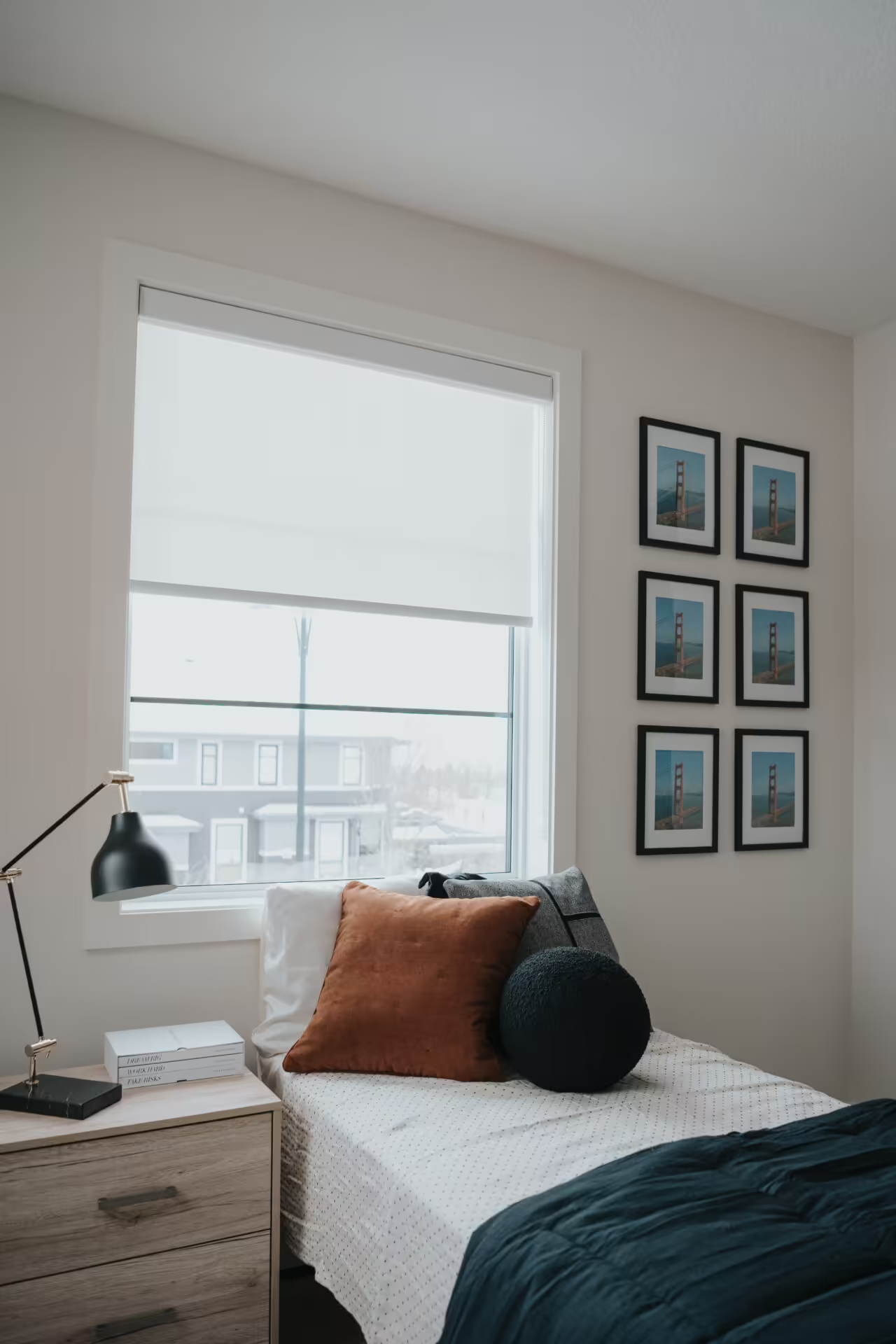
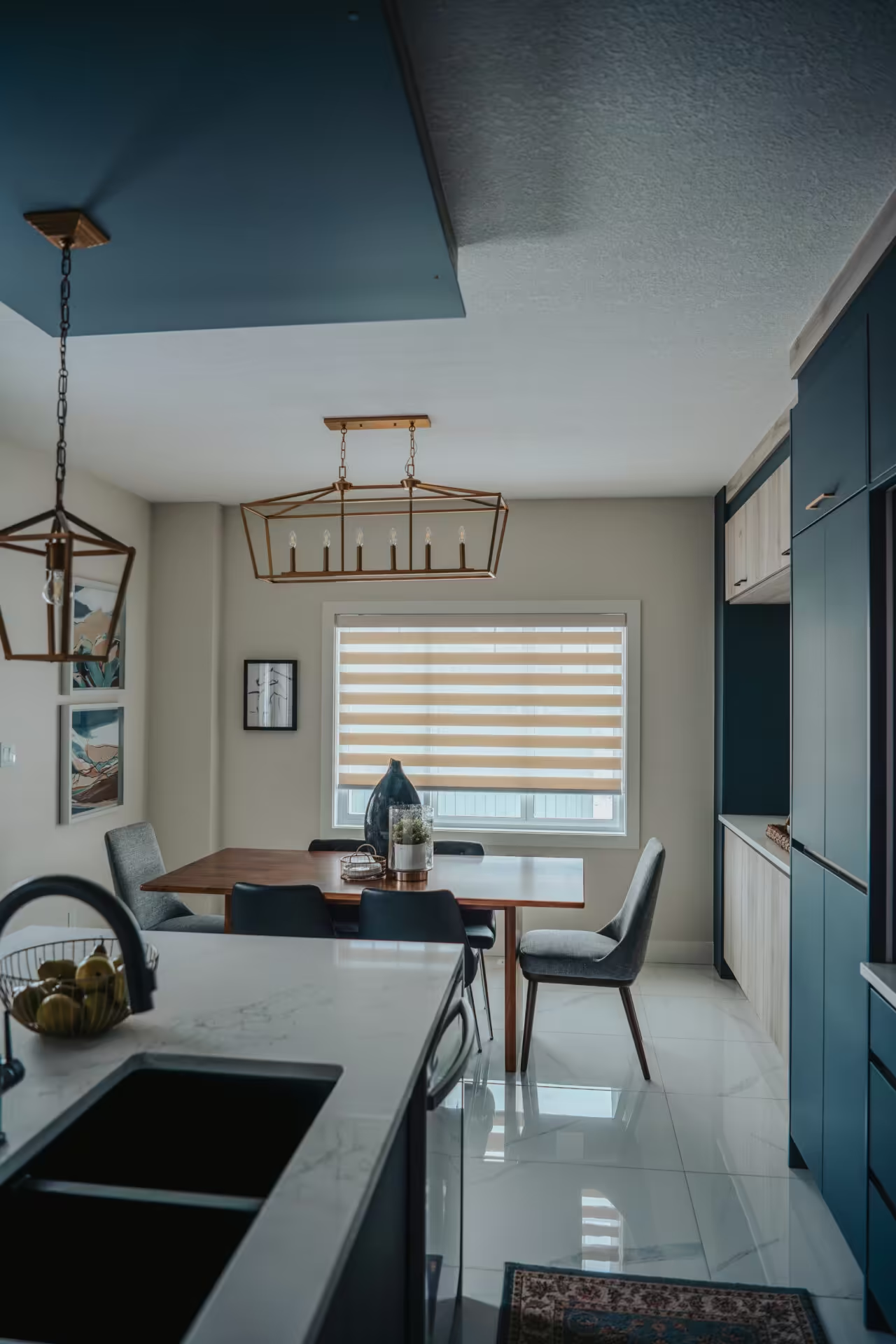
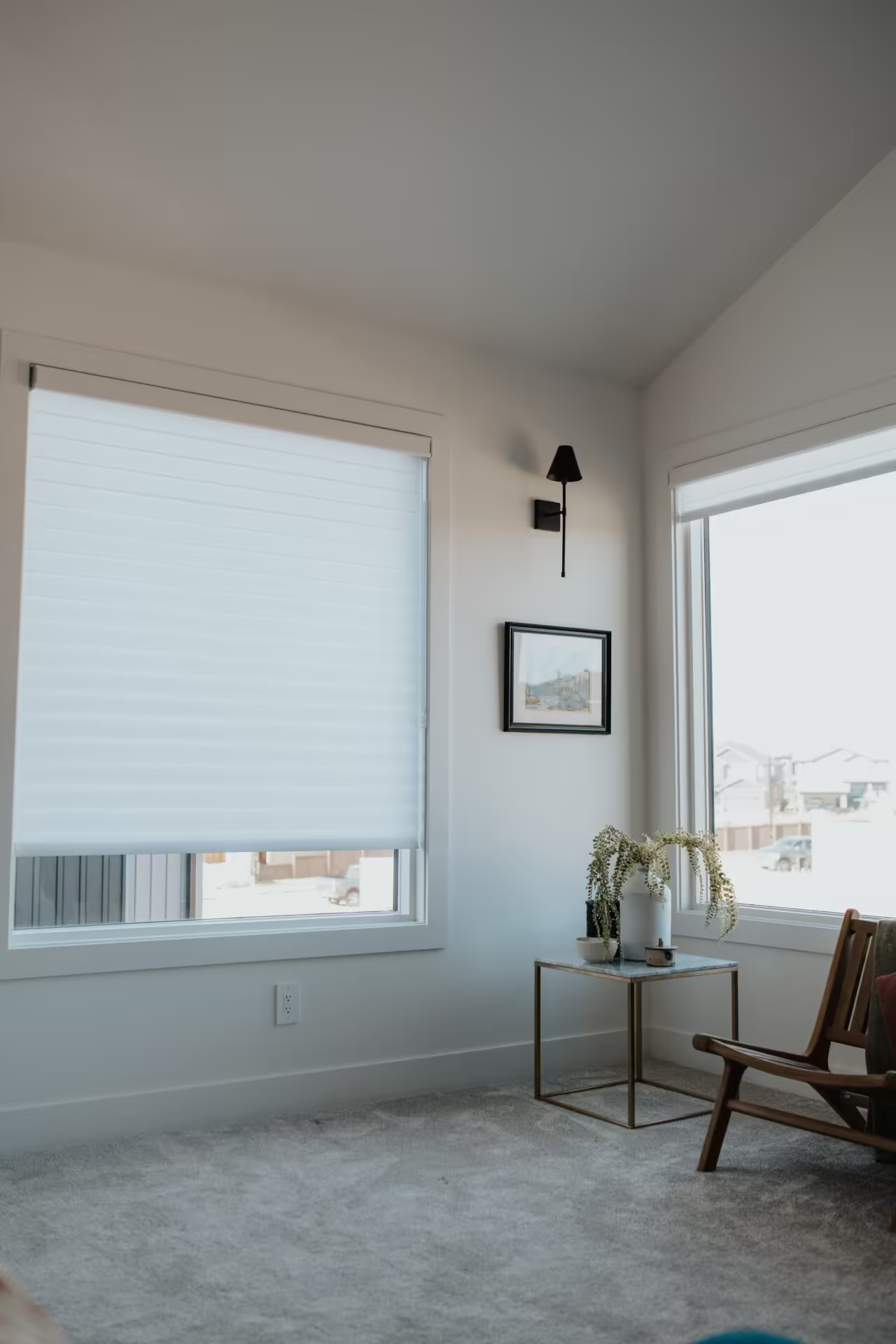
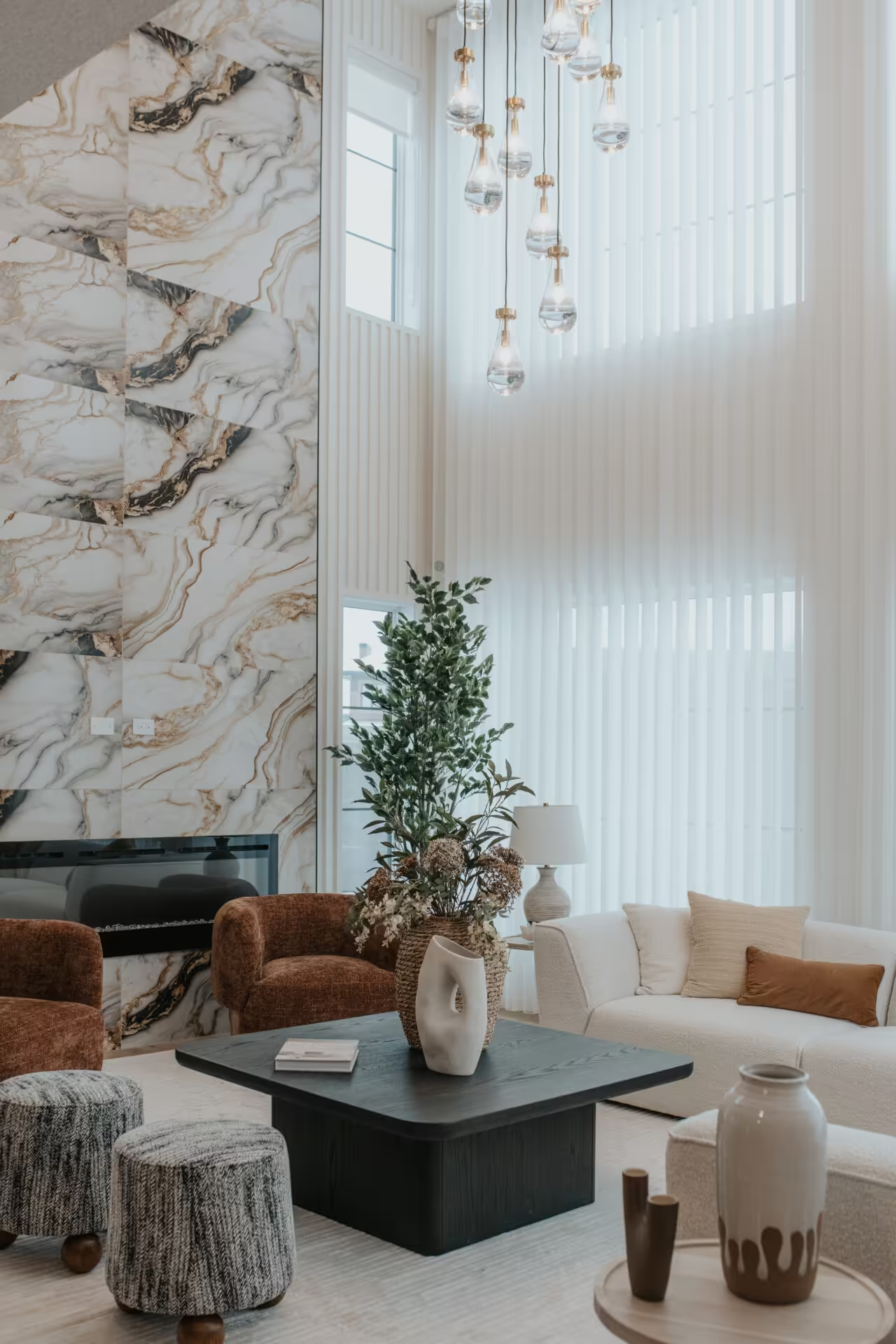
Bay window installations across Edmonton homes.
Room-by-room — matching the bay window to its job
Living room bay
The living room bay is the one visitors see first. Light control and visual presence matter here. Zebra blinds or roller shades in a textured fabric are the most common choice. If the bay has a window seat or built-in bench, inside-mount keeps the fabric flush and doesn’t interfere with the seating. Motorize for convenience — nobody wants to walk around a window seat to reach the side panel chain.Bedroom bay
Thermal insulation and blackout are the priorities. Honeycomb blinds in a double-cell blackout fabric handle both — they block light for sleep and insulate against Edmonton’s winter cold radiating off the glass. If you’re a shift worker or light sleeper, pair the cellulars with blackout roller shades behind them for a two-layer system that eliminates every trace of light bleed at the edges.Dining room bay
The dining room bay is about ambience. Zebra blinds tuned to filter afternoon light create a warm, soft-lit dining space without closing off the view entirely. For formal dining rooms with bow windows, drapery on a curved track sets the tone for dinner-party lighting. Keep the fabric neutral — dining rooms change decor more often than other spaces, and neutral bay window coverings outlast trend cycles.The Edmonton factor — bay windows and winter heat loss
Bay windows lose more heat per square foot than any other window type in an Edmonton home. The angles create more linear feet of frame-to-wall junction, which means more paths for air infiltration. The glass surface area relative to the room is larger. And in older bays — pre-2000 builds especially — the weatherstripping at the angle joints has usually failed by now, letting cold air seep through gaps that are invisible but absolutely felt. On a −25°C January night, an uncovered bay window becomes the coldest surface in the room. You can feel the cold-air convection current standing three feet away. That draft drives up heating costs, makes the reading nook or window seat unusable from November through March, and stresses the furnace. The right blinds don’t fix the window itself — but they create a buffer between the glass and the room. Cellular shades are the strongest performer here, with their trapped-air honeycomb pockets acting as a second layer of insulation. Roller shades and zebra blinds help too — any fabric barrier reduces convection off the glass — but cellulars measurably outperform them in thermal testing. For homes with serious bay window drafts, the best approach is cellulars on the bay plus weatherstrip replacement at the angle joints. The blinds handle the radiant cold; the weatherstripping handles the air infiltration. Together, they make the bay window useable year-round instead of just May through September.Common bay window blind mistakes
- Measuring the total bay width and ordering one big blind. A single blind across a bay window won’t follow the angles. Each panel needs its own individual blind, cut to its own width.
- Using stock-size shades and hoping the gaps won’t show. They always show. A quarter-inch gap at a bay angle joint is visible from across the room when backlit by afternoon sun.
- Skipping the angle brackets. Standard flat-wall brackets don’t work at bay joints. Purpose-built angle connectors keep each blind’s headrail aligned through the turn. Without them, the blinds either splay outward or pinch inward at every corner.
- Inside-mounting in a shallow bay. Many Edmonton bays — especially 1970s and 1980s builds — have only 2 to 3 inches of mounting depth. That’s not enough for most inside-mount headrails. Outside mount with a valance is the cleaner result.
- Forgetting motorization on the side panels. The side panels of a bay window are the hardest to reach, especially if there’s a window seat or furniture in the way. Motorizing all three panels to one control is the single upgrade bay window owners use most.
- Mixing different blind types across the bay. Roller on the centre, cellular on the sides — it never looks intentional. Keep the product and fabric consistent across all panels.
What we’d recommend for an Edmonton bay window
For most Edmonton bay windows — three-panel, living room or dining room, south or west-facing — here’s the install we’d spec:- Product:zebra blinds for living/dining rooms, cellular shades for bedrooms
- Mount: inside mount if the depth allows (3.5 inches minimum), outside mount with a coordinated valance if it doesn’t
- Hardware: angle-specific brackets at each joint, measured to the actual angle — not the nominal 30 or 45
- Motorization: yes, all three panels, single remote — especially if there’s a window seat or the side panels are hard to reach
- Fabric: light-filtering for daytime rooms, double-cell blackout for bedrooms
Book your bay window consultation
Bay windows are one of the few installs where we genuinely recommend the in-home measure over any online or phone estimate. The angles, depths, and panel widths need to be exact — and the only way to get them exact is to be in the room with the tools. Call us at 780-245-0190 or book through our contact page. Consultations are free across Edmonton and the metro area. We measure and install bay window blinds across all 10 cities we serve: Edmonton, Sherwood Park, Windermere, St. Albert, Leduc, Spruce Grove, Fort Saskatchewan, Beaumont, Stony Plain, Grande Prairie, and Red Deer. Browse our full product catalogue or check out past installs on our projects page.Frequently asked questions
Can you put blinds on a bay window?
Yes — but they need to be custom-measured and cut to each individual panel. Stock-size blinds from a box store won’t follow the angles of a bay window. Each of the three (or more) panels gets its own blind, connected at the joints with angle-specific brackets. The result is a coordinated set that looks and operates like one unit.What is the best blind for a bay window?
It depends on the room. For living rooms and dining rooms, zebra blinds offer the most light control through the day. For bedrooms, cellular shades provide the best insulation and blackout. Roller shades are the most affordable option that still looks clean on a bay. All three work well — the right choice comes down to whether you’re optimizing for light control, insulation, or budget.How much do bay window blinds cost in Edmonton?
For a standard three-panel bay window with custom-measured blinds and professional installation, expect $800 to $2,400 in 2026 Edmonton pricing. Cordless roller shades are at the lower end. Motorized zebra or cellular blinds are at the higher end. Bow window drapery on a curved track runs $1,800 to $3,200 depending on fabric and lining.How do you measure a bay window for blinds?
Each panel is measured individually — width at top and bottom, height at both sides, mounting depth at each point, and the angle at every joint measured with a digital angle finder. The angles are almost never the exact 30 or 45 degrees you’d expect, and even small deviations change the bracket hardware needed. We do this as part of every free in-home consultation.Should bay window blinds be inside or outside mount?
Inside mount looks cleaner — the blinds sit inside the window frame with no visible brackets. But it requires at least 3.5 inches of mounting depth, and many Edmonton bay windows (especially older builds) don’t have that. If the depth is too shallow, outside mount with a matching valance is the better result. Your installer will confirm the right approach during the measure.Are motorized blinds worth it on a bay window?
For bay windows specifically — yes. The side panels are usually the hardest-to-reach windows in the house, especially when there’s a window seat, furniture, or a built-in bench in the way. Motorizing all three panels to a single remote or smart-home trigger means the entire bay operates with one tap. The motor adds $400 to $700 across a three-panel bay and is one of the upgrades homeowners say they wish they’d done sooner.Bay windows deserve a custom fit.
Free in-home measurement for any bay or bow window. We bring samples, measure every angle, and build to your exact specs.
Book free consultationServing