


Novo Blinds · Edmonton
Best Blinds for Forest Fire Smoke Season in Alberta (2026 Guide)
Alberta smoke season means sealed windows and rising indoor temps. Cellular, blackout, and motorized blinds that help — and what they can’t do.
Smoke-Ready
Sealed Fit
3–5 wk
Lead Time
4.8★
Google Rating
It is mid-July and the sky over Edmonton looks like someone draped a grey-brown filter across the entire river valley. The Air Quality Health Index reads 10-plus — the “very high risk” category — and Environment Canada is telling everyone to stay indoors. You have sealed every window in the house. The portable air purifier is running on high. And now the real problem sets in: with every window shut and the sun still beating down on the glass, your second floor is climbing past 28 degrees by 2 PM. This has been Alberta’s new normal since 2023. If you are preparing your home for smoke season this year, the window coverings you choose are not going to filter particulate matter out of the air — no blind does that. But the right blinds do something equally critical when you are locked in a sealed house for days at a time: they block solar heat gain, cut UV exposure, and keep indoor temperatures liveable so you can actually keep those windows shut without cooking.
The short answer
For smoke season specifically, the three best products are cellular (honeycomb) shades for their insulation value in a sealed house, blackout rollers with side tracks for full light and heat block on the worst AQI days, and motorized blinds so you can close every window in the house at once when a smoke advisory drops. Pair any of those with a standard roller shade in UV-blocking fabric for rooms where you still want daylight during moderate smoke days. If you only do one thing before July: get cellular shades on your south and west-facing windows. They keep indoor temps lower when you cannot open windows for cross-ventilation — which is the entire point during smoke events.Why smoke season changes the blind conversation
Alberta has had wildfire smoke every summer since the catastrophic 2023 season. That year, Edmonton recorded over 40 days where the AQHI exceeded 7 (the “high risk” threshold). In 2024, smoke events returned in July and August. In 2025, the pattern held — shorter but still intense episodes pushed the AQHI above 10 multiple times between late June and early September. Before 2023, most Edmonton homeowners thought about blinds in terms of light control, privacy, and winter heat retention. Smoke season added a fourth axis: how well do your window coverings support a sealed-house strategy? Because when the AQHI spikes, the advice from Alberta Health Services is straightforward — close your windows, close your doors, run your air filtration, and stay inside. The problem is that a sealed house in July heats up fast. Edmonton’s summer days regularly hit 28 to 32 degrees, and a house with no cross-ventilation and sun pouring through uncovered windows can climb 5 to 8 degrees above outside temperature on upper floors. That is the gap your window coverings need to close — not the air quality gap, but the temperature gap that makes people crack a window even when the air outside is hazardous.What blinds can (and cannot) do during smoke
Let’s be direct about this. Blinds do not filter PM2.5. Wildfire smoke particles are 0.4 to 0.7 microns in diameter. No fabric window covering stops particles that small. You need a HEPA air purifier (rated for your room’s square footage) or a furnace filter rated MERV 13 or higher running continuously for that job. What blinds actually do during smoke season:- Block solar heat gain so your sealed house stays cooler without opening windows. A cellular shade on a south-facing window reduces heat transfer through that window by 40% to 60% compared to an uncovered pane.
- Cut UV radiation that accelerates indoor heat buildup and fades furniture. Most roller fabrics block 95% or more of UV even in light-filtering mode.
- Reduce the visual stress of smoke haze. This sounds minor until you have lived through a week of brown sky. Blackout shades in bedrooms and living areas create a sense of normal interior lighting that helps with the psychological toll of extended smoke events.
- Support better sleep during smoke advisories when outdoor air quality forces you to run fans or purifiers overnight. A sealed, dark, temperature-controlled bedroom is easier to sleep in than a sealed, bright, hot one.
Best products for smoke season
Cellular (honeycomb) shades — the insulation play
When you cannot open windows for ventilation, the insulation value of your window coverings matters more than any other feature. Cellular shades trap a pocket of dead air between the fabric layers. That air pocket adds roughly R-3 to R-4 to the window assembly — the same property that saves heating costs in Edmonton winters works in reverse during a smoke-season lockdown by slowing heat transfer through the glass. Double-cell honeycomb shades outperform single-cell for this application. The extra air pocket adds measurable insulation. For a standard 36-by-60-inch window, expect to pay $180 to $340 per window for a custom double-cell in Edmonton, depending on fabric and features. The ideal setup: cellular shades on every south and west-facing window, drawn fully closed by 11 AM on smoke days. Combined with a portable AC unit or a basement-to-upstairs fan loop, this keeps most Edmonton homes under 25 degrees indoors even when the outside temp hits 30 and you cannot crack a window. We covered the broader insulation math in our cooling without AC guide — the same principles apply during smoke events, just with the added constraint that opening windows is off the table.Blackout roller shades with side tracks — the full seal
For the worst smoke days — AQHI 10-plus, visibility under 2 kilometres, multi-day events — blackout roller shades with side-channel tracks are the most effective single product. The side tracks eliminate the light gaps on either edge of the shade, and the blackout fabric stops 100% of visible light and virtually all solar heat gain through the covered window. This is the product for bedrooms during extended smoke events. When you are stuck indoors for three or four consecutive days, sleep quality is the first thing to deteriorate. A blacked-out, cool bedroom at least gives you a controlled rest environment. For living spaces, full blackout may be more darkness than you want during daytime. A better pairing for common areas: roller shades in a UV-blocking light-filtering fabric. You still get natural daylight — enough to read and work comfortably — while blocking 90% or more of the solar heat and UV that would otherwise drive indoor temperatures up. Expect to pay $220 to $420 per window for a custom blackout roller with side tracks in Edmonton, depending on width and motorization.Motorized blinds — close the whole house at once
Here is the scenario that sells motorization during smoke season: you check the AQI forecast at 7 AM and see that a plume is arriving by noon. You tap one button on your phone and every shade in the house drops to its smoke-season position — south and west windows fully closed, east windows at half, north windows open for ambient light. The house is sealed and temperature-managed before the smoke even arrives. Without motorization, closing 15 to 20 windows manually takes 10 to 15 minutes and often does not happen until the smoke is already visible and the house has already started heating up. That delay costs you 2 to 4 degrees of indoor temperature that you will spend the rest of the day trying to claw back with fans and portable AC. Motorized cellular or motorized blackout rollers in Edmonton typically run $350 to $650 per window including motor and installation. The per-window cost is higher, but for a whole-house smoke-season response, the convenience is material. For a closer look at how different shade types compare for light and heat control, see our solar shades vs roller shades vs zebra blinds breakdown.Our Work
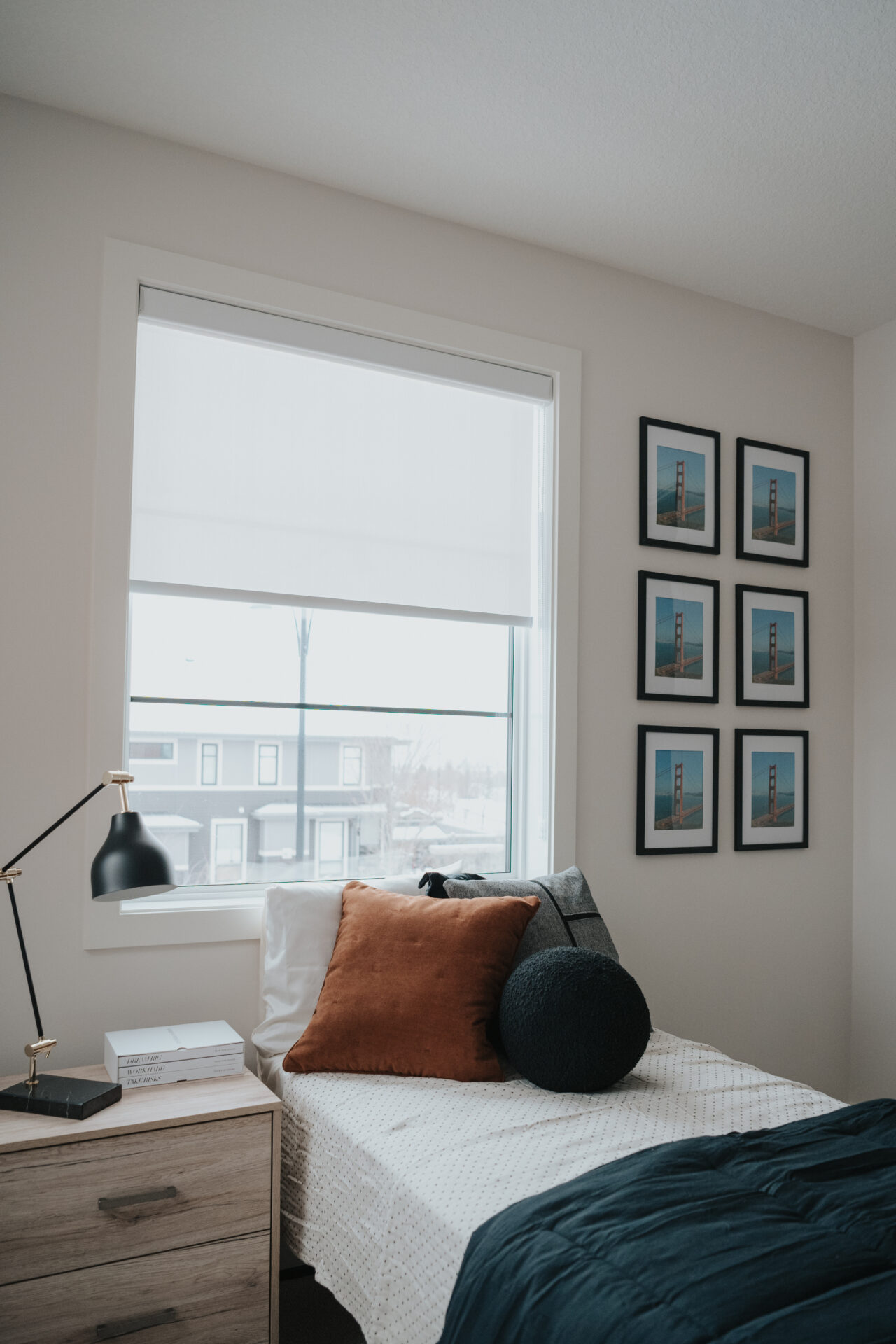
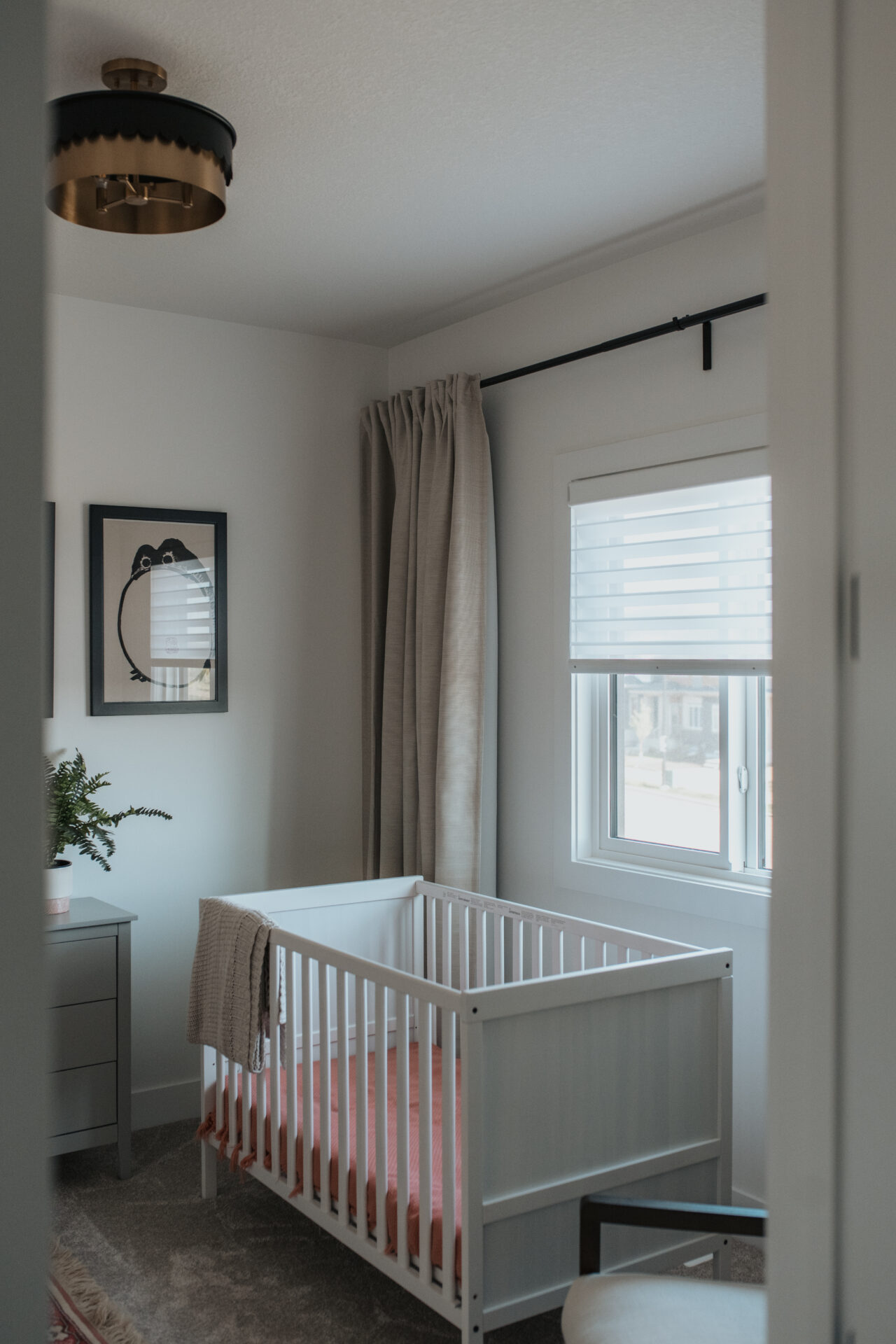
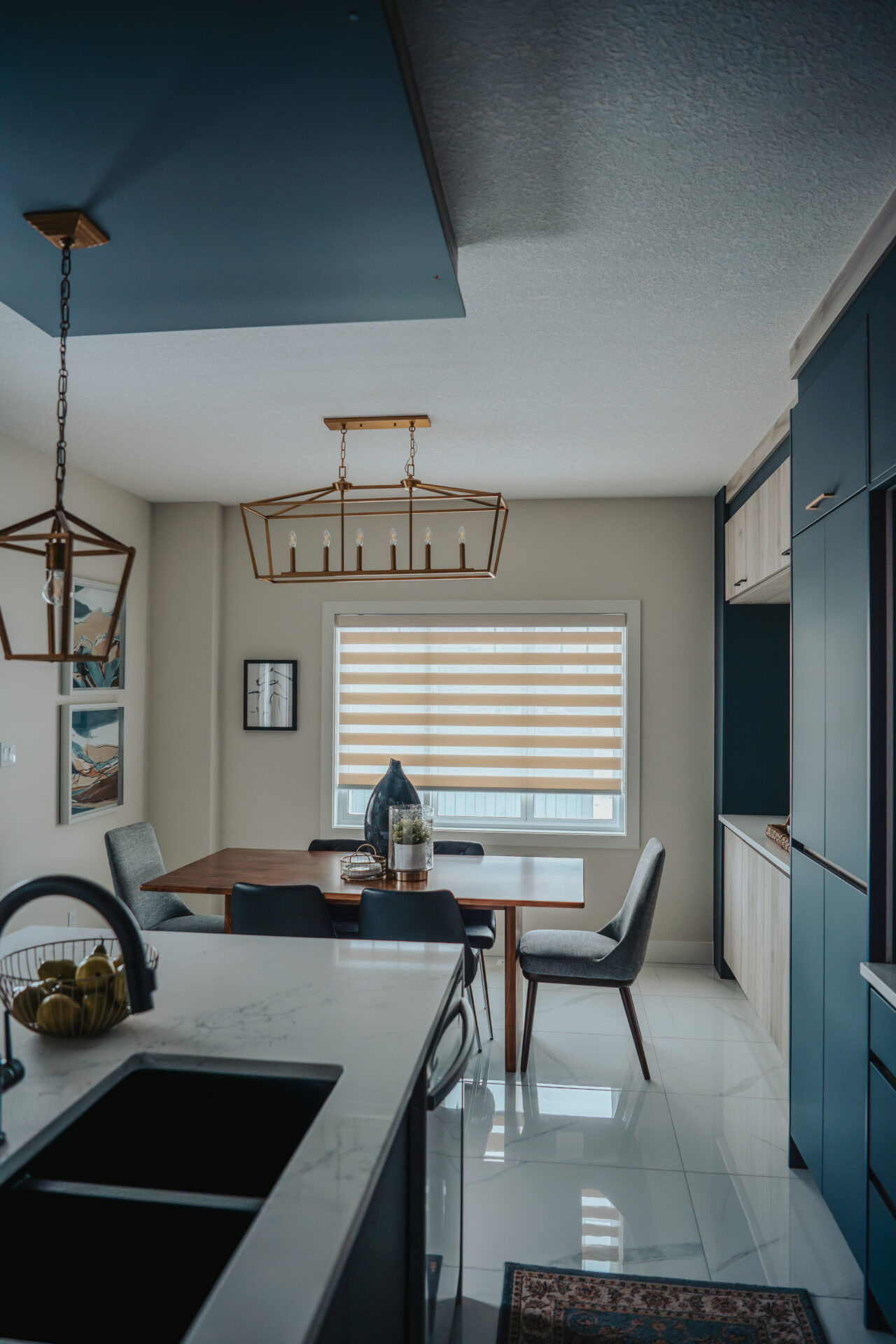
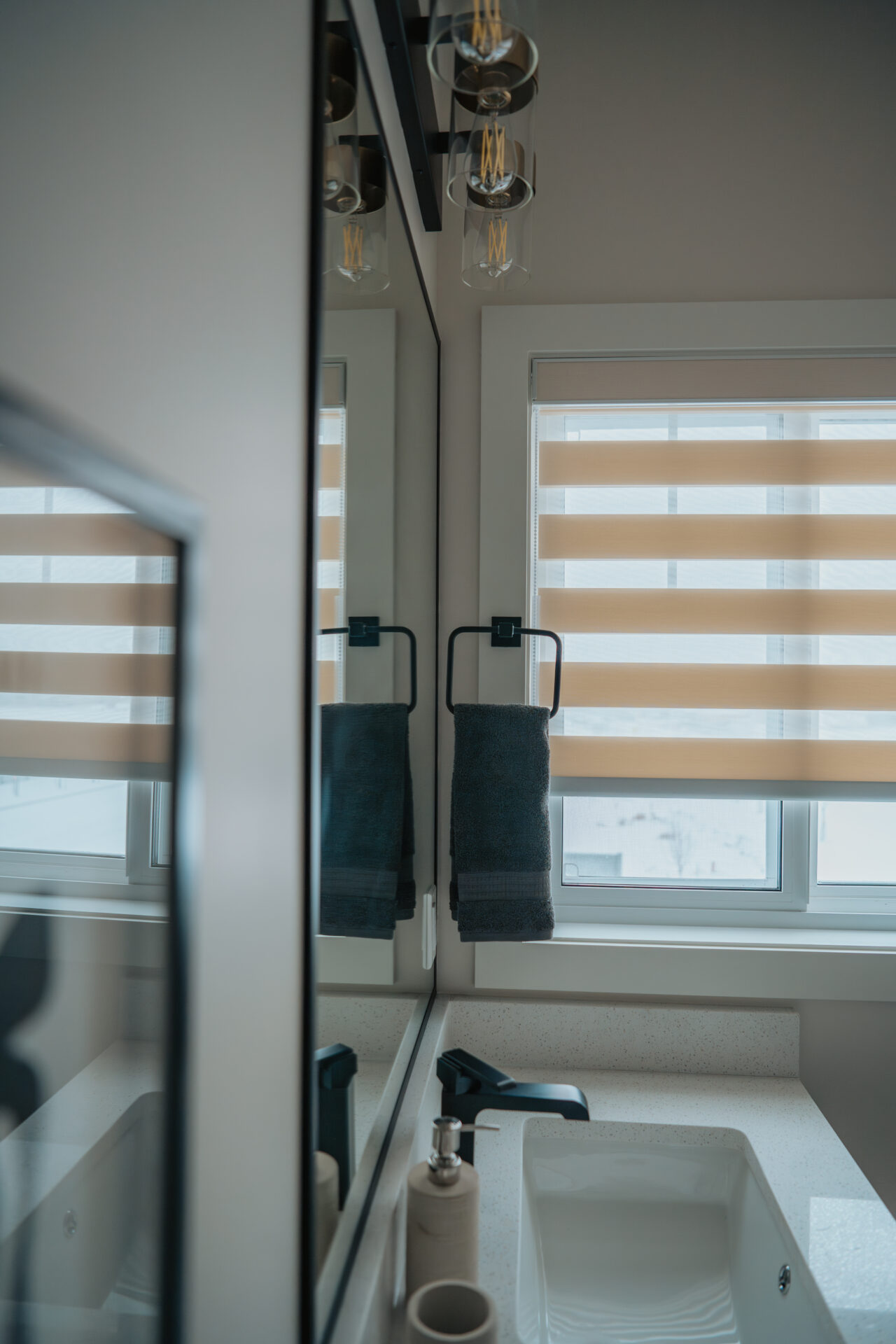
Edmonton homes sealed and shaded for summer.
The Edmonton smoke season timeline
Edmonton’s smoke season typically runs from early July through mid-September, with the worst episodes concentrated in late July and August. Key reference points:- 2023: Over 40 AQHI-exceeding-7 days. The June plume from northeast Alberta fires pushed Edmonton’s AQI past 300 — among the worst readings recorded in any major Canadian city.
- 2024: Shorter events, still disruptive. Multiple weeks in July and August where the AQHI sat between 7 and 10 for consecutive days.
- 2025: Similar pattern to 2024 — episodic spikes rather than sustained weeks, but with less warning time between clear air and hazardous readings.
Common mistakes during smoke season
- Opening windows because the sky looks clearer. Smoke particles linger at ground level for hours after visibility improves. Check the actual AQHI reading (Environment Canada app or weather.gc.ca), not the colour of the sky.
- Running window fans pointed inward. A window fan pulls outside air — including smoke — directly into your house. During AQHI 7-plus events, switch to recirculate mode on your HVAC or use a standalone air purifier. Fans are fine for internal air circulation, not for pulling outside air.
- Leaving south and west windows uncovered until the room is already hot. Solar heat gain through uncovered glass is cumulative. By the time you notice the room is warm, the walls and furniture have already absorbed hours of radiant heat and will re-radiate it for the rest of the day. Close your shades proactively — by 10 or 11 AM on forecast smoke days.
- Assuming any blind helps equally. A sheer curtain or an open-weave decorative shade blocks almost no solar heat. For smoke-season performance, you need either cellular, blackout, or a roller with UV-blocking fabric. Decorative sheers are not doing the job.
- Forgetting the east-facing bedroom. The morning sun heats east-facing bedrooms from 5 AM to 10 AM in Edmonton summers. If you sleep late during smoke events (and you should — less outdoor exposure), that room is already 26 degrees by the time you wake up. A blackout shade on east windows pays for itself in sleep quality alone.
Final take — what to prioritize before smoke season
If you are buying window coverings before this summer’s smoke season, here is the order we would recommend: First priority — south and west-facing windows. Cellular shades (double-cell, light-filtering or blackout depending on the room). These windows drive 70% of your sealed-house heat gain. Custom-fit cellular shades in Edmonton run $180 to $340 per window. Second priority — bedrooms. Blackout rollers with side tracks on any bedroom that faces east, south, or west. You will sleep better and keep those rooms measurably cooler. $220 to $420 per window. Third priority — motorization on the windows you already have covered. If you have 10 or more windows with manual shades, adding motors so you can close everything from your phone when a smoke advisory drops is worth the investment. Adding a motor to an existing compatible shade runs $150 to $250 per window. Budget-conscious option: start with standard roller shades in a UV-blocking fabric on your worst sun-exposure windows. Even without the insulation of cellular or the full seal of blackout tracks, a UV-blocking roller cuts solar heat gain meaningfully and costs $120 to $220 per window. Try different fabric options in your own rooms before buying — our free room visualizer lets you see how various products look on your actual windows. We offer free in-home consultations across Edmonton, Sherwood Park, St. Albert, Leduc, Spruce Grove, Fort Saskatchewan, Beaumont, Stony Plain, Grande Prairie, and Red Deer. Call 780-245-0190 or book online — written quote within 48 hours. Browse past installs in our project gallery.Frequently asked questions
Do blinds filter wildfire smoke out of indoor air?
No. Blinds and shades are fabric window coverings — they do not filter airborne particulate matter. Wildfire smoke particles (PM2.5) are 0.4 to 0.7 microns, far too small for any window shade to capture. For air filtration during smoke season, use a HEPA air purifier or a furnace filter rated MERV 13 or higher. What blinds do is block solar heat and UV, which keeps your sealed house cooler so you can keep windows shut longer without overheating.What type of blind is best for keeping a sealed house cool during smoke?
Cellular (honeycomb) shades are the top performer. A double-cell honeycomb shade adds R-3 to R-4 of insulation to the window assembly, reducing heat transfer through glass by 40% to 60%. This matters most during smoke events because you cannot open windows for cross-ventilation — the insulation is your primary cooling tool alongside fans and portable AC.How much do smoke-season blinds cost in Edmonton?
For custom-fit window coverings in Edmonton (2026 pricing): cellular shades run $180 to $340 per window, blackout rollers with side tracks run $220 to $420, and motorized options add $150 to $250 per window on top of the shade cost. Budget roller shades with UV-blocking fabric start at $120 per window.Should I close my blinds before or during a smoke event?
Before. Solar heat gain is cumulative — once your walls, floors, and furniture absorb radiant heat, they re-radiate it for hours even after you close the shades. On forecast smoke days, close your south and west-facing shades by 10 to 11 AM. If you have motorized blinds, set a smoke-season schedule that drops them automatically each morning during July through September.Are blackout blinds worth it just for smoke season?
Yes, especially for bedrooms. Extended smoke events in Edmonton can last three to seven consecutive days. Sleep quality deteriorates rapidly in a hot, bright, sealed room. Blackout shades with side tracks create a dark, cool environment that helps you get through multi-day events. They also block UV year-round and provide full darkness for shift workers and early risers during Edmonton’s long summer daylight hours.When does smoke season typically start in Edmonton?
Smoke typically arrives between early July and mid-September, with peak episodes in late July and August. The timing depends on where fires burn and how wind patterns carry the plume. Edmonton has experienced significant smoke events every summer since 2023 — preparation before July is the best strategy.Get your windows smoke-season ready.
Free in-home consultation. We measure, recommend the right setup, and install before the smoke rolls in.
Book free consultationServing