

Novo Blinds · Edmonton
Shangri-La Sheer Shades Explained (and When They’re the Right Pick)
Shangri-La sheer shades filter light through soft horizontal vanes. How they compare to zebra blinds and rollers, plus 2026 Edmonton pricing.
Shangri-La
Specialist
Edmonton
Made here
4.8★
Google Rating
You’re standing in your living room mid-afternoon. The sun is hitting the south-facing windows at that low, flat angle that makes you squint. You want the light — you just don’t want the harshness. Now picture this: instead of a solid roller blocking the view or a zebra stripe cutting the glass in half, the entire window is draped in a soft, continuous glow. You can still see the trees outside, still read the shape of the street — but the glare is gone. The light feels like it’s been run through linen. That’s a Shangri-La sheer shade doing what it does best. Most homeowners in Edmonton have never heard of Shangri-La sheer shades. They know rollers. They know zebras. They might have seen a sheer shade once in a design magazine and assumed it was a custom drapery. It’s not — and for certain rooms, it’s the best window covering you can buy.
The short answer
If you have a living room, dining room, or primary bedroom where you want filtered daylight and a clear view — and you’re willing to spend more than a roller or zebra — Shangri-La sheer shades are the right pick. If you need a bathroom blind, a kitchen blind, or something for a high-moisture room, skip them. They’re a fabric product that belongs in dry, low-traffic spaces where light quality matters.What Is a Shangri-La Shade?
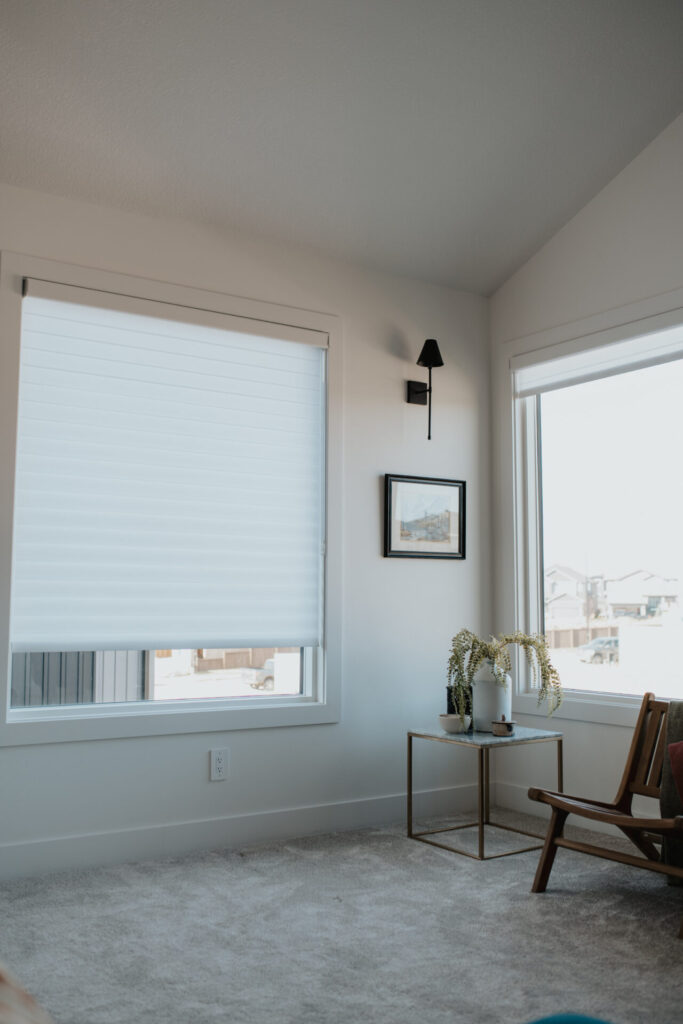
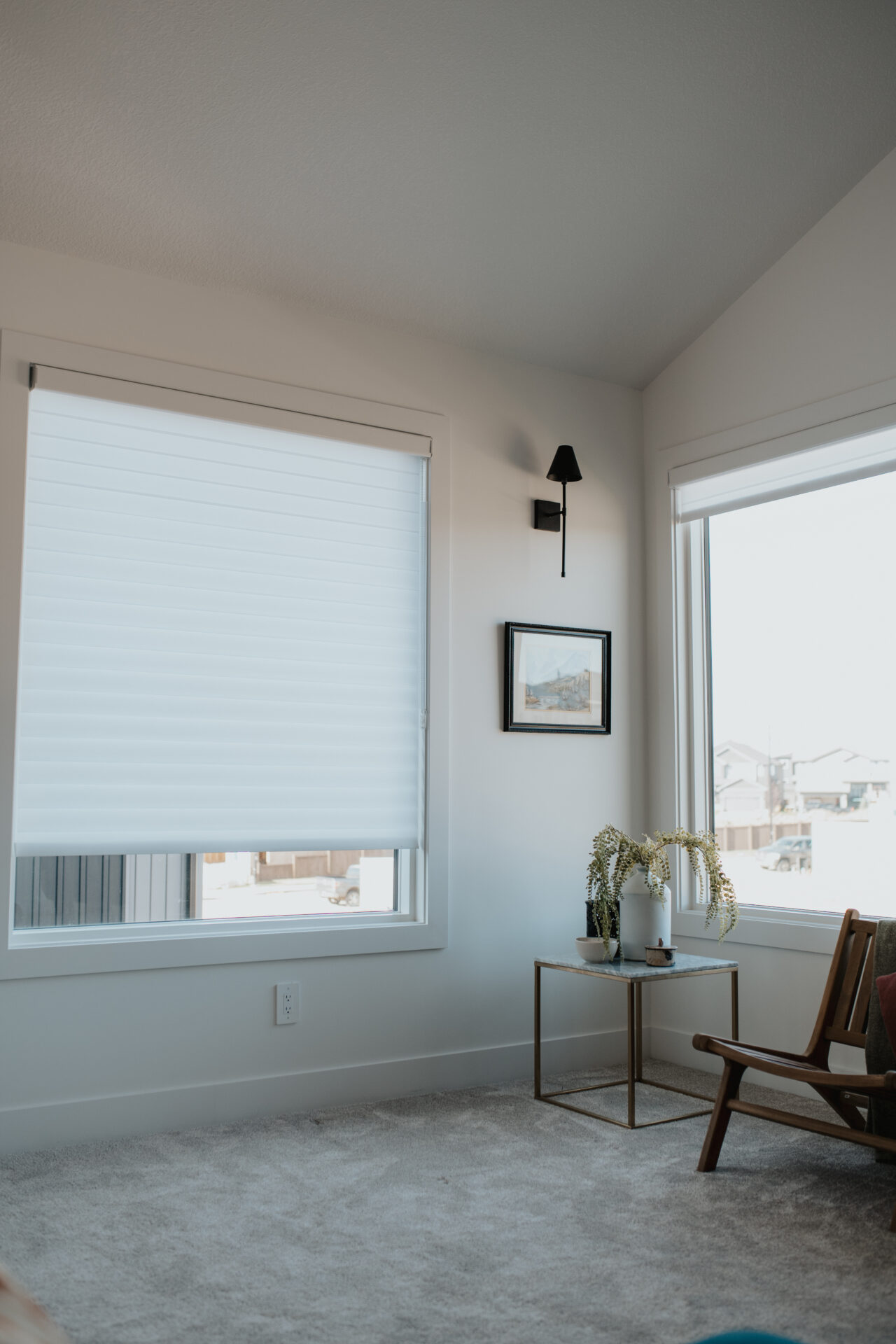
A Shangri-La shade — sometimes called a soft horizontal sheer or layered sheer shade — is a window covering made of horizontal fabric vanes suspended between two sheer panels. Think of it as a venetian blind rebuilt entirely in fabric. The vanes float between the front and back sheers, and when you tilt them open, light passes through both layers of sheer fabric and scatters softly across the room. When you tilt them closed, the vanes overlap and block the view for privacy. The whole assembly rolls up into a headrail — similar to a roller shade — so when you raise the blind completely, the window is unobstructed. No stacking, no bunching at the top. It disappears.How it compares to a zebra blind at a glance
A zebra blind uses two layers of alternating sheer and opaque bands. When the bands align sheer-to-sheer, light passes through. When you shift them so opaque covers sheer, the window darkens. It’s a binary system — open or closed, with a narrow transition range in between. A Shangri-La works differently. The vanes tilt gradually, like a venetian. You get a full spectrum of positions between open and closed, not just two states. And because both outer layers are sheer fabric (not alternating bands), the light that enters the room is softer and more diffused at every position. A zebra gives you stripes of light. A Shangri-La gives you a wash.Shangri-La vs Zebra Blinds
This is the comparison most people need, because zebra blinds are the closest product in the lineup and cost less. When zebra wins:- Budget. Zebra blinds start from $75 per blind at factory pickup; Shangri-La shades start from about $100 at factory pickup. Your installed quote depends on size, fabric and controls.
- Durability in high-traffic rooms. Zebra fabric is tighter-woven and more forgiving if a kid grabs it or a pet brushes against it. Shangri-La vanes are delicate — not fragile, but they prefer to be left alone.
- Kitchens and bathrooms. Zebras handle humidity better. The fabric doesn’t absorb moisture the way Shangri-La sheers can.
- Strong light blocking. When closed, zebra blinds block more light than a Shangri-La in its closed position. If you need near-blackout, zebra gets closer. (For full blackout, go blackout roller or cellular instead.)
- Light quality. This is the main event. Shangri-La sheer shades produce the softest, most even light of any blind we manufacture. No stripes, no hard shadows, no hot spots. Rooms feel brighter without feeling exposed.
- View-through. With vanes open, you see through both sheer layers to the outside. The view is softened but intact. Zebras give you a view only through the sheer bands — you’re always looking between opaque stripes.
- Aesthetics in formal rooms. Shangri-La reads as a high-end drapery, not a mechanical blind. In a dining room or a living room with tall windows, the visual difference is obvious.
- Gradual tilt control. You can park the vanes at any angle, adjusting how much light enters. Zebras are either aligned or not.
Shangri-La vs Roller Shades
Roller shades are the simplest, most affordable option in the lineup. They’re a single panel of fabric that rolls up and down. No vanes, no layers, no tilt. Light quality. A roller shade is either up (full daylight) or down (filtered or blocked, depending on fabric opacity). There’s no in-between position that gives you both a view and diffused light. Shangri-La sheer shades give you both at once — the vanes open for view-through, while both sheer layers still soften the incoming light. Aesthetics. Rollers look clean and minimal. They’re a flat panel. Shangri-La sheer shades have depth and texture — the floating vanes create a layered look that reads more like a soft furnishing. In a room where you want the window covering to contribute to the decor, Shangri-La wins. In a room where you want the covering to disappear, roller wins. Cost. Roller shades start from $75 per blind at factory pickup; Shangri-La shades start from about $100 at factory pickup. Compare itemized quotes for your window sizes and fabric choices. When to go roller instead: Bedrooms where you want blackout (pair a roller with a blackout fabric), kitchens, bathrooms, laundry rooms, any space where function outranks ambiance. Our solar shades vs roller shades vs zebra blinds comparison covers the roller-versus-everything breakdown.Our Work
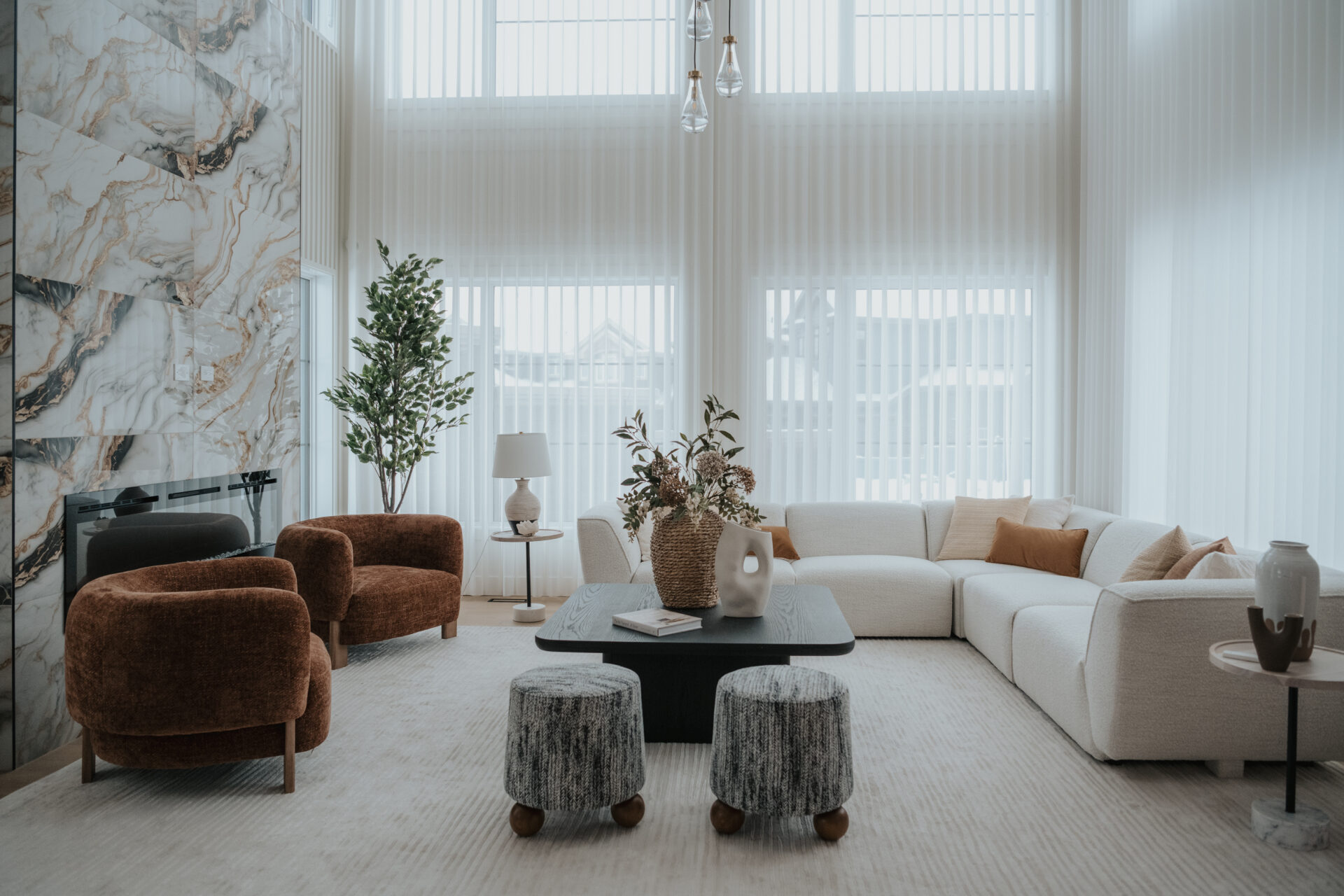
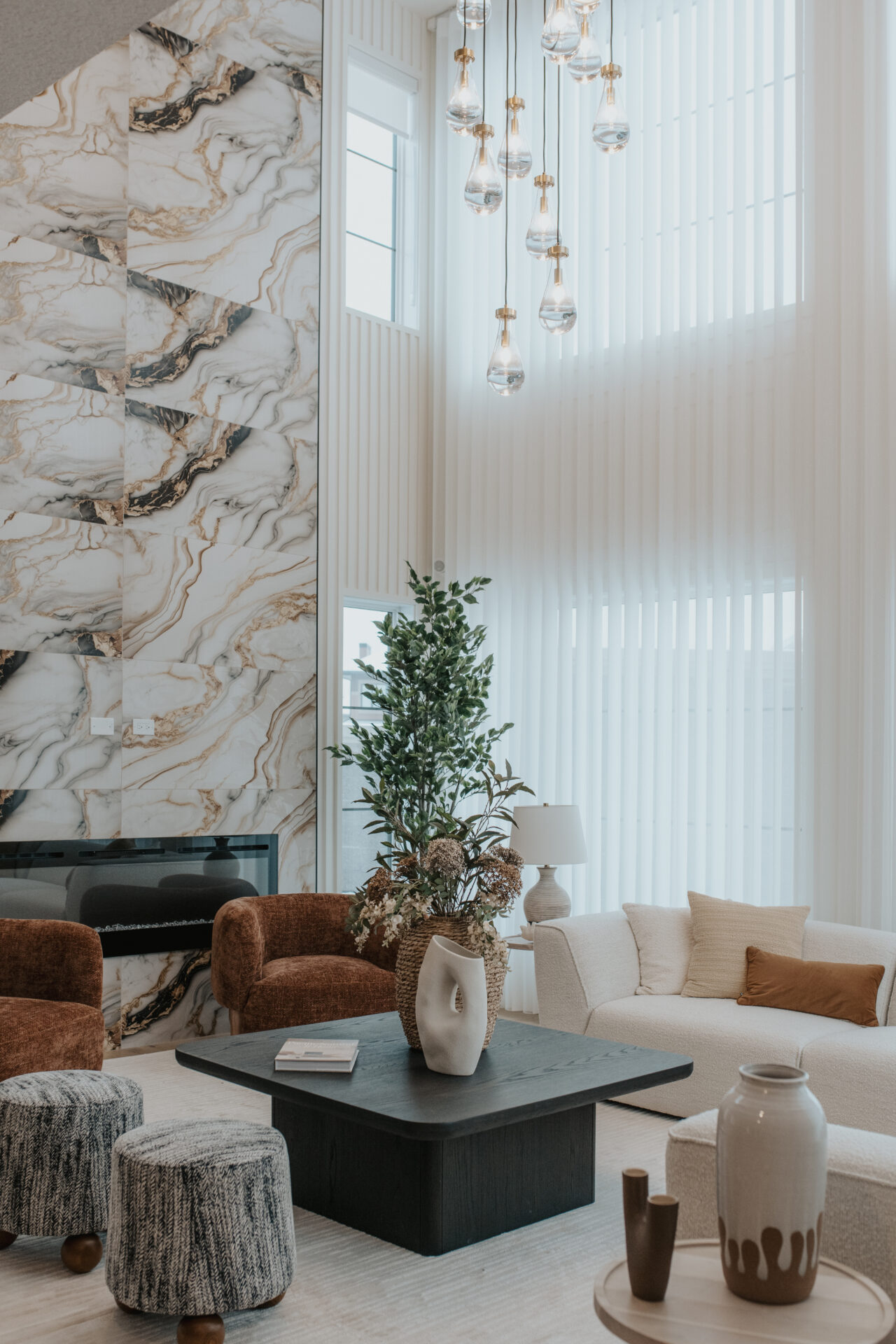
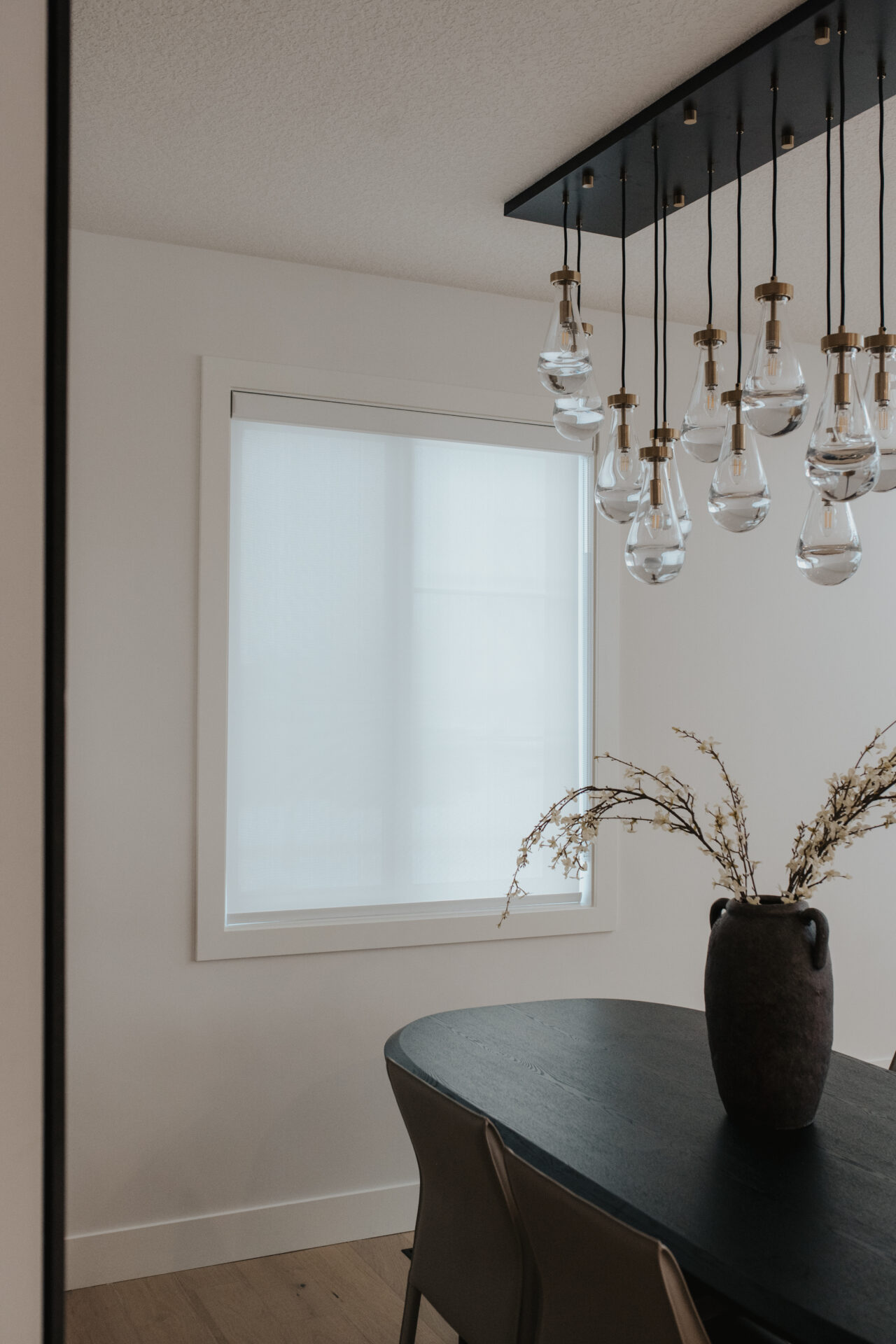
Sheer shade installations across Edmonton.
Best Rooms for Shangri-La Sheer Shades
Not every room in the house needs — or benefits from — a Shangri-La. Here’s where they earn their price and where they don’t.- Living room. The number-one room for Shangri-La sheer shades. Large windows, long sight lines, guests who notice the light. This is where the soft horizontal sheers pay off most.
- Dining room. Same logic. If your dining area has a window wall or faces the backyard, Shangri-La diffuses the afternoon sun beautifully during dinner. No squinting. No glare on the table.
- Primary bedroom. Shangri-La works well as a daytime shade — it softens morning light without blocking it entirely. Pair it with a blackout roller on a dual bracket if you also need full darkness at night. This layered setup is the highest-end spec we install for bedrooms.
- Home office. If you’re on video calls and your desk faces a window, Shangri-La creates flattering, diffused light that doesn’t wash you out or cast harsh shadows. Our best blinds for home offices guide covers the full range of options.
- Skip: kitchen. Grease, steam, and splashes. Shangri-La fabric absorbs all of it. Go roller or zebra instead.
- Skip: bathroom. High moisture. Shangri-La sheers aren’t meant for wet environments.
- Skip: kids’ playroom. The delicate vanes don’t survive curious hands. Zebra or roller is the better pick.
Shangri-La Sheer Shades in Edmonton — the Climate Angle
Edmonton’s light conditions are specific enough that they shape which rooms benefit most from Shangri-La sheer shades. Winter low-angle sun. From November through February, the sun never climbs higher than about 15° to 20° above the horizon at solar noon. That means direct sunlight enters south-facing windows almost horizontally, hitting your eyes, your TV, and your floors at a punishing angle. Shangri-La vanes tilt to intercept that low-angle glare while still admitting ambient light through the sheers. Rollers have to be fully lowered to block the same glare — which also blocks the daylight you need on short winter days. Summer west-facing glare. Edmonton gets 17 hours of daylight at the solstice. West-facing windows take the worst of it from 4 PM until past 9 PM. Shangri-La sheer shades reduce the glare intensity by roughly 75% to 85% (depending on vane fabric) without turning the room dark. That’s meaningful if your living room faces west and you don’t want to close the blinds for five hours every evening. UV protection. The dual-sheer construction filters a significant amount of UV — most Shangri-La fabrics block 80% to 95% of UV radiation even with vanes open. That protects hardwood floors, furniture upholstery, and artwork from fading. In a city where floors can see intense direct sun for hours in summer, that matters. Motorized option. As a Canadian-made alternative to imported sheer shades, Shangri-La blinds are available with motorized lift and tilt. A motor lets you schedule the vane tilt to adjust with the sun’s position throughout the day — open in the morning, partially closed by afternoon, fully closed at night. Battery-powered motors avoid wiring and recharge via USB-C.Common Mistakes with Shangri-La Sheer Shades
- Putting them in a kitchen or bathroom. The fabric absorbs moisture, grease, and cooking odours. One season in a kitchen and the sheers will yellow. Choose a roller or zebra for wet or high-traffic rooms.
- Expecting blackout. Shangri-La sheer shades — even fully closed — still allow some light through the sheer layers. They are a light-filtering product, not a blackout product. If you need full darkness, pair with a blackout roller on a dual bracket or go with a dedicated blackout blind.
- Ordering stock sizes online. Shangri-La vanes are precision-aligned between two sheer panels. If the blind doesn’t fit the window exactly, the vanes bunch or gap at the edges and the whole effect falls apart. This product only works custom-measured.
- Ignoring the headrail size. The roll-up mechanism is larger than a standard roller headrail — about 3 to 4 inches in diameter when fully raised. If your window has a shallow recess, the headrail may protrude. An outside-mount solves this, but measure first.
- Cleaning them wrong. Do not submerge Shangri-La sheers in water or run them through a washing machine. Dust with a soft cloth or use a vacuum on the lowest suction setting with a brush attachment. Spot-clean only if needed.
Final Take — Who Should Buy Shangri-La?
Go Shangri-La if:- You’re covering living room, dining room, or primary bedroom windows where light quality is the top priority.
- You want a refined, layered look that reads closer to drapery than a mechanical blind.
- Your budget allows for the fabric and control options in your itemized quote.
- You value gradual tilt control and want to adjust light precisely throughout the day.
- Budget is the deciding factor — zebra blinds start from $75 per blind at factory pickup.
- The room is a kitchen, bathroom, or high-traffic area.
- You want near-blackout capability from a single product.
- You want the cleanest, most minimal look at the lowest cost — roller shades start from $75 per blind at factory pickup.
- The room needs blackout and you’ll pair the roller with opaque fabric.
- Function matters more than ambiance.
Book a Free Consultation
We measure, manufacture, and install Shangri-La sheer shades from our 15,000 sq ft Edmonton facility. Free in-home consultation across Edmonton and the metro — Sherwood Park, St. Albert, Leduc, Spruce Grove, Beaumont, and beyond. An itemized written quote after your measure. One installer, start to finish. Book your free consultation or call 780-245-0190.FAQ
What are Shangri-La sheer shades?
Shangri-La sheer shades are a window covering made of soft horizontal fabric vanes suspended between two layers of sheer fabric. The vanes tilt open and closed — like a venetian blind — but the entire assembly is fabric, creating a softer, more diffused light than standard blinds or roller shades.How much do Shangri-La sheer shades cost in Edmonton?
Shangri-La sheer shades start from about $100 per blind at factory pickup. The installed quote depends on window size, fabric and motorization. Made in about 1 week. Installed within 2–3 weeks of approval.Are Shangri-La sheer shades good for bedrooms?
They’re good for primary bedrooms where you want soft, filtered morning light and a refined look. They are not blackout — even fully closed, some light passes through the sheer layers. If you need full darkness for sleep, pair the Shangri-La with a blackout roller on a dual bracket, or choose a dedicated blackout blind instead.Can Shangri-La sheer shades be motorized?
Yes. Shangri-La sheer shades are available with motorized lift and tilt. Battery-powered motors recharge via USB-C and last 6 to 12 months between charges on typical use. Motorization adds about $210 per blind over the manual version.How do you clean Shangri-La sheer shades?
Dust regularly with a soft microfibre cloth or a vacuum on the lowest suction setting using a brush attachment. Do not submerge in water, machine wash, or use chemical cleaners. Spot-clean stains gently with a damp cloth. The delicate vane fabric stays clean longer in dry, low-dust environments — another reason to keep them out of kitchens and bathrooms.What is the difference between Shangri-La and zebra blinds?
Zebra blinds use alternating sheer and opaque bands that shift to control light — you get two states (open or closed) with a narrow transition. Shangri-La sheer shades use tilting vanes between two full sheer panels, giving you a continuous range of positions and softer, more evenly diffused light. Shangri-La costs more and looks more refined; zebra is more durable and budget-friendly. See our full product lineup to compare side by side.Curious if Shangri-La fits your space?
Free in-home consultation. We bring fabric samples so you can see the light filtering in your own room.
Book free consultationServing