

Novo Blinds · Edmonton
Best Blackout Blinds for Baby Nurseries (Edmonton Parent’s Guide)
Cordless blackout blinds for baby nurseries in Edmonton. Cellular, roller, motorized options — child-safe, nap-ready, built for Alberta’s endless summer light.
100%
Cordless Safe
3–5 wk
Lead Time
4.8★
Google Rating
It’s 9:30 PM on a Tuesday in June. Your six-month-old has been rubbing her eyes for an hour but won’t go down. The room looks bright because — in Edmonton — it basically is. Sunset doesn’t happen until after 10 PM at the solstice, and the glow through that stock-size roller shade turns the nursery into a soft grey box instead of the dark cave your baby’s brain needs. You’ve tried the travel blackout curtain suctioned to the glass. It fell off twice. You’ve tried tin foil on the window. It worked, but your neighbours think you’re running a grow-op. There’s a better way, and it starts with getting the right blackout blinds for the nursery — custom-fit, cordless, and built for Edmonton’s wild summer light.
The short answer
If you want one product and done, go with a cordless double-cell blackout cellular shade with side tracks. It blocks virtually all light, insulates the room, and has no cords anywhere near the crib. If you want a cleaner look, a cordless blackout roller shade with side channels does 90% of the same job at a lower price point. If you want hands-free control for nap time — open the blinds slowly when wake time hits, close them on schedule before the bedtime routine — go motorized. All three options are cordless by default.Why Blackout Matters for Baby Sleep
Babies aren’t small adults who happen to sleep more. Their circadian rhythm is still forming for the first 12 to 18 months, and light is the single strongest signal their brain uses to decide whether it’s time to be awake or asleep. Melatonin — the hormone that initiates and sustains sleep — is suppressed by light exposure. Even a moderate amount of ambient light in the nursery can delay sleep onset by 20 to 40 minutes and shorten nap duration. That’s a problem everywhere, but it’s a bigger problem in Edmonton. At 53° north latitude, the city gets roughly 17 hours of daylight at the summer solstice. Sunrise is before 5:10 AM. Sunset is past 10 PM. The sky doesn’t go fully dark until nearly midnight. If your baby’s bedtime is 7 PM and the nursery isn’t properly blacked out, you’re asking a developing brain to ignore four more hours of sunlight streaming through or around the window covering. Most babies can’t do it — and the ones who can usually don’t stay asleep as long. In winter, the situation flips: only about 7.5 hours of daylight in December, which means the nursery is naturally dark for most naps and bedtimes. But the sleep habits and room setup you build in summer carry forward. Spec the nursery for worst-case June, not comfortable January.Cordless Cellular Blackout — The Go-To for Most Nurseries
A double-cell blackout cellular shade with side tracks is the most popular nursery setup we install across Edmonton. Here’s why it keeps winning:- True blackout with edge sealing. The double-cell fabric construction blocks 99%+ of light through the material. Side tracks — channels that run along both vertical edges of the window — seal the gaps where light would otherwise leak past the sides of the blind. The combination gets you closer to total darkness than any fabric alone.
- No cords, no chains, no loops. Cordless cellular shades lift and lower by hand from the bottom rail. There is nothing hanging from the blind that a child can reach, grab, or wrap around anything. This is the single most important safety feature in a nursery window covering.
- Thermal insulation. Double-cell honeycomb construction adds R-3 to R-4.5 to the window, depending on cell size and fabric weight. That keeps the nursery cooler in summer — a room that’s too warm is the second most common reason babies fight sleep — and warmer in winter without running the furnace harder. Our cellular shades for Edmonton winters guide covers the thermal math in detail.
- Quiet operation. Cordless lift is silent. No motor hum, no chain rattle. You can adjust the blind during a nap without waking the baby.
Blackout Roller with Side Channels — Clean and Effective
If the cellular look isn’t your style — or if the nursery will eventually become a kid’s bedroom and you want something more streamlined — a cordless blackout roller shade with side channels is a strong second option. The roller fabric is a single layer of opaque material that wraps around a tube at the top. Side channels perform the same edge-sealing function as side tracks on a cellular: they close the gap between the blind and the window trim so light can’t sneak past. Without side channels, a roller shade — even with 100% blackout fabric — leaves a visible light line along each side of the window. That line is bright enough to cast a glow on the opposite wall. With side channels, it’s gone. Roller shades are also cordless when specced that way. The lift mechanism is a spring-assist tube — you pull the bottom rail down to lower the shade and give it a gentle tug to retract. No cord. No chain. Price range in 2026 Edmonton: $220 to $400 per window, installed with side channels. Slightly less than cellular because the fabric construction is simpler, but the difference narrows once you add the channels.Motorized — Hands-Free Nap Blackout
Motorized blackout blinds are gaining ground in nurseries for one practical reason: you can open and close them without entering the room. Think about it. You’ve spent 20 minutes settling the baby. She’s finally asleep. The room is dark. You don’t want to crack the door, walk to the window, and fiddle with a blind rail when nap time ends — because any noise or light spike risks restarting the entire routine. With a motorized shade, you tap your phone or set a schedule: blinds close at 6:45 PM before bedtime, open gradually at 7 AM for wake time. Some parents pair them with a Hatch or sound machine routine so the room transitions from dark-and-quiet to light-and-awake without anyone walking in. Motorized shades are cordless by design — the motor replaces any manual lift mechanism. The motor runs for 8 to 15 seconds and produces a soft hum, not a loud noise. Most babies sleep through it once they’re accustomed to the sound; it’s quieter than a furnace cycling on. Price range in 2026 Edmonton: $450 to $750 per window for a motorized blackout roller or cellular, installed. The motor adds $150 to $250 over the cordless manual equivalent. Battery-powered motors avoid running wiring to the window — the rechargeable pack lasts 6 to 12 months on a typical nursery schedule and recharges via USB-C. Use our free room visualizer to see how different motorized blackout options look in a nursery-sized window before committing.Our Work
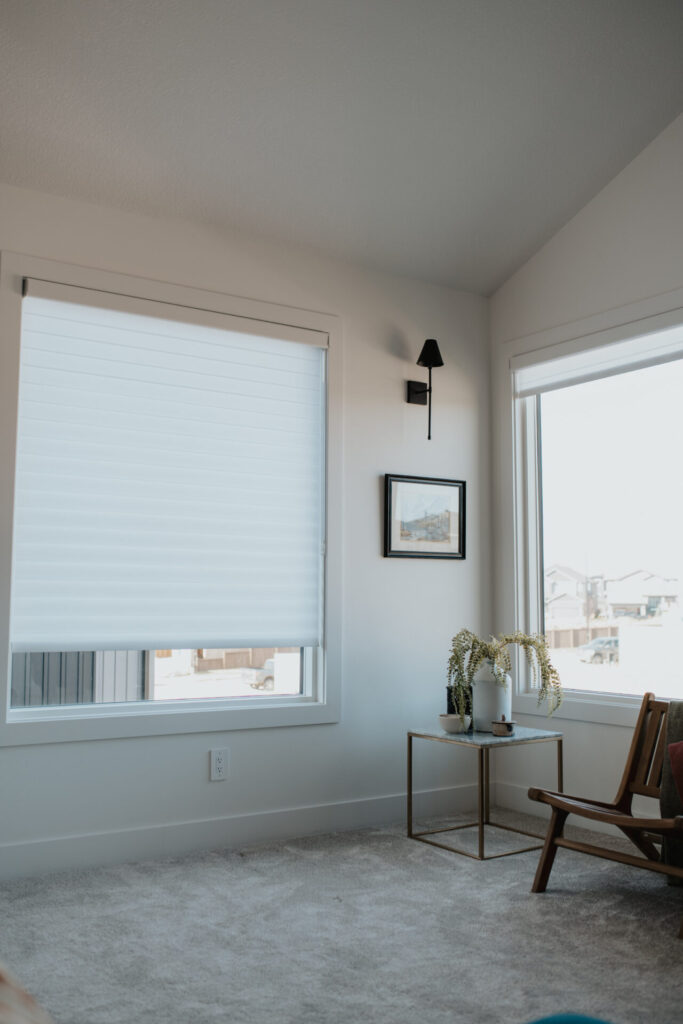
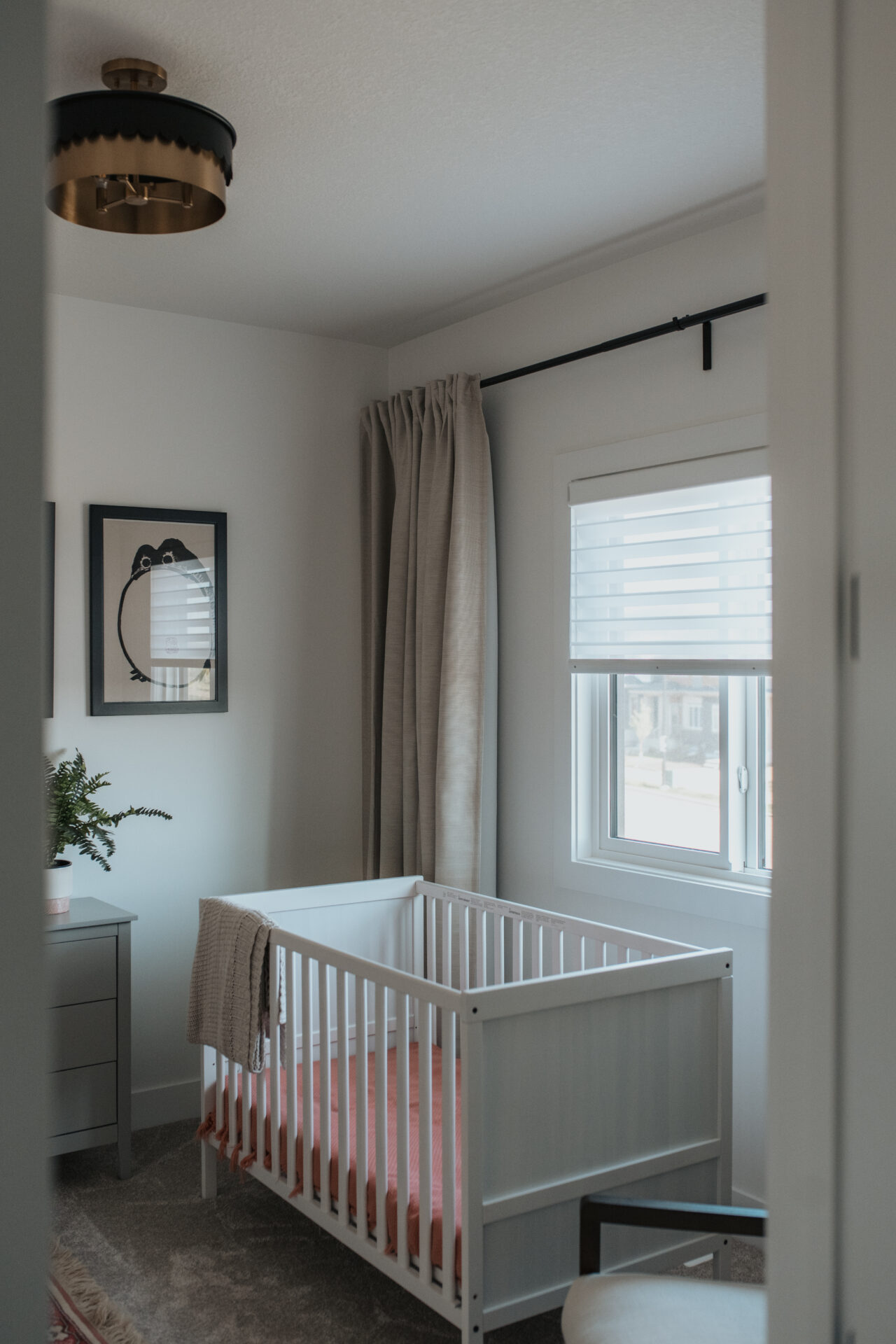
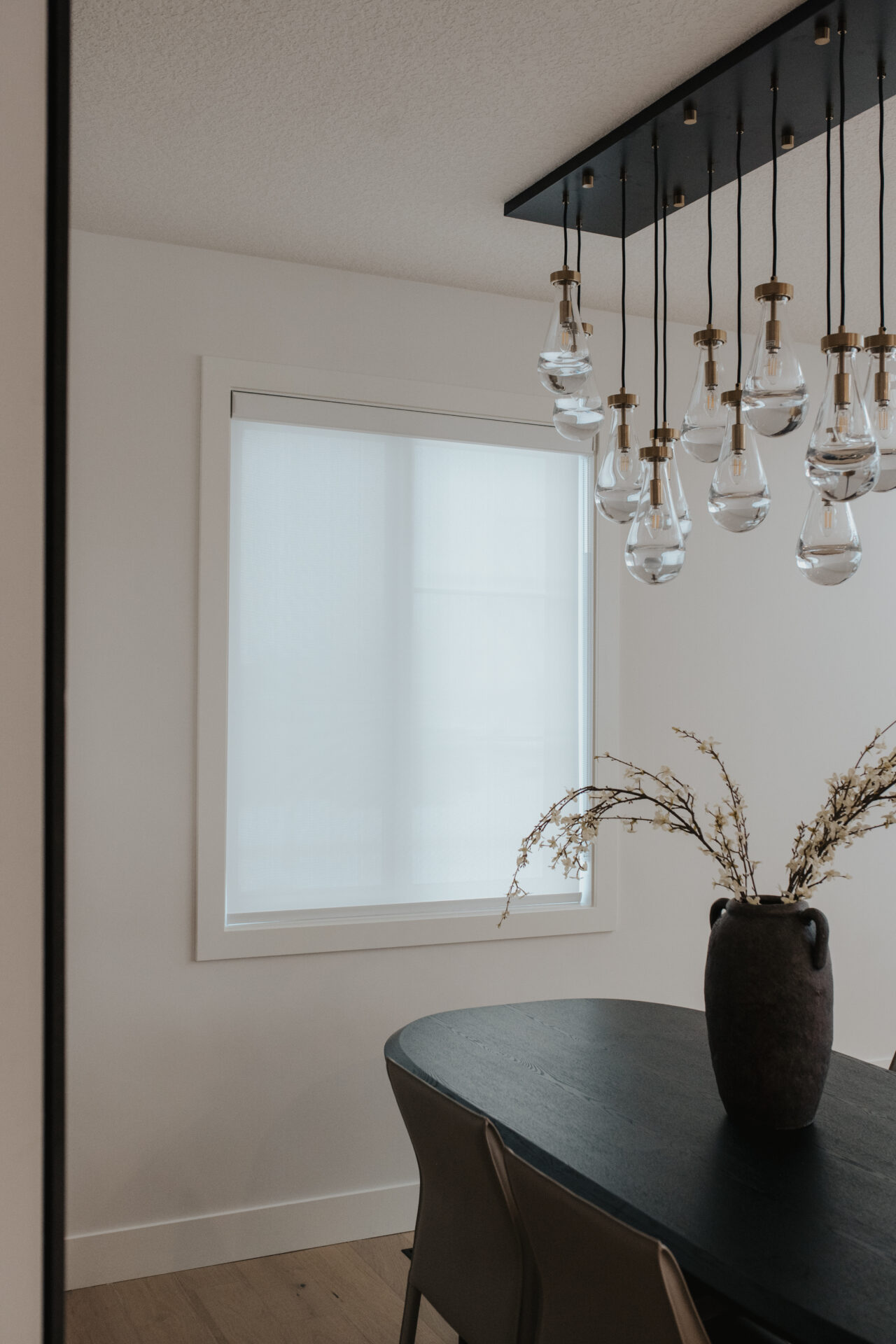
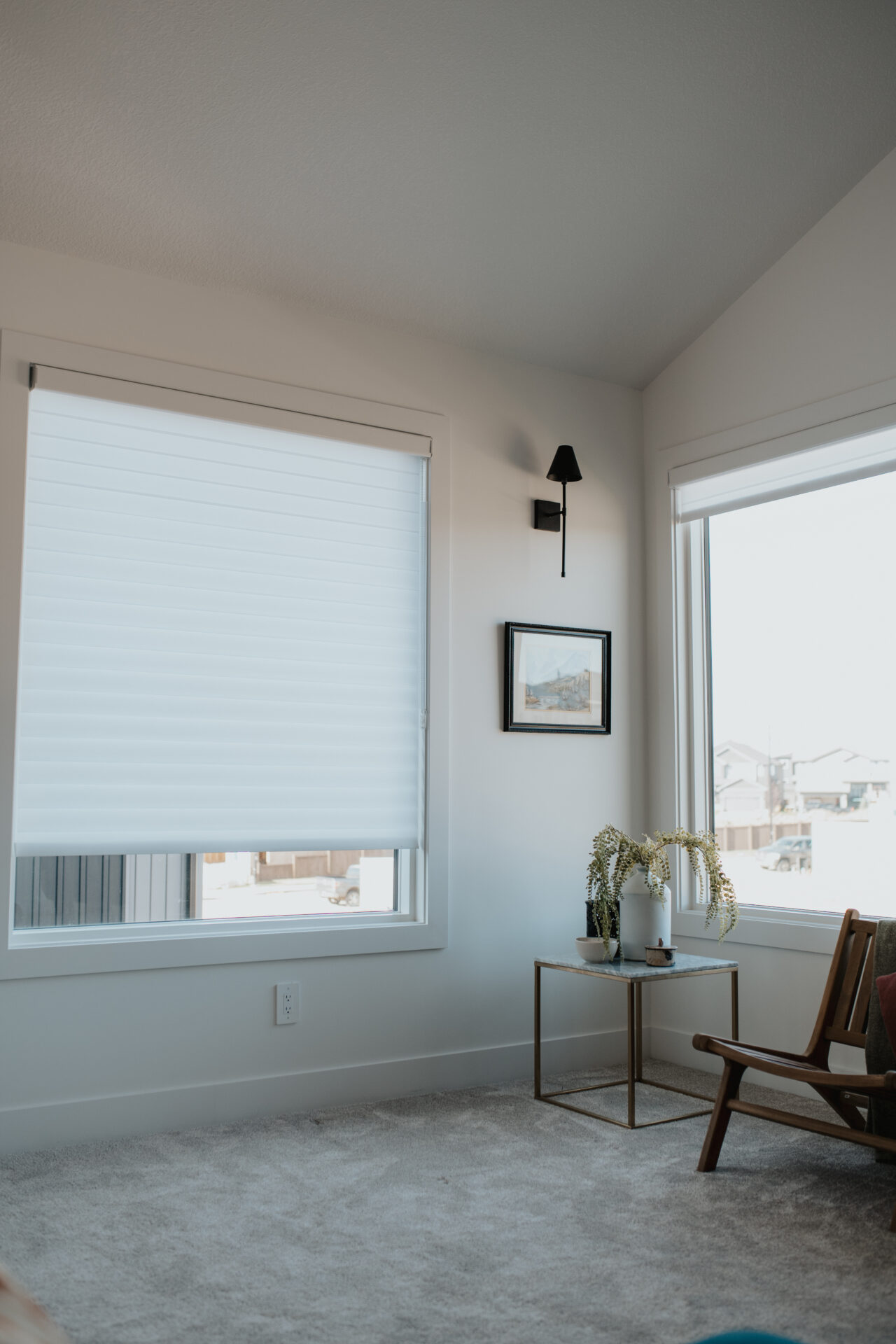
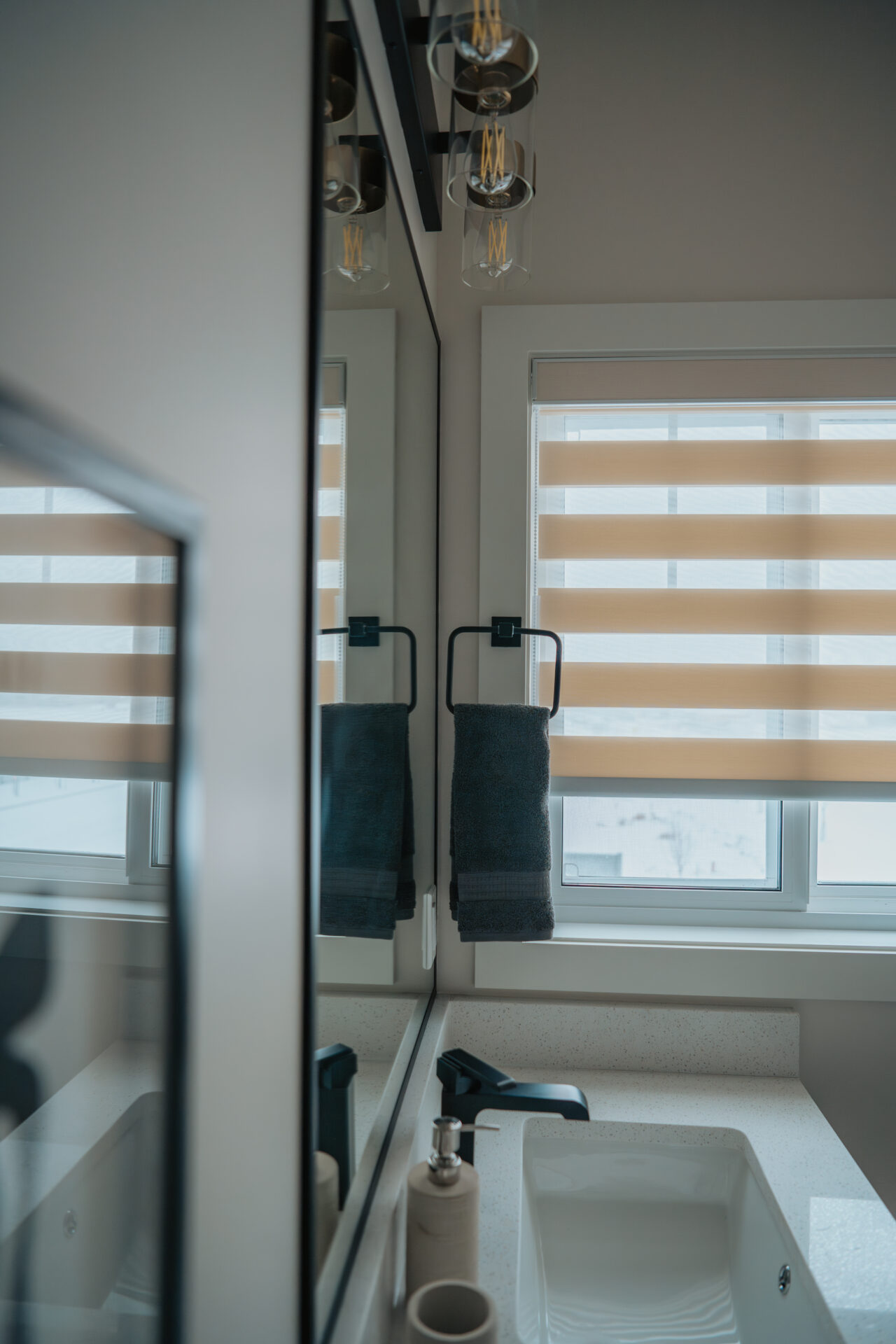
Nursery and bedroom installs by Novo Blinds.
Child Safety — Why Cordless Is Non-Negotiable
This section matters more than anything else in this guide. Health Canada’s Window Covering Safety Regulations — updated most recently to align with the 2022 standard — require that all window coverings sold in Canada be cordless or have inaccessible cords. The regulation exists because corded blinds have been linked to strangulation injuries and deaths in young children. Cords that dangle within reach of a crib, change table, or play area are a serious hazard. Every product we manufacture and install is cordless — cellular, roller, and motorized. There is no exposed cord, chain, or loop on any Novo blind. That’s the baseline, not an upgrade. Here’s where custom-fit matters for child safety specifically:- Stock-size shades from a box store often leave gaps between the blind and the window frame. A toddler can get fingers, hands, or their head between the blind and the wall. A custom-measured blind fits the opening precisely — no gaps, no access points.
- Aftermarket cord cleats (the little hooks you wrap excess cord around) are a band-aid. They rely on the parent remembering to wrap the cord every time. A cordless blind removes the hazard entirely rather than managing it.
- Tension devices on continuous-loop chains reduce the risk but don’t eliminate it. The safest nursery window covering has no cord, no chain, and no loop of any kind.
Room-by-Room: Nursery, Toddler Room, Shared Bedroom
Dedicated nursery (0 to 18 months)
Go full blackout. Double-cell cellular with side tracks is the top pick. Motorized if the budget allows and you want schedule-based control. Mount inside the window trim if the trim is deep enough (3 inches minimum for most cellular shades); outside-mount if not, extending at least 3 inches past the trim on each side to minimize top and side light leak.Toddler room (18 months to 4 years)
Same blackout spec, but think about durability. Toddlers pull on things. A cordless cellular is robust — the bottom rail lifts and lowers smoothly and snaps back into the side tracks. Avoid anything with a dangling cord or a delicate fabric panel that invites tugging. If you’re transitioning from a crib to a toddler bed, the child can now reach the window more easily — cordless is even more critical here than in the crib stage.Shared parent-baby room
Common in condos and smaller Edmonton homes — the baby sleeps in a bassinet or crib in the parents’ bedroom for the first 6 to 12 months. The blackout spec protects both the baby’s nap schedule and the parent’s sleep. Layer a blackout cellular with a drapery panel for maximum darkness if the parent is also a shift worker or light sleeper — see our shift workers and light sleepers guide for the layered setup. If only the baby needs the dark, the cellular alone with side tracks is usually enough.Edmonton’s Light — The Real Reason Off-the-Shelf Doesn’t Cut It
Edmonton’s latitude creates light conditions that most baby-room blinds sold online aren’t designed for. The products that work fine in Toronto or Vancouver — where summer daylight is 2 to 3 hours shorter — underperform here. Summer: 17+ hours of daylight. A 7 PM bedtime means the sun is still high. By 9 PM it’s golden hour, casting long horizontal rays that find every gap in a poorly sealed blind. The suction-cup travel blackout that held up in a hotel room fails in a south- or west-facing Edmonton nursery in July. Winter: 7.5 hours of daylight in December. Naps and bedtimes are naturally dark. But morning wake-ups at 8 AM can still catch a 9:15 AM sunrise — if the nursery faces east, the light arrives just as the baby should be settling into a second nap cycle. Energy impact: a well-insulated blackout cellular shade keeps the nursery 3 to 5 degrees cooler in summer afternoon heat and retains warmth in winter, reducing the load on your furnace and AC. Over the 3 to 5 years a child uses the nursery, the energy offset partially pays for the blind. This is especially relevant in newer Edmonton builds where triple-pane windows are standard but the window coverings are often the weakest thermal link. Spec the nursery for the June solstice. If it works on the longest day of the year, it works every other day too.Common Nursery Blackout Mistakes
- Buying “room darkening” and expecting blackout. Room darkening means the fabric reduces light; it doesn’t block it. In a nursery, the difference between 85% light reduction and 99.5% light reduction is the difference between a 45-minute nap and a 90-minute nap.
- Skipping side tracks or side channels. The single most common reason a new blackout blind doesn’t darken the nursery enough. Light leaks around the edges, not through the fabric. Budget for the edge-sealing upgrade.
- Mounting a stock-size shade that’s too narrow for the window. A 36-inch shade on a 37-inch opening leaves a bright strip on each side. Custom-measured blinds eliminate this — the blind fits the window, not the other way around.
- Using tape, foil, or suction-cup products as a permanent fix. These are fine for travel. They are not a durable nap-blackout setup. Adhesive residue damages window frames, foil traps heat against the glass, and suction cups fail in temperature swings — which Edmonton delivers in abundance.
- Ignoring the door. Hallway light under the nursery door can undermine an otherwise perfect blackout. A $15 door-bottom seal from the hardware store closes that gap.
- Forgetting about the monitor light. A baby monitor with a glowing green LED or a bright display screen adds light to the room. Turn the screen brightness down, cover the LED with a small piece of electrical tape, or angle the display away from the crib area.
Final Take — What We’d Recommend by Budget
- Best value ($220–$400/window): Cordless blackout roller shade with side channels. Does the job, looks clean, fully child-safe. Good pick for a nursery that will become a kid’s bedroom later.
- Best overall ($280–$480/window): Cordless double-cell blackout cellular with side tracks. Better light blocking, better insulation, quieter. This is what we install in most Edmonton nurseries.
- Best for hands-free parents ($450–$750/window): Motorized blackout cellular or roller. Schedule-based open/close, no cords, no entering the room to adjust. Worth it if you’re building a sleep routine around timed light transitions.
- Maximum darkness — shared room or extreme light sensitivity ($700–$1,100/window): Layered blackout cellular with side tracks plus thermal-lined drapery. The setup shift workers use — and it works just as well for a parent-baby shared room during Edmonton’s endless summer evenings.
Book Your Nursery Consultation
We measure and install blackout blinds for nurseries across Edmonton, Sherwood Park, Cavanagh, St. Albert, Keswick, Leduc, Spruce Grove, Fort Saskatchewan, Beaumont, Stony Plain, Grande Prairie, Red Deer, and the surrounding region. Free in-home consultation, written quote within 48 hours. Tell us your baby’s age and sleep schedule at the consultation — we’ll spec the nursery around your actual routine, including walking through what the room looks like at 9 PM in June. Right now, Novo is offering a Free 60-Second AI Mockup + $250 Alberta-Made Credit on orders $1,500+ — a good reason to try the visualizer before your consultation. Book your free consultation, try the room visualizer to preview blackout options in your nursery, or browse the photo gallery for finished nursery and bedroom installs. If you’re also setting up a home office in the same house, we can measure both rooms in one visit.Frequently Asked Questions
What are the best blackout blinds for a baby nursery?
The best blackout blinds for a nursery are cordless double-cell blackout cellular shades with side tracks. The cellular fabric blocks 99%+ of light, the side tracks seal the edges so no light leaks around the blind, and the cordless lift eliminates any strangulation hazard near the crib. For a cleaner look at a lower price, cordless blackout rollers with side channels are a strong alternative.Are cordless blinds mandatory for nurseries in Canada?
Health Canada’s Window Covering Safety Regulations require that all window coverings sold in Canada be cordless or have inaccessible cords. This applies to all rooms, not just nurseries. In a nursery specifically, cordless is essential because the crib places the child within arm’s reach of the window covering in many room layouts.How much do blackout nursery blinds cost in Edmonton?
In 2026 Edmonton pricing, a cordless blackout roller with side channels runs $220 to $400 per window installed. A cordless double-cell blackout cellular with side tracks costs $280 to $480 per window. Motorized options add $150 to $250 over the manual cordless price. All prices include custom measurement, manufacturing, and professional installation.Do blackout blinds help babies nap longer?
Yes. Light suppresses melatonin production, the hormone that initiates and sustains sleep. A properly blacked-out nursery — with edge-sealed blinds, not just blackout fabric — allows the baby’s brain to produce melatonin on schedule regardless of the time of day. This is especially important in Edmonton, where summer daylight extends past 10 PM and can interfere with a 7 PM bedtime.Should I get motorized blackout blinds for the nursery?
Motorized blinds are a strong choice if you want to open and close the nursery blinds without entering the room. You can schedule them to close before bedtime and open at wake time, which supports a consistent sleep routine. The motor produces a soft hum lasting 8 to 15 seconds — most babies sleep through it. Battery-powered motors avoid the need for wiring and recharge every 6 to 12 months via USB-C.What is the difference between blackout and room darkening for a nursery?
Blackout fabric blocks 99% to 100% of light through the material. Room darkening reduces light but still lets a meaningful amount through — typically blocking 80% to 95%. In a nursery, especially during Edmonton’s long summer days, room darkening is not enough. The remaining light is sufficient to suppress melatonin and disrupt nap schedules. Always specify blackout-rated fabric for a baby’s sleep space.Ready to blackout that nursery?
Free in-home consultation. We measure, recommend the right fabric, and install — one visit, one installer, done.
Book free consultationServing