

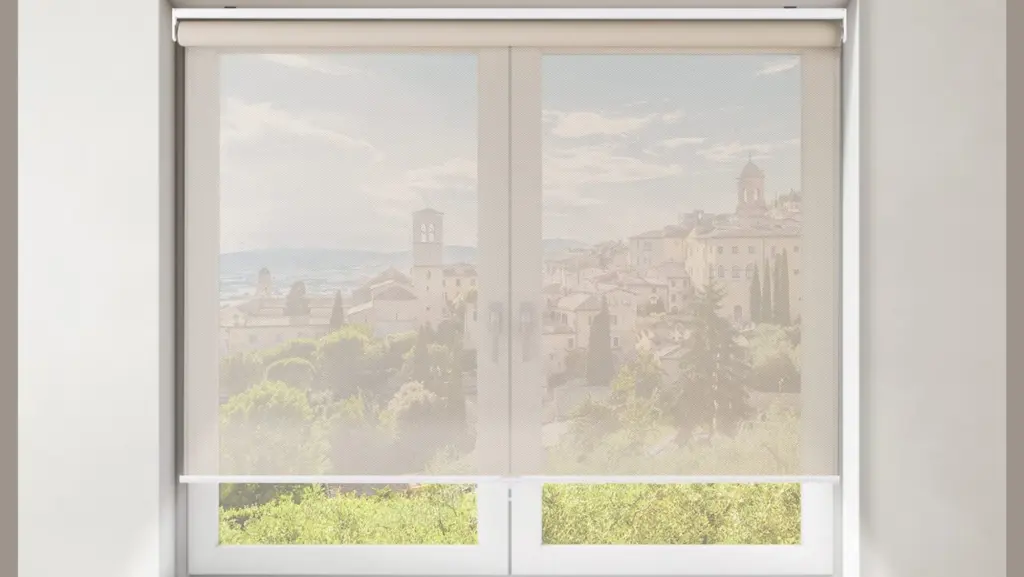
Start with Solar Roller Shades if glare is the problem and you want to keep some daytime view. Choose Zebra Blinds for adjustable bands of light, or Honeycomb Shades for soft pleats and cellular construction. If the room also needs privacy or darkness after sunset, plan for that separately.
Start with the room, not just the direction
South-facing windows can receive strong direct sun, but neighbouring buildings, trees, roof overhangs and the glass itself change the exposure. A small kitchen window and a tall great-room window may need different solutions.
- Glare: when does sunlight hit your screen, seating or work surface?
- Heat: which part of the room becomes uncomfortable, and at what time?
- View: how much outside visibility do you want while the shade is lowered?
- Privacy: what must the window covering do when the room lights are on at night?
Compare the useful options
Solar Roller Shades: glare control with a daytime view
Solar shades are Roller Shades made with an open-weave mesh. They can soften glare while retaining some outward view. The result depends on the fabric, colour, openness and lighting.
They are worth comparing for a living room or home office. Do not assume the daytime view provides nighttime privacy: when the lights are on inside, you may need an opaque second layer.
Zebra Blinds: change the balance through the day
Zebra Blinds shift sheer and solid bands against one another. You can adjust coverage as the sun moves without raising the whole blind. Compare samples for glare and evening privacy; the banded construction is not a full-blackout solution.
Honeycomb Shades: pleats and cellular construction
Honeycomb Shades form pockets of air within the fabric. That makes them worth considering when cellular construction matters more than keeping the view. Results depend on the window, fit and use; there is no single energy-saving outcome for every home.
Novo’s current Honeycomb range is cordless-only, so check whether you can comfortably reach the window.
Two layers: give day and night different jobs
A Solar Roller plus drapery can separate daytime glare control from evening coverage. A Solar Roller plus a Blackout Roller can serve a bedroom that needs both daylight and a darker sleeping space. Honeycomb with drapery is another option if you prefer pleats.
Check mounting space, access and the gaps around each layer. Two coverings add cost and bulk; they do not automatically eliminate heat, fading or all light.
Openness describes the weave, not the whole performance
Openness is the percentage of open area in the fabric. It is not the percentage of UV blocked, heat rejected or light transmitted. Compare the selected fabric’s specifications as well as its appearance.
- 1–3%: a less open weave to compare when glare control is a priority.
- 5–10%: a more open weave to compare when outward view matters.
- Either range: test the actual colour and fabric at the window; the number alone does not establish privacy or performance.
There is no automatic “right” percentage for every south-facing window. Compare samples at the time of day when the light is most troublesome.
Compare fabric colours in the room
A swatch on a showroom table cannot show the whole result. Place a light and a dark sample at the actual window, then compare the view, brightness and screen glare.
Ask for the fabric’s relevant solar and UV performance information if heat or fading is a priority. Colour and openness alone are not a guarantee of either. A window covering also cannot promise to prevent every cause of fading.
Make high windows easy to use
Compatible motorized Roller or Zebra options can make tall windows easier to operate. A remote may be enough; scheduled or smart-home operation depends on the selected motor and compatible controls or hub.
Confirm the setup before ordering. Do not assume every motor includes scheduling or that the same controls are available on every product.
Before you order
- Compare samples with direct sun on the window and with the room lights on after dark.
- Confirm how each fabric handles your actual glare, view and privacy needs.
- Check mounting depth, handles, furniture and access to the controls.
- Ask about joins between shades and any light around a blackout layer.
- Compare the full quote, including the fabric, controls, additional layers and installation.
Frequently asked questions
What are the best blinds for south-facing windows?
Compare Solar Rollers for glare and some daytime view, Zebras for adjustable bands, and Honeycomb for pleats and cellular construction. Choose around the room’s actual light, privacy and control needs.
Do solar shades block UV rays?
Solar fabrics can reduce UV transmission, but the amount depends on the selected fabric. Ask for its tested specification; openness alone does not give the UV-blocking percentage.
What openness factor should I choose for a south-facing window?
Compare less-open and more-open fabrics at your window. Consider glare, view and nighttime privacy together; 3% is not automatically the best choice for every room.
Are darker solar shades better than lighter ones?
Neither is automatically better. Compare light and dark samples for view, brightness and glare, and use the actual fabric specifications when assessing solar or UV performance.