

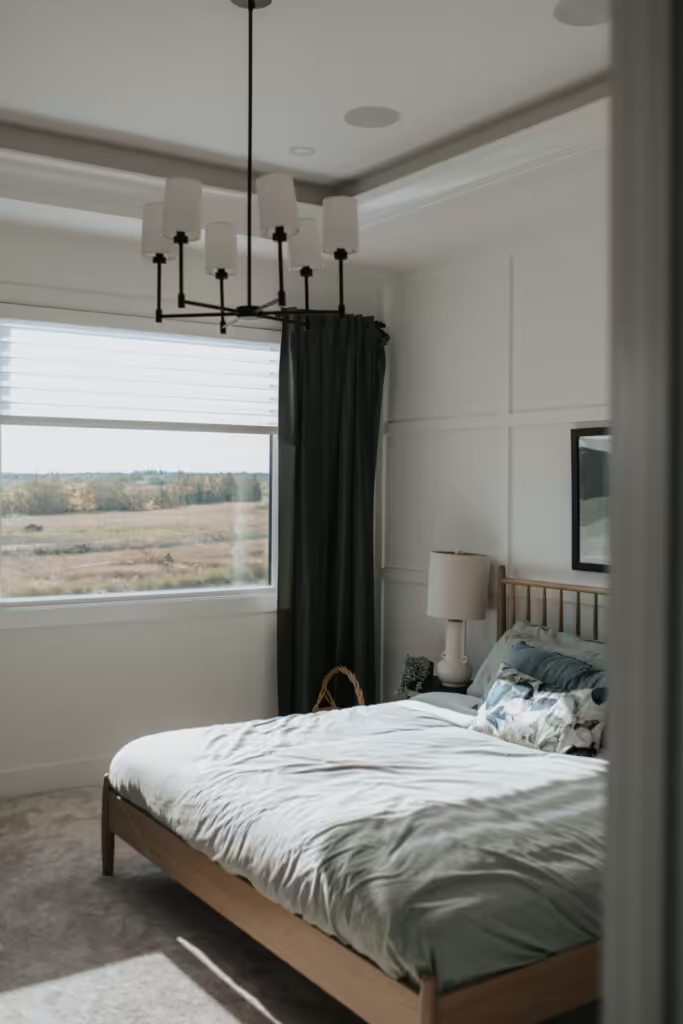
Novo Blinds · Edmonton
Blackout Blinds: 90% vs 99% vs 100% Light Blocking What’s the Real Difference?
Not all blackout blinds are equal. 90% still lets visible light through. 99% is good for most bedrooms. True 100% needs side channels. Here’s the breakdown.
90→100%
Range Explained
3–5 wk
Lead Time
4.8★
Google Rating
“Blackout” is the most over-promised word in window coverings. Every big-box roller shade slaps the label on the packaging. Every online listing says “blocks 100% of light.” Then you install the thing, walk into the room at noon, and see a bright halo around every edge of the window — plus a faint grey glow through the fabric itself. It’s darker, sure. But it’s not dark. Here’s the reality most people don’t hear until after they’ve bought: the majority of products labelled “blackout” block somewhere between 85% and 92% of incoming light. That’s room darkening. It is not blackout. The difference between 90%, 99%, and true 100% light blocking is not a marketing split — it’s a measurable gap you can see with your eyes, and it matters for sleep, shift work, nurseries, and home theatres. This post breaks down all three tiers — what each one actually looks like in a room, what creates the gap between them, and which one you actually need.
Quick comparison
Here’s the practical breakdown before we get into details: | | 90% (Room Darkening) | 99% (Blackout) | 100% (True Blackout) | |—|—|—|—| | What you see at noon | Visible glow around edges, faint light through fabric | Very dark room, thin light lines at edges | Pitch black — no visible light | | Fabric | Standard opaque roller | Quality blackout fabric, often back-coated | Same quality fabric | | Hardware | Basic brackets, no edge sealing | Inside mount with tight fit | Cassette headbox + side channels | | Best for | Living rooms, offices, kitchens | Most bedrooms, guest rooms | Nurseries, shift workers, home theatres | | Price per window (installed) | $180 – $320 | $250 – $420 | $380 – $600 | The fabric is only half the equation. The hardware — how the blind mounts to the window and what seals the edges — is what separates each tier in practice.What “blackout” actually means (and doesn’t)
There is no industry-wide standard that defines “blackout” as a specific light-blocking percentage. No regulatory body certifies a blind as blackout the way Energy Star certifies appliances. Manufacturers use the word however they want, and most use it generously. What you’re actually dealing with is two separate measurements that most product listings conflate into one: Fabric opacity — how much light passes through the material itself when you hold it up to a window. A quality blackout fabric blocks 99% to 99.9% of light through the weave. Most cheaper fabrics labelled “blackout” block 90% to 95%. You can test this yourself: hold the fabric against a bright window. If you can see the outline of your hand behind it, it’s room darkening, not blackout. Installed light blocking — how much light gets into the room once the blind is mounted on the window. This is the number that actually matters for your sleep, and it’s always lower than the fabric spec. Why? Because light leaks around the edges. The gaps between the blind and the window frame — top, bottom, left, right — let in far more light than whatever small percentage passes through the fabric. A 99.9% opacity fabric mounted with basic brackets and no edge sealing might deliver 88% to 92% installed light blocking. The fabric is doing its job. The installation isn’t finishing the job. That’s the gap most people don’t realize exists until they’re lying in bed staring at a bright rectangle of light around their “blackout” blind.The three tiers
90% light blocking — room darkening
This is what most people actually get when they buy a “blackout” roller shade from a box store or order one online. The fabric itself might be genuinely opaque, but the blind mounts on basic brackets with no edge-sealing mechanism. Light pours in from every side. What 90% looks like in a room: at noon on a sunny day, you can see the outline of furniture. You can read your phone without the backlight bothering you, but you wouldn’t need the flashlight to find the door. There’s a visible bright line along both vertical edges and often a glow at the top and bottom. On a south-facing window in June, that edge glow is bright enough to cast soft shadows on the opposite wall. A standard roller shade without side channels falls into this category — even with premium blackout fabric. So does an outside-mounted cellular shade with no side tracks. The fabric isn’t the weak link. The fit is. Good for: living rooms where you want to cut glare for TV watching, home offices where you need screen contrast, kitchens and dining areas. Anywhere you want it darker but don’t need it dark.99% light blocking — genuine blackout
This is the tier where most bedrooms should land. You get here by combining two things: a fabric that genuinely blocks 99%+ of light through the material, and an inside mount that fits precisely within the window opening — leaving gaps of 3 mm or less on each side. What 99% looks like in a room: at noon, the room is dark. You can’t read a book. You’d need a few seconds for your eyes to adjust before you could navigate to the door. But if you look directly at the window, you can see thin hairline light lines along the edges — especially at the top where the blind meets the header. It’s dark enough for sleep. It’s not cave-dark. Getting to 99% requires custom measurement. A blind that’s 5 mm too narrow leaves a light gap you’ll notice every morning. A blind that’s precisely fitted to the opening — and mounted inside the window frame rather than on the face of the wall — closes most of those gaps. A custom inside-mounted blackout roller shade or a blackout cellular shade hits this tier consistently. No side channels needed if the fit is precise and the window frame has enough depth to recess the blind. Good for: master bedrooms, kids’ bedrooms, guest rooms. Most people who say they want “blackout” actually want this tier — dark enough that ambient light doesn’t wake you, but not so over-engineered that you’re paying for hardware you don’t need.100% light blocking — true blackout
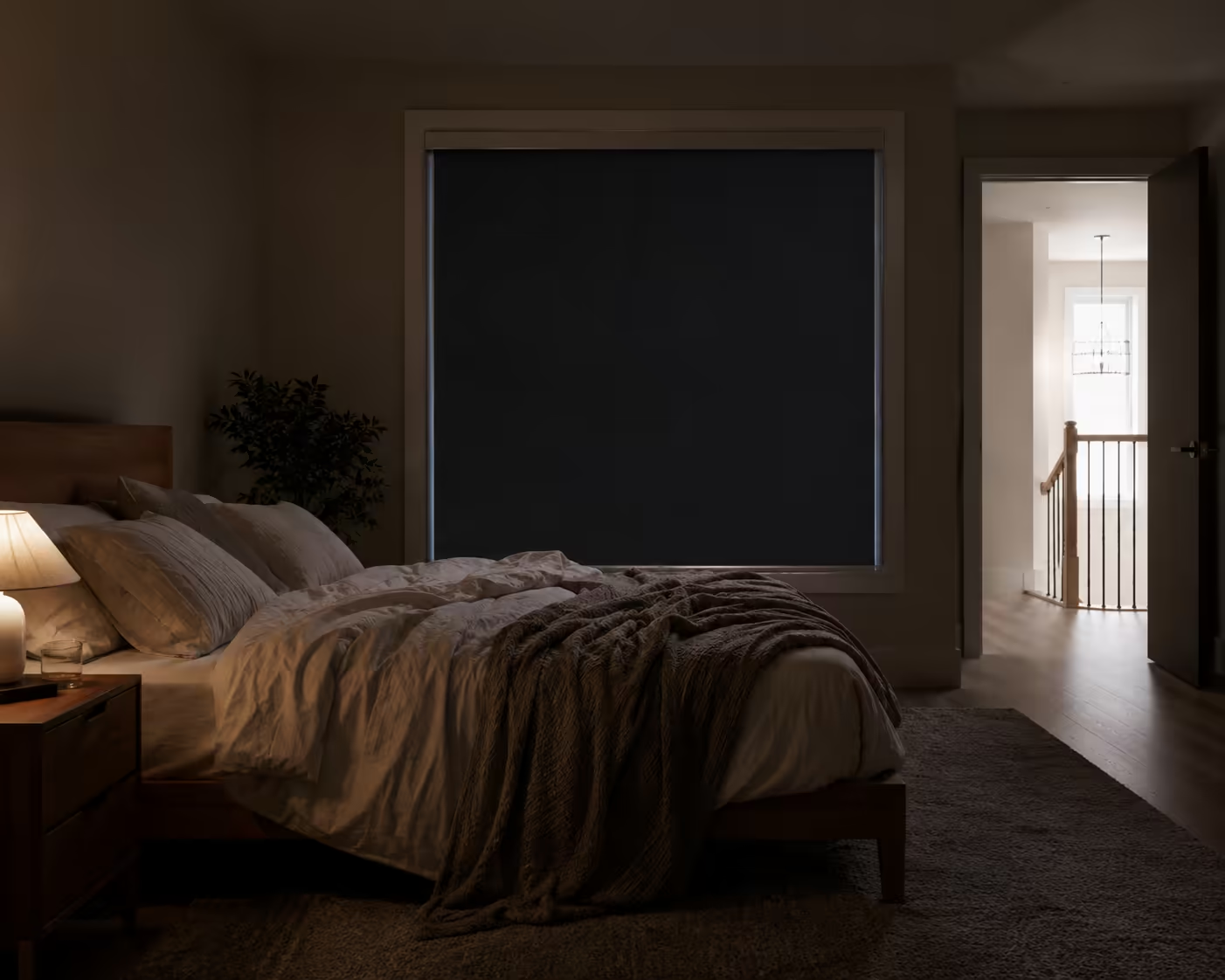
This is the real thing. Zero visible light. You walk into the room at noon and you cannot tell whether the window is on the left wall or the right wall. Your eyes never adjust because there’s nothing to adjust to. Getting to 100% requires sealing the light path at every edge. That means one of two approaches: Cassette headbox + side channels. The cassette is a housing at the top that encloses the rolled-up fabric — no light leaks from the top. Side channels are U-shaped tracks that run along both vertical edges of the window frame, and the blind fabric slides inside them. The bottom rail seats into a light-blocking strip. Every edge is sealed. Double-bracket drapery with overlap. Blackout drapery panels mounted on a return bracket that wraps around the sides of the window frame, with enough overlap to eliminate edge gaps. This is an older approach — it works, but it’s bulkier and harder to automate. The cassette-and-channel system is what we install most often for true blackout applications. It adds $100 to $180 per window over a standard inside-mount blackout roller, and it works with both manual and motorized configurations. The visual difference is subtle — the channels are slim, typically 20 mm wide, and sit flush inside the window frame. Good for: nurseries where a six-month-old needs pitch dark at 7 PM in June (we wrote a full nursery blackout guide if that’s your situation), shift workers who sleep during daylight hours, and dedicated home theatres where any ambient light washes out the projector. If you work at one of the refineries or plants around Sherwood Park and sleep days after night shifts, this is the tier that actually lets you sleep — our shift worker guide covers the full setup.Our Work
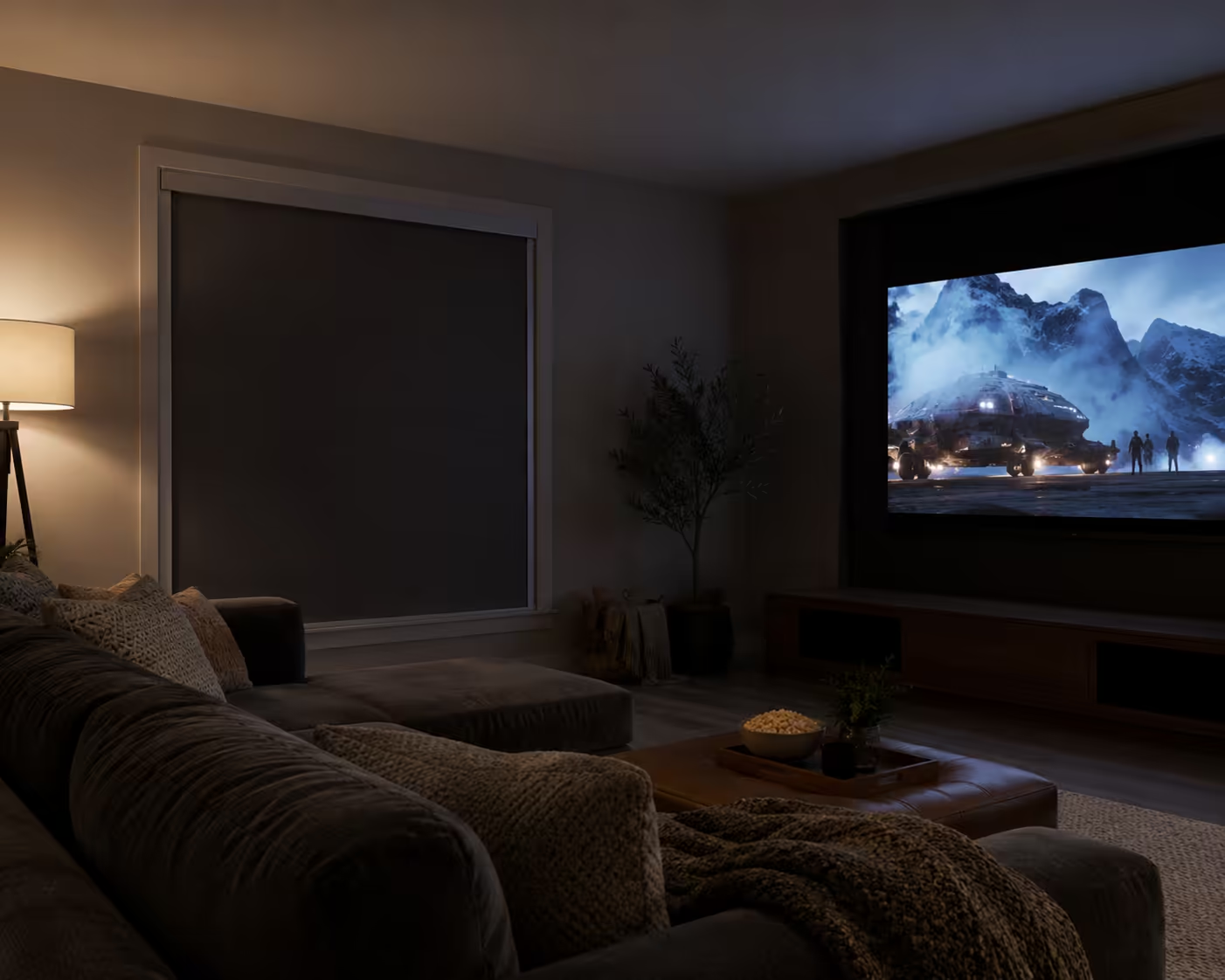
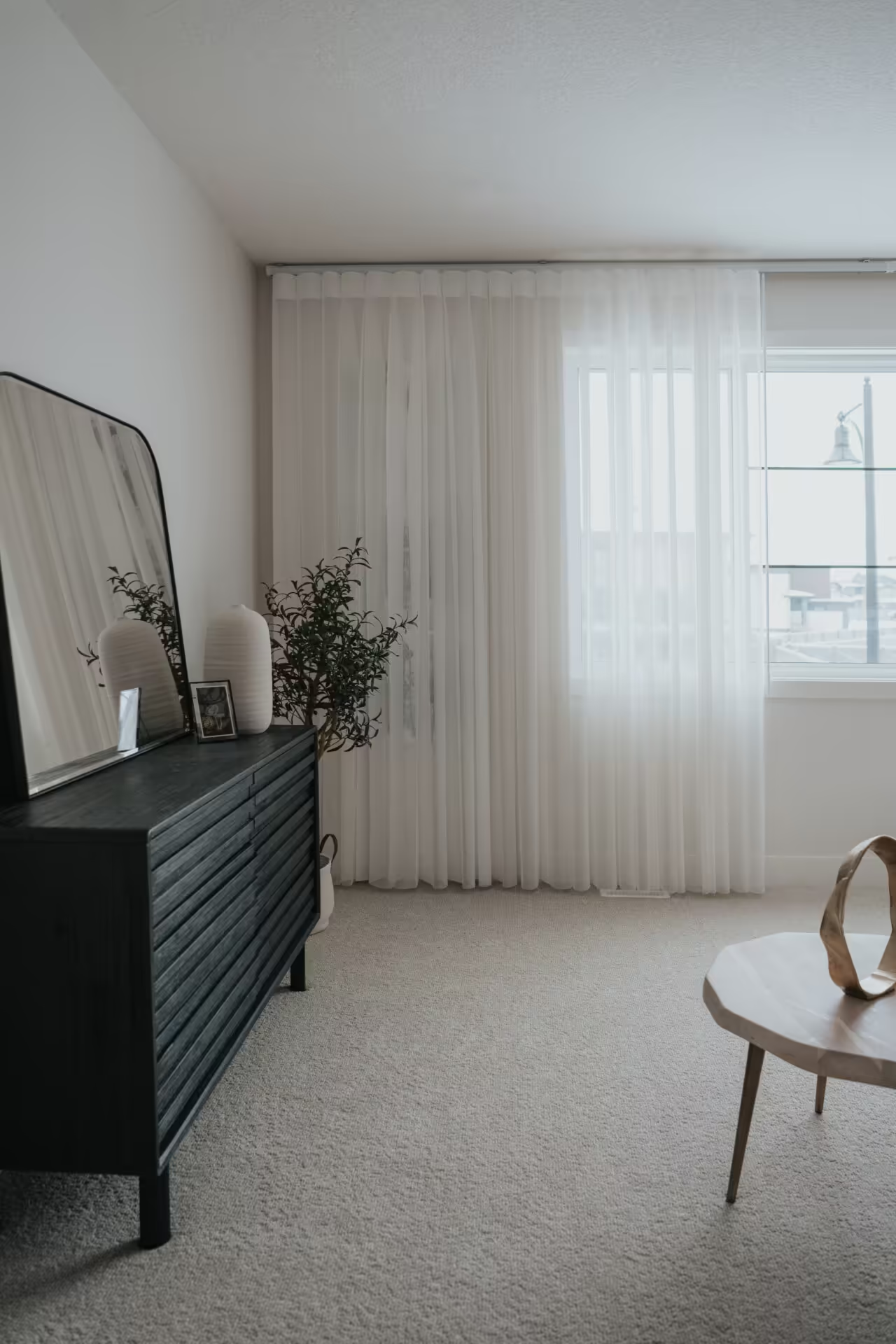
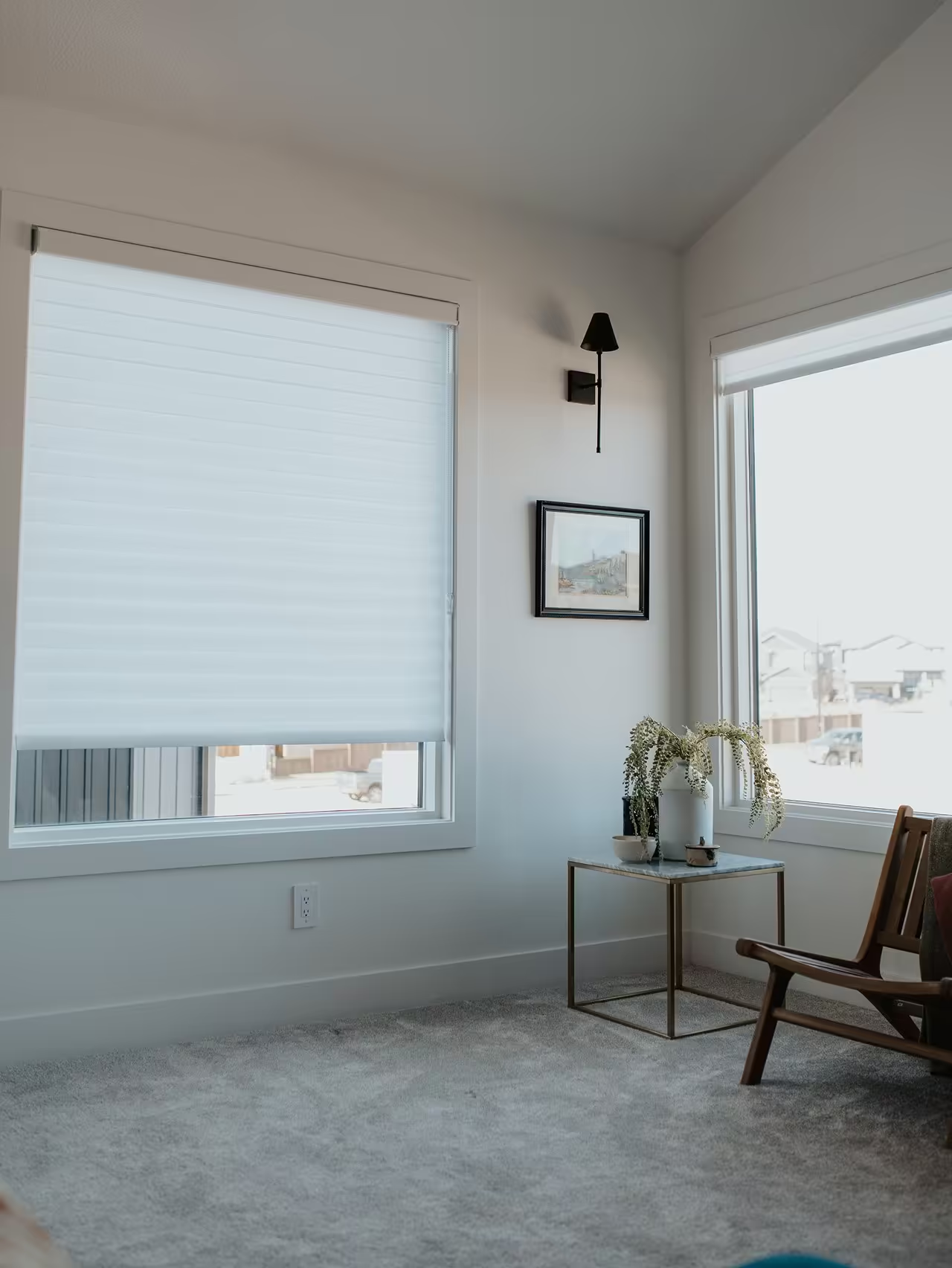
Blackout installations across Edmonton.
What creates light leakage
Five factors determine how much light sneaks past a blackout blind. Understanding them helps you diagnose why your current setup isn’t dark enough. Mount type — inside vs. outside. An inside-mounted blind sits within the window frame opening. An outside-mounted blind covers the opening from the face of the wall. Inside mount generally performs better because the frame itself acts as a light baffle on all four sides — but only if the frame is deep enough to recess the blind (typically 75 mm minimum). An outside mount on a shallow frame leaves the blind floating in front of the opening, with light pouring around every edge. Gap size. The difference between a 2 mm edge gap and an 8 mm edge gap is enormous. Light is aggressive. A gap you can barely see when you look at the blind becomes a bright line when the room behind it is dark and the sun is hitting the glass. Custom measurement closes gaps to 2 to 3 mm. Stock sizes from a shelf leave 10 to 15 mm on average — sometimes more. Fabric construction. Not all “blackout” fabrics are equal. A single-layer polyester with a foam backing might block 92%. A triple-weave or aluminium-coated blackout fabric blocks 99.5%+. White-backed fabrics reflect more heat but allow slightly more light bleed at the edges because reflected light bounces off the frame. Black-backed fabrics absorb light at the edges but run warmer. Window frame depth. Deep frames (100 mm+) act as a natural light trap around the blind. Shallow frames (50 mm or less) don’t provide enough recess, and the blind sits nearly flush with the wall — light walks right around it. If your frames are shallow, side channels become essential for any real blackout performance. Headrail gap. The top of the blind is the most common leak point. A standard open roller leaves a 15 to 25 mm gap between the rolled-up fabric and the header. That’s a stripe of direct sunlight across the top of the window every morning. A cassette headbox eliminates it.The Edmonton factor
Edmonton sits at 53.5° north latitude. That means roughly 17 hours of daylight at the summer solstice — sunrise before 5:10 AM, sunset past 10 PM, and civil twilight that never fully fades to black. If you’re trying to sleep before 11 PM or after 4 AM between May and August, you need real blackout performance, not a label. This matters most for three groups in our market: Shift workers. Edmonton’s industrial corridor — the refineries around Sherwood Park and Fort Saskatchewan, the plants along Highway 15, the distribution centres running 24-hour operations — puts thousands of people on rotating shifts. If you’re sleeping 8 AM to 4 PM in June, a 90% room-darkening shade is not going to cut it. You need 100% — cassette, side channels, the full system. We see this request weekly during spring and summer. Our shift worker blackout guide covers the complete setup. Nurseries. Baby bedtime at 7 PM means putting a child to sleep with four hours of sunlight left. Baby wake-up at 5 AM means the sun has already been up for nearly an hour. Both ends of the sleep window need real blackout, not room darkening. See our nursery blackout guide for the full product breakdown. Home theatres. Even a small amount of ambient light washes out a projector. If you’ve invested in a 4K projector setup in a basement or bonus room, 99% might not be enough — that 1% hairline edge glow shows up as a visible haze across a 120-inch screen at low black levels.Cost comparison — what each tier actually runs
Pricing below is for 2026 Edmonton, custom-measured and professionally installed, per window. Exact cost depends on window size, fabric choice, and whether you add motorization. 90% (room darkening): $180 to $320 per window. Standard roller shade with blackout-labelled fabric, basic brackets, no edge sealing. This is what you’d get from a big-box store — except custom-measured to actually fit. 99% (genuine blackout): $250 to $420 per window. Custom inside-mount blackout roller or cellular shade with precise fit. No side channels needed if the window frame is deep enough. 100% (true blackout): $380 to $600 per window. Cassette headbox with side channels on a blackout roller or cellular. Add $150 to $250 for motorization if you want scheduled open/close or phone control. The jump from 90% to 99% is mostly about measurement precision and fabric quality — it adds $70 to $100 per window. The jump from 99% to 100% is about hardware — the cassette and side channels add another $100 to $180. Whether that last 1% is worth the investment depends entirely on the room and who’s sleeping in it.Common mistakes
Buying “blackout” on the label without checking the fabric. If the product page doesn’t specify the fabric’s light-blocking percentage, it’s probably 88% to 92%. Room darkening, not blackout. Measuring loosely. A blind that’s 10 mm too narrow creates a 5 mm light gap on each side. At 3 AM in June when the sun is already coming up, that gap is a bright vertical line on each side of the window. Custom measurement eliminates this. Skipping the top. You can have perfect side channels and a precisely fitted roller — but if the headrail is exposed at the top, a bar of light comes through every morning. A cassette headbox or a deep inside mount with a pelmet solves it. White walls amplifying edge glow. Light that leaks around the edges bounces off white walls and ceilings, spreading the glow across the room. In a bedroom or nursery, this is more noticeable than you’d expect. Side channels or deeper frames cut the source instead of chasing the symptom. Choosing outside mount when inside mount was possible. Outside mount is sometimes necessary — if the frame is too shallow or the trim profile won’t allow an inside mount. But when you have the option, inside mount almost always delivers better blackout performance because the frame acts as a light trap.What we’d recommend — by room type
Master bedroom: 99% is the right tier for most couples. A custom inside-mount blackout roller with precise fit. Skip the side channels unless one partner is extremely light-sensitive or you have shallow window frames. Budget $250 to $420 per window. Kids’ bedroom: 99% as well. Same recommendation as the master. If your child is a light sleeper and the room faces east, consider upgrading to 100% with side channels on that one window. Nursery: 100%. No compromise. Cassette plus side channels, cordless or motorized. The extra $100 to $180 per window pays for itself in sleep — yours and the baby’s. Read our full nursery guide for specific product recommendations. Shift worker bedroom: 100%. Same setup as the nursery — cassette, side channels, and consider motorization so you can close the blinds from your phone before a day sleep. If you’re near Sherwood Park or Fort Saskatchewan, we do these installs regularly. Living room / office: 90% is fine. A standard roller shade or zebra blind in blackout fabric cuts glare for screens without making the room feel like a cave during the day. Home theatre: 100%. You’ve already spent thousands on the projector. Spend the extra $100 to $180 per window to eliminate the ambient light that washes out your contrast ratio. Not sure which tier fits? Use our free room visualizer to see how different blackout options look in your specific window, or get in touch for a free consultation.Frequently asked questions
Is there really a visible difference between 90% and 99% blackout? Yes — a significant one. At 90%, you can see furniture outlines and a bright glow around the window edges at noon. At 99%, the room is dark enough that you need a few seconds for your eyes to adjust. The jump is the difference between “dimmer” and “actually dark.” Can I get 100% blackout without side channels? Not reliably. Even the best blackout fabric mounted with standard brackets leaves edge gaps that let light in. Side channels seal those gaps. A cassette headbox seals the top. Without both, you’ll top out around 95% to 98% in practice — which is good, but not pitch-black. Do cellular (honeycomb) shades block more light than rollers? Through the fabric, a double-cell blackout cellular blocks about the same amount of light as a quality blackout roller — 99%+. The difference is in the edges. Cellular shades with side tracks seal the edges more completely than a roller on standard brackets. But a roller with side channels matches or beats a cellular with side tracks. At 100%, the hardware matters more than the fabric type. Does blackout fabric colour matter? Yes. White-backed blackout fabric reflects more solar heat — better for energy efficiency — but reflects a small amount of light sideways at the edges. Black-backed or dark-backed fabric absorbs that light instead, reducing edge glow. For maximum blackout in a nursery or shift-worker bedroom, darker backing performs slightly better. For most bedrooms, the difference is minor. How long does a blackout blind installation take? A single window takes 20 to 30 minutes to install, including side channels or a cassette headbox. A typical three-bedroom home with 6 to 8 windows takes about half a day. We measure first, manufacture to those measurements, and install in a single visit. Are motorized blackout blinds worth the extra cost for a bedroom? For most bedrooms, manual cordless blackout is sufficient — you close the blind once at night and open it in the morning. Motorized makes sense when you want scheduled open/close (shift workers, nurseries), when the window is hard to reach (behind a bed or above a tub), or when you have many windows and want one-tap whole-house blackout. The motorized options page covers the full feature set.Need real blackout — not just marketing blackout?
Free in-home consultation. We measure light gaps, recommend the right density, and install with side channels if needed.
Book free consultationServing