

Novo Blinds · Edmonton
Keeping Kids’ Rooms Cool and Dark This Edmonton Summer
Edmonton summer means 17-hour days and overheated bedrooms. Blackout + heat-rejecting blinds that help kids sleep — cordless, child-safe, custom-fit.
100%
Cordless Safe
3–5 wk
Lead Time
4.8★
Google Rating
It’s 9 PM on a Wednesday in late June. The sun is still above the roofline. Your five-year-old is doing laps around the hallway in bare feet because his bedroom feels like the inside of a parked car — 26°C and climbing, thanks to the west-facing window that’s been soaking up direct sun since 4 PM. The $30 box-store roller shade you bought three years ago is doing approximately nothing. It’s not blocking light, it’s not rejecting heat, and the dangling cord is something you’ve been meaning to deal with since the baby stage. The kid is wired, the room is bright, and bedtime is a fantasy. This is an Edmonton summer problem. And it has a straightforward fix — if you treat the two culprits separately.
The short answer
Cordless blackout cellular shades are the best all-around pick for kids’ rooms in Edmonton. They block light for sleep, reject heat for comfort, and have no cords anywhere. Add motorized if you want scheduled closes at bedtime — the blinds drop at 8:30 PM without you walking in to do it.The Two Problems — Light and Heat
Parents usually describe the issue as one thing: “the room is too hot and bright.” But light and heat are separate problems with different fixes, and Edmonton summer makes both of them worse at the same time. Light disrupts sleep. Kids’ brains — especially under age 10 — are more sensitive to ambient light than adult brains. Melatonin production starts dropping when the room isn’t dark enough, and in Edmonton, “not dark enough” describes every bedroom from May through August. Sunset in late June is past 10 PM. Civil twilight lingers until nearly 11 PM. A child with a 7:30 or 8 PM bedtime is fighting 2+ hours of visible daylight. That’s not a discipline issue — it’s a biology issue. Heat makes the room uncomfortable. A west-facing or south-facing kid’s bedroom can reach 26°C to 29°C by early evening on a 28°C day, even with the thermostat set to 21°C. The window is the problem. A standard double-pane window with no covering passes roughly 2,000 to 2,500 BTUs per hour of solar heat into the room when the afternoon sun hits it directly. That’s the thermal equivalent of running a small space heater in your child’s bedroom from 3 PM to 9 PM. Treat light and heat as two separate layers. A product that blocks light but doesn’t reject heat leaves you with a dark, hot room. A product that rejects heat but lets light through leaves you with a cool, bright room. The right setup handles both.Light Blocking for Sleep
True blackout in a kids’ room requires three things: the right fabric, sealed edges, and the right mount. Blackout fabric means the material itself blocks 99% or more of visible light. This is different from “room darkening,” which blocks 80% to 95%. In a room-darkened bedroom at 8 PM in June, your child can still see every toy on the shelf. In a properly blacked-out room, they can’t — and that’s the signal their brain needs to start producing melatonin. Side channels or side tracks seal the light gaps between the blind and the window frame. Without them, even the best blackout fabric leaves a bright stripe down both sides of the window. That stripe is enough to cast a visible glow on the opposite wall — and enough to keep a light-sensitive kid awake. Inside mount vs outside mount. Inside mount — where the blind sits within the window trim — looks cleaner and works well if the trim depth is at least 3 inches. Outside mount — where the blind covers the trim and extends past it — blocks more light because it covers the gaps above and beside the frame. For a kid’s room where maximum darkness matters, outside mount with a 3-inch overlap on each side is the better call. For rooms where aesthetics matter more, inside mount with side channels gets you 90% of the way there. How much darkness do kids actually need? Research on pediatric sleep suggests that children under 5 need near-total darkness for optimal melatonin production — think pitch-black, where you can’t read the titles on a bookshelf. Kids aged 5 to 10 can tolerate slightly more ambient light, but a room that’s meaningfully darker than the hallway still produces better sleep onset times. Teenagers are a different story — their circadian shift means they’re fighting biology regardless — but keeping the room dark still helps.Heat Rejection for Comfort
Blocking light and blocking heat overlap but aren’t the same thing. A plain blackout roller shade blocks light effectively but can actually trap heat between the fabric and the glass, turning that air pocket into a radiator. The right heat-rejecting setup reflects solar energy back outside before it enters the room. Reflective or white backing on blackout fabric bounces solar radiation back toward the window instead of absorbing it. A blackout cellular shade with a white-backed exterior layer reflects 60% to 70% of incoming solar energy. A dark fabric without reflective backing absorbs that energy and re-radiates it into the room. Cellular air pockets add insulation between the window and the room. A double-cell honeycomb shade adds R-3 to R-4.5 to the window assembly. That insulating layer slows heat transfer in both directions — it keeps summer heat out and winter warmth in. The same shade that makes a kid’s room comfortable in July saves energy in January. Temperature difference with proper blinds: a well-fitted blackout cellular shade with white backing and side tracks typically drops room temperature by 3°C to 5°C compared to an uncovered west-facing window on a 28°C day. That’s the difference between a room that feels stuffy at bedtime and one that feels comfortable. It won’t replace air conditioning on the hottest days, but Edmonton only hits 30°C+ a dozen times a summer — for the other 80 hot days, good blinds are enough.Child Safety — Cordless Is Non-Negotiable
Health Canada’s Window Covering Safety Regulations require that all window coverings sold in Canada be cordless or have inaccessible cords. The regulation exists because corded blinds have caused strangulation injuries and deaths in young children. Cords that hang within reach of a bed, dresser, or play area are a serious hazard — and kids climb. Every product we manufacture and install is cordless. No chains, no pull cords, no continuous loops. That’s the baseline at Novo, not an upgrade. Cordless lift mechanisms use a spring-loaded system. You pull the bottom rail down to lower, give a gentle tug to retract. Nothing dangles. Nothing loops. A child can reach the bottom rail but there’s nothing to wrap around a neck, wrist, or furniture leg. Motorized eliminates all manual components. A motorized shade has no cord, no chain, and no bottom-rail lift. The motor does all the work. For families with multiple kids — including toddlers who pull on everything — motorized is the most child-safe option available. Battery-powered motors recharge via USB-C every 6 to 12 months and require no wiring to the window. Stock-size shades leave gaps. A 36-inch shade on a 37.5-inch opening leaves exposed space on each side — space a toddler’s fingers or head can fit into. Custom-measured child safe window coverings eliminate gaps entirely. The blind fits the window, not the other way around.Product Options for Kids’ Rooms
Blackout Cellular — Top Pick
A cordless double-cell blackout cellular shade with side tracks is what we install in most kids’ rooms across Edmonton. It handles both problems — light blocking and heat rejection — in one product. The double-cell construction insulates, the blackout fabric blocks light, the side tracks seal the edges, and there are no cords. Price range in 2026 Edmonton: $280 to $480 per window, custom-measured and installed.Blackout Roller with Side Channels
A cordless blackout roller with side channels is a clean, modern alternative. The roller fabric wraps around a tube at the top — lower profile than a cellular. Side channels seal the light gaps the same way side tracks do on a cellular. Slightly less thermal insulation than a double-cell honeycomb, but the price is lower: $220 to $400 per window installed. Good pick for older kids’ rooms where the look matters and maximum insulation isn’t critical.Motorized Roller — Scheduled Bedtime Close
The parent’s favourite. Set a schedule: blinds close at 8:15 PM, 15 minutes before the bedtime routine starts. The room is already dark and cooling when you walk in with the toothbrush. In the morning, the blinds open at 7 AM — gentle light wakes the child naturally instead of a parent flipping a switch. Motorized blackout blinds add $150 to $250 per window over the manual cordless price. Battery-powered, no wiring needed.Layered: Sheer + Blackout
For a bedroom that doubles as a playroom during the day, a dual setup works well — a light-filtering roller shade for daytime glare control layered behind a blackout cellular for bedtime. During the day, the sheer stays down and the blackout stays raised. At bedtime, lower the blackout over the sheer. The room goes from bright and airy to dark and cool in one pull. This setup costs more (two treatments per window) but gives the most flexibility for rooms that need to serve double duty.Our Work
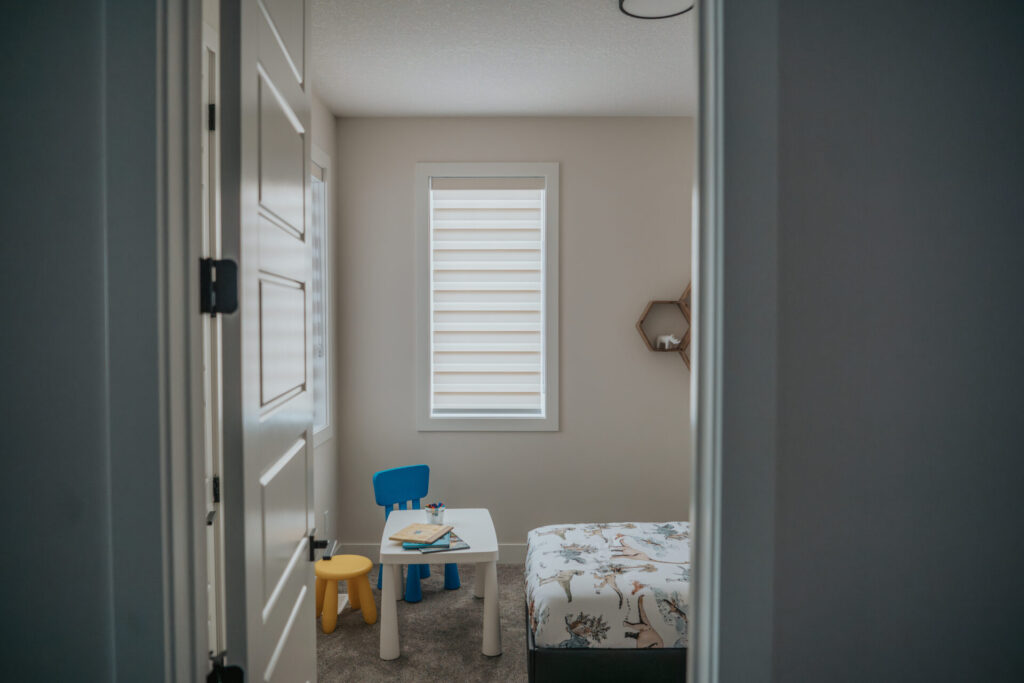
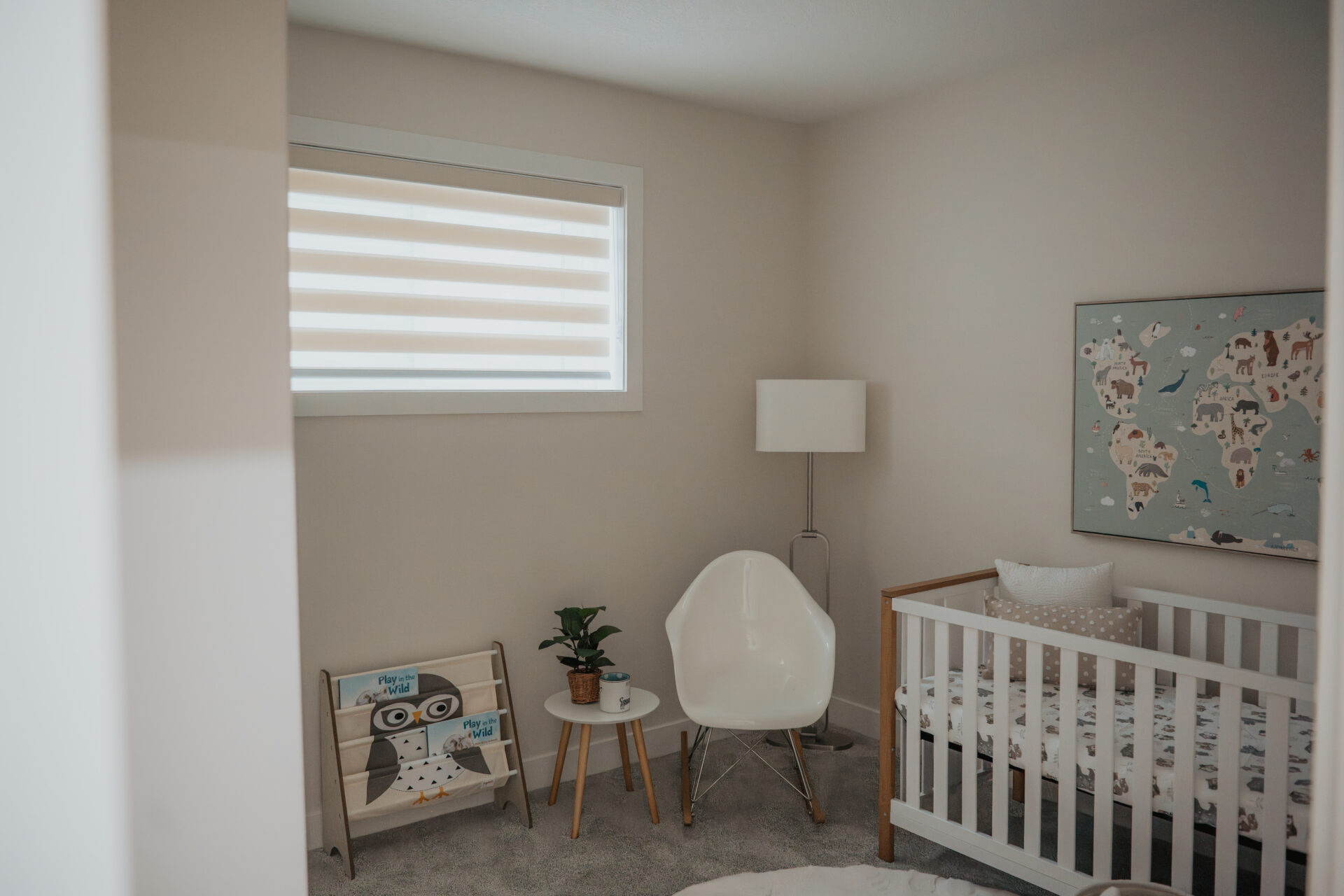
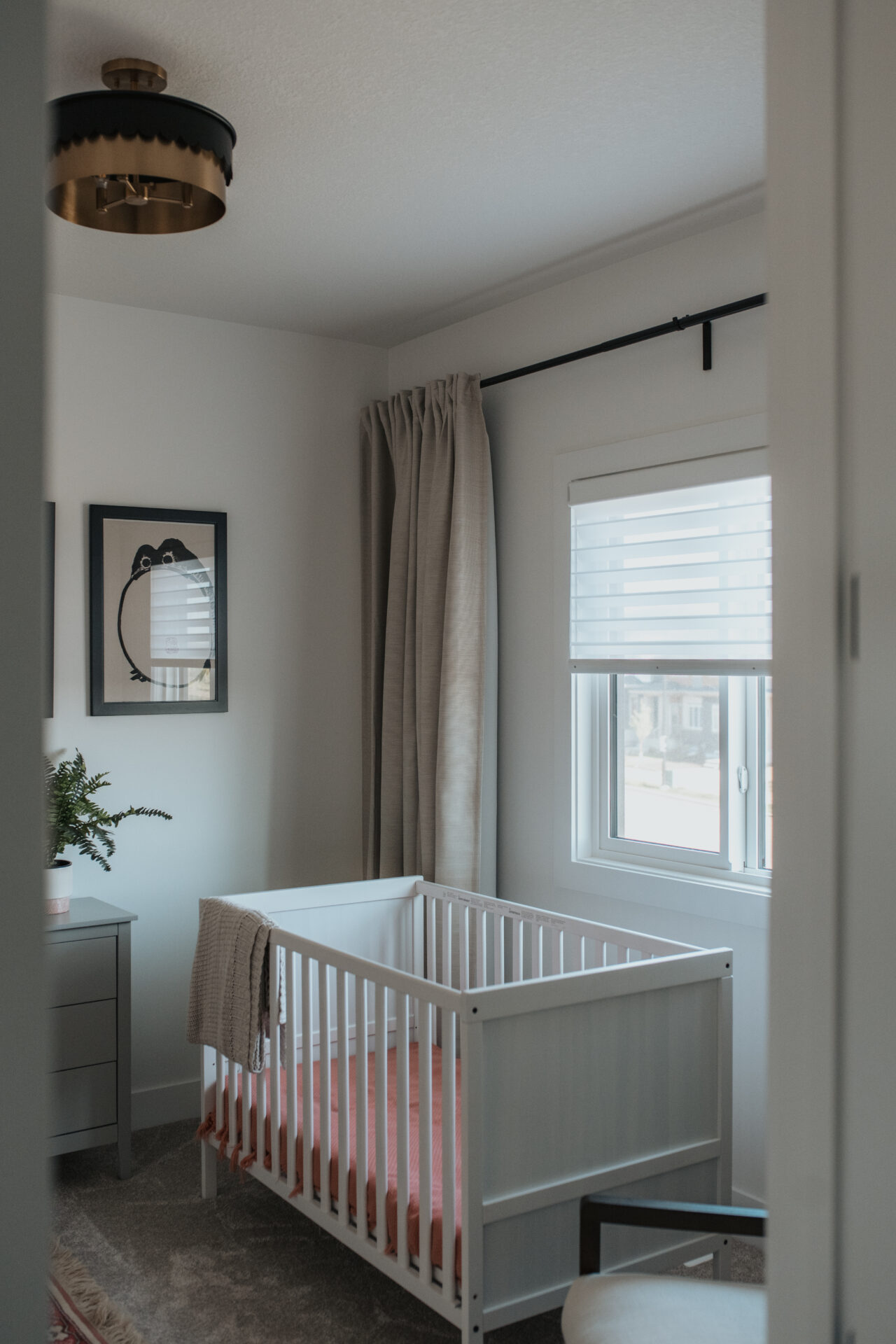
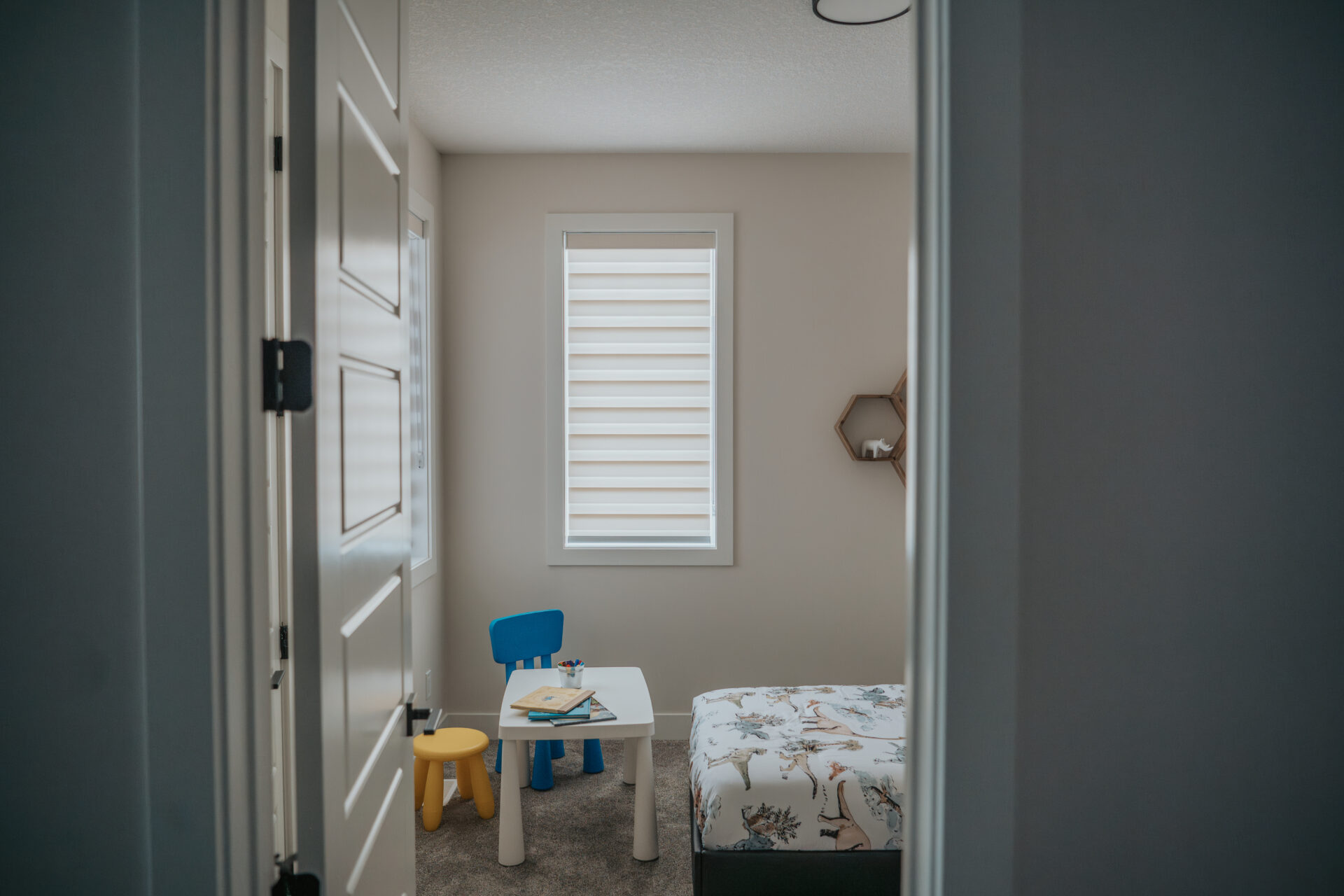
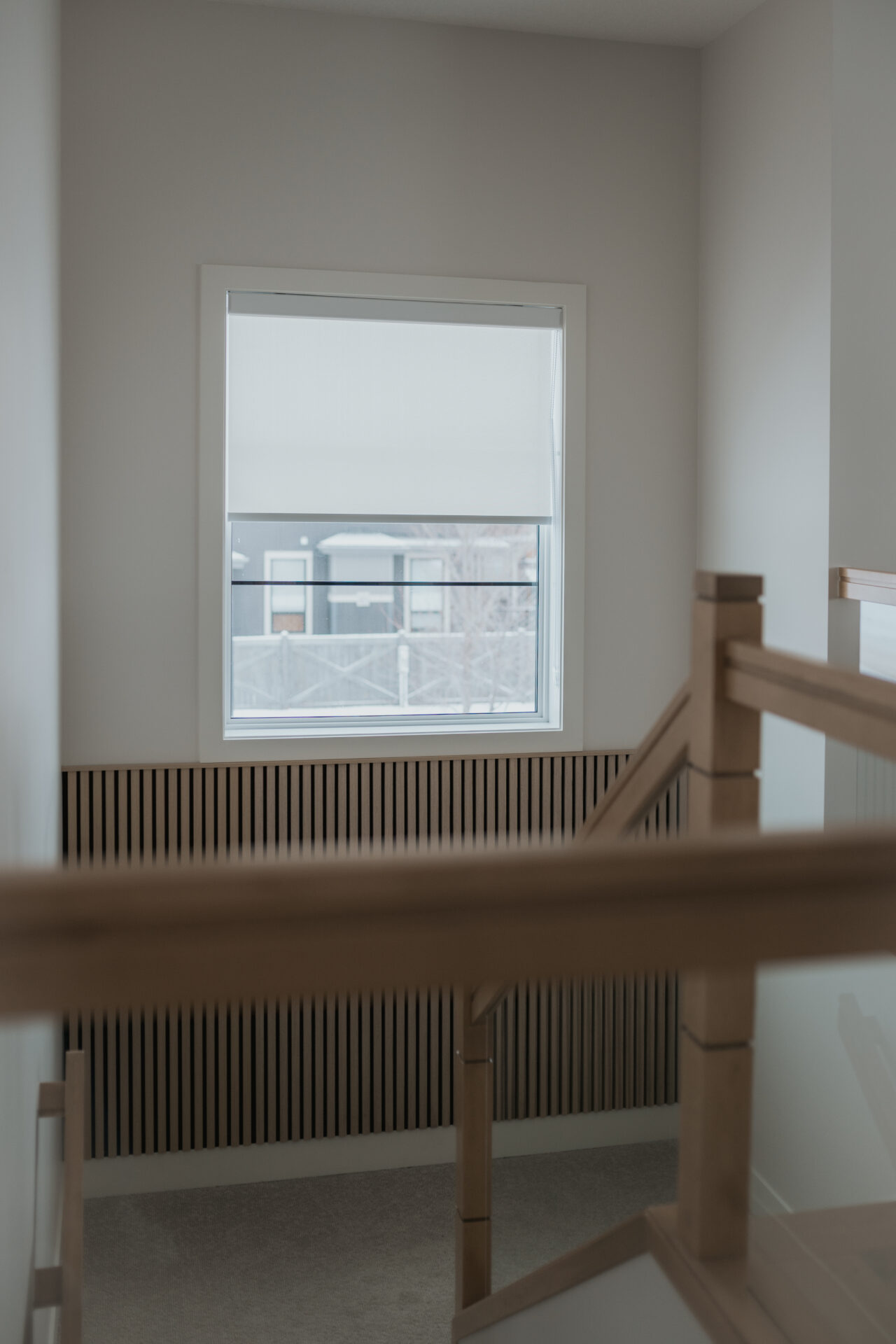
Kids’ room installs across Edmonton.
The Edmonton Summer Reality
Edmonton sits at 53° north latitude. That means 17 hours of daylight at the summer solstice — sunrise before 5:10 AM, sunset past 10 PM, and a sky that never goes fully dark until nearly midnight. A child’s 8 PM bedtime happens in broad daylight from late May through mid-July. West-facing rooms are the worst. The afternoon and evening sun hits west-facing windows from about 3 PM until sunset. That’s 7 hours of direct solar exposure on the longest days. A kid’s bedroom on the west side of the house accumulates heat all afternoon and doesn’t start cooling until well after bedtime. If you’re picking one room to upgrade first, it’s the west-facing bedroom. New builds with big windows compound the problem. Newer Edmonton communities — Keswick, Cavanagh, Cy Becker, Paisley — tend to have large window packages for natural light and street appeal. A floor-to-ceiling window in a second-storey kid’s bedroom looks great on the MLS listing. It also turns the room into a greenhouse in July. Bigger glass means more solar gain and more light leak if the blinds don’t fit precisely. The overnight cool-down helps — if you trap it. Edmonton nights cool down to 12°C to 15°C on most summer nights. Open the bedroom window after the sun drops, let cool air flush the room, then close the window and lower the blackout shade before the sun hits it again in the morning. That nighttime flush drops the room temperature significantly — but only if the shade seals well enough to hold the cooler air in once the sun returns. A leaky shade with gaps gives back most of the overnight gains by 10 AM.Common Mistakes
- Buying “room darkening” instead of blackout. Room darkening blocks 80% to 95% of light. In an Edmonton summer bedroom at 8 PM, that remaining 5% to 20% is enough to read a book by. Kids need actual blackout — 99%+ light block — for the melatonin signal to work.
- Skipping side channels or side tracks. The number-one reason a new blackout blind disappoints. Light leaks around the edges, not through the fabric. The $80 to $120 side-channel upgrade is the highest-value add-on for any kids’ room blind.
- Closing blinds at bedtime instead of before noon. Once the room absorbs solar heat through the afternoon, the walls and furniture radiate it back for hours. Close the blinds before the sun hits the window — ideally by noon on hot days — and the room stays 3°C to 5°C cooler by evening.
- Using tin foil, garbage bags, or suction-cup blackout sheets as permanent fixes. They work in a pinch. They also look terrible, trap heat against the glass, damage window frames with adhesive, and fall off during Edmonton’s temperature swings. A custom-fit blackout shade does the job without the duct-tape aesthetic.
- Ignoring the door gap. Hallway light under a bedroom door can undermine an otherwise perfect blackout job. A $15 door-bottom seal from the hardware store closes that gap. Cheap and effective.
- Assuming all cordless blinds are equally safe. A cordless shade that doesn’t fit the window leaves gaps a toddler can access. Custom-measured is the safety standard — not just the premium option.
What We’d Recommend
Best value for most families ($280–$480/window): Cordless double-cell blackout cellular with side tracks. Handles light, heat, and safety in one product. Fits every age group from infant to teenager. This is what we install in the majority of Edmonton kids’ rooms. Best for older kids who want a modern look ($220–$400/window): Cordless blackout roller with side channels. Clean sight line, lower profile, slightly less insulation but still effective. Works well in bedrooms that double as homework or hangout spaces. Best for busy parents ($430–$730/window):Motorized blackout cellular or roller. Scheduled close before bedtime, scheduled open at wake time. No cords, no manual adjustment, no walking into a sleeping kid’s room. Battery-powered, rechargeable via USB-C. Best for maximum comfort on the hottest days ($600–$1,000/window): Layered blackout cellular with side tracks plus thermal-lined drapery. The nuclear option for west-facing rooms in houses without AC. Blocks virtually all light and rejects the most heat. Overkill for most rooms — perfect for the one bedroom that turns into a sauna every July. All prices are 2026 Edmonton installed pricing. Includes consultation, custom manufacturing, and professional installation — one installer, start to finish.Book Your Kids’ Room Consultation
We measure and install kids’ room blackout blinds across Edmonton, Sherwood Park, St. Albert, Leduc, Spruce Grove, Fort Saskatchewan, Beaumont, Stony Plain, Grande Prairie, Red Deer, and the surrounding region. Free in-home consultation with a written quote within 48 hours. Tell us which rooms face west, how old the kids are, and whether you want motorized — we’ll spec each window for your actual summer conditions. Book your free consultation, try the room visualizer to preview blackout options in your child’s window before committing, or browse the photo gallery for finished bedroom installs across Edmonton. Already have a nursery to set up too? Our nursery blackout guide covers infant-specific picks. And if the rest of the house is overheating, our guide on keeping your Edmonton home cool without AC covers whole-home strategies.Frequently Asked Questions
What are the best blinds for a kids’ room in Edmonton summer?
Cordless double-cell blackout cellular shades with side tracks are the top choice for Edmonton kids’ rooms. They block 99%+ of light for sleep, add R-3 to R-4.5 of insulation to reject summer heat, and have no cords or chains. For a lower-cost alternative, cordless blackout rollers with side channels provide strong light blocking with slightly less thermal performance.How much do kids’ room blackout blinds cost in Edmonton?
In 2026 Edmonton pricing, a cordless blackout roller with side channels runs $220 to $400 per window installed. A cordless double-cell blackout cellular with side tracks costs $280 to $480 per window. Motorized options add $150 to $250 over the manual cordless price. All prices include custom measurement, manufacturing, and professional installation.Do blackout blinds actually keep a room cooler?
Yes. A blackout cellular shade with white or reflective backing reduces room temperature by 3°C to 5°C compared to an uncovered window on a sunny day. The cellular air pockets insulate the window, and the reflective backing bounces solar energy back outside. The effect is most noticeable on west-facing windows that take direct afternoon sun — exactly the rooms that overheat most in Edmonton summer.Are cordless blinds required by law in Canada?
Health Canada’s Window Covering Safety Regulations require all window coverings sold in Canada to be cordless or have inaccessible cords. This applies to every room, not just children’s bedrooms. Every product Novo manufactures and installs is cordless — no chains, no pull cords, no continuous loops.Should I get motorized blinds for my kids’ rooms?
Motorized blinds are worth considering if you want scheduled closes at bedtime and opens at wake time — the blinds move automatically without anyone entering the room. They’re also the safest option for households with toddlers, since there are no manual lift components at all. Battery-powered motors last 6 to 12 months per charge and recharge via USB-C. The motor adds $150 to $250 per window over manual cordless.What is the difference between blackout and room darkening blinds?
Blackout fabric blocks 99% to 100% of visible light. Room darkening blocks 80% to 95%. In an Edmonton bedroom at 8 PM in June, room darkening still lets in enough light to read by — and enough to suppress melatonin in a child’s brain. For kids’ bedrooms, especially during the 17-hour summer days, always specify blackout-rated fabric plus side channels or side tracks to seal the edges.Ready to cool down that bedroom?
Free in-home consultation. We measure, recommend the right combo for kids’ safety and comfort, and install.
Book free consultationServing