

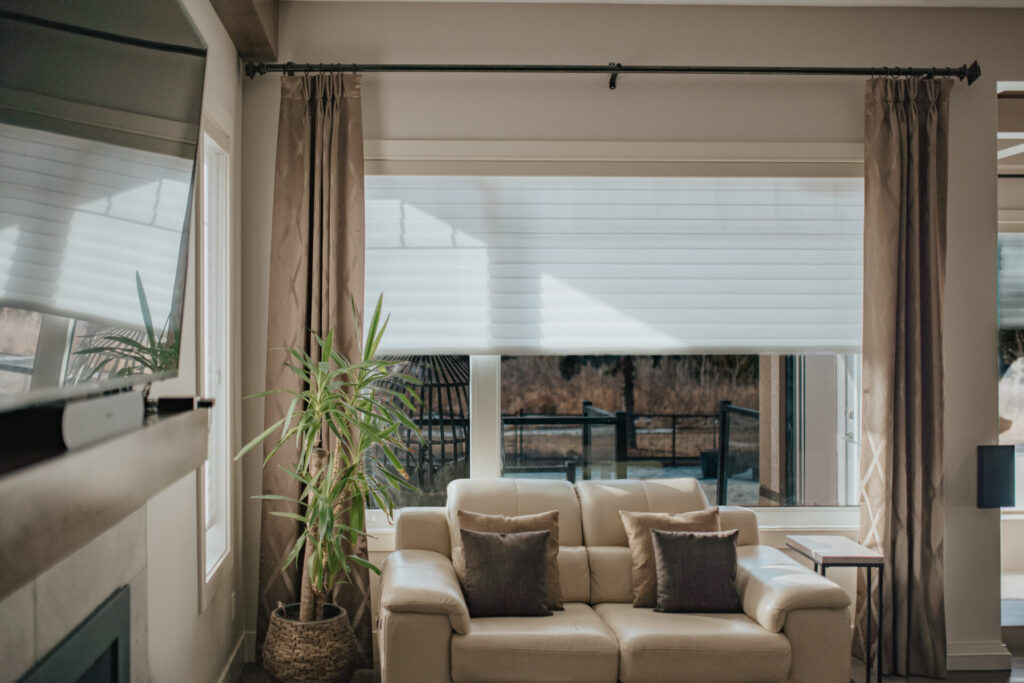
Sun control, side by side
Solar, roller, or zebra. Which one wins where.
The 2026 Canadian comparison — openness factors, UV math, real Edmonton pricing, and which we’d actually install in each room.
The three most common sun-control products in Canadian homes — solar shades, plain rollers, and zebra blinds — look superficially similar from the street. They all hang from a top header, all roll up the same way, and all install with the same brackets. Walk inside and they behave nothing alike. One blocks 95% of UV without losing the view; one is a binary on-off switch for daylight; one tunes light through the day with a flick of a chain.
Picking the wrong one for the wrong window is the most common mistake we see on installs we walk into for second opinions. A solar shade in a north-facing bedroom is a waste of money. A plain roller on a south-facing living room window means the room is either hot or dim every afternoon. A zebra over a primary bedroom window leaves enough morning light through to wake a light sleeper at 5 AM in June.
This guide breaks down what each does, where each wins, and which we’d actually pick room by room in an Edmonton home.
The short answer
For sun control specifically: solar shades win on west-facing windows where you need to block heat and UV without losing the view. Zebra blinds win on living-area windows where you want to tune privacy and light through the day. Plain roller shades win on bathrooms, basements, and any room where the binary “open or closed” is fine and the view is not important.
If you only have time for one decision: zebra in living rooms and bedrooms, solar in dedicated office and west-facing window scenarios, plain rollers in utility rooms.
We covered the broader zebra-vs-roller decision in our most-read comparison post. This one extends that to add solar shades — the third option that most homeowners don’t realize exists until an installer raises it.
What each one is
Solar shades — engineered openness, view through, UV blocking
A solar shade is a roller shade made from technical fabric with an engineered openness factor. The openness percentage tells you how much light and view passes through the woven fabric. A 3% openness fabric is nearly opaque from outside, blocks 95%-plus of UV, and lets you see out reasonably well from a metre away. A 14% openness lets in noticeably more light, blocks 80% to 90% of UV, and gives a clearer view.
The whole product is the fabric. There’s no separate sheer layer, no horizontal slats, no banded mechanism. Pull the chain or hit the motor button, the shade rolls down, and the room reads cooler and dimmer immediately. Roll it back up, the window returns to clear glass.
Solar shades are a Novo specialty for Edmonton homes facing the worst sun — west-facing master suites, south-facing living rooms with full glass, glassed-in offices.
Plain roller shades — binary, simple, affordable
A plain roller shade is a single sheet of light-filtering or blackout fabric on a roll. It’s either down (blocking the window) or up (clearing it). There’s no openness factor and no view-through engineering — the fabric is opaque or filtered enough that you can’t really see through it once it’s down.
Rollers are the most affordable category in our lineup. They look clean, they install fast, and they’re the right answer for most utility rooms — bathrooms, laundry, kids’ playrooms, basements. They’re also the right answer for blackout situations where you want the room dark and don’t care about the view (kid’s nap room, primary bedroom secondary window, media room).
We covered which roller fabric to choose in our home office blinds guide — for utility rooms, white or off-white in a mid-grade fabric is the safe default.
Zebra blinds — banded, tunable, view-flexible
A zebra blind (also called a dual shade or banded shade) uses two layers of fabric joined into alternating sheer and solid bands. Rotate the bands so the sheer aligns with the sheer (and solid with solid) and you have view through plus diffused light. Rotate so sheer aligns with solid and you have privacy plus diffused light. Pull all the way down for full closure (similar to a plain roller).
That tunability is why zebras dominate living rooms and home offices in our installs. They cover the morning “view + light” mode, the daytime “privacy + light” mode, and the evening “fully closed” mode without changing products.
The downside: zebras don’t block UV as effectively as solar shades, and the banded mechanism adds about 15% to 25% to the price compared to a plain roller of the same size.
Tradeoff 1 — UV and heat blocking
Solar shades win, decisively. A 3% openness solar shade in a darker fabric blocks 95% of UV and reflects the majority of solar heat back outside. A 5% openness shade still blocks 90% of UV. Plain rollers in light-filtering fabric block roughly 60% to 80% of UV depending on the fabric. Zebras in privacy mode (sheer aligned with solid) block 40% to 60%.
If you have hardwood floors, leather furniture, or art that’s prone to fading, the UV difference matters every single day from May through October in Edmonton. We’ve replaced solar shades on installs that were 12 to 15 years old and still blocking the same UV — the fabric does not degrade noticeably under sun load.
For window-shading-as-cooling specifically (covered in our keep your home cool without AC guide when it goes live), solar shades are also the standout — see that post for the heat math.
Tradeoff 2 — View through
Solar shades win during the day, lose at night. During daylight hours a quality solar shade lets you see out reasonably well — distant streetlights, the silhouettes of people walking, a clear view of the trees in your yard from a metre back. After dark, the view inverts: people outside can see in (if interior lights are on) more than you can see out, because you become the brighter side. This is why solar shades are not a privacy product after sunset — pair with drapery panels or a blackout layer for after-dark privacy.
Zebras win for the open-band view setting. Pull a zebra to the open position and the sheer bands give a fully clear view through, similar to a sheer curtain. This works day or night since the bands are easy to rotate to privacy mode in seconds.
Plain rollers don’t have a view setting. They’re either down (no view) or up (full view). There’s no in-between.
Tradeoff 3 — Privacy
Plain rollers and zebras win. A plain roller in light-filtering or blackout fabric, fully down, gives complete privacy. A zebra in privacy mode (sheer aligned with solid) gives complete daytime privacy with diffused light still entering — the best of both for living rooms.
Solar shades give partial daytime privacy but not nighttime privacy. A 3% openness in a darker fabric gives reasonable privacy during the day (people on the sidewalk can see vague movement, not detail). After dark with interior lights on, solar shades show your interior to the outside more than they hide it. This is the most common reason homeowners regret solar shades on bedroom windows — the cooling and UV is great, but the after-dark privacy isn’t there.
Tradeoff 4 — Price
For a custom 60-inch by 60-inch shade in 2026 Edmonton pricing:
- Plain roller, light-filtering, cordless lift: $140 to $260
- Solar shade, 5% openness, cordless lift: $200 to $360
- Zebra blind, mid-grade fabric, cordless lift: $260 to $420
- Plain roller, blackout fabric, cordless lift: $180 to $300
- Solar shade, motorized: $340 to $560
- Zebra blind, motorized: $400 to $640
Plain rollers are the budget pick. Zebras are the premium living-area pick. Solar shades sit in between by price but win on a different axis (UV/heat) entirely.
The motorization upcharge is similar across all three — roughly $150 to $250 over the cordless version, which pays off on west-facing windows where scheduled drops are the difference between comfortable and miserable. See the motorized blinds page for the broader smart-home pairing.
Tradeoff 5 — Look and aesthetics
Solar shades and plain rollers look nearly identical from the street and from inside the room. Both roll into a clean header, both hang flat against the wall, both come in standard widths. The visual difference is the fabric texture: solar shade fabric has a subtle weave pattern that’s noticeable up close; plain roller fabric is more uniform.
Zebras have a slightly more substantial visual presence because the banded mechanism shows the alternating bands when partially deployed. In an open band setting they look more like a sheer curtain than a roller. In privacy mode they look like a textured solid.
For ultra-minimal architectural homes, plain rollers and solar shades disappear into the window better. For traditional or transitional homes with more decor presence, zebras pair well with the room without competing.
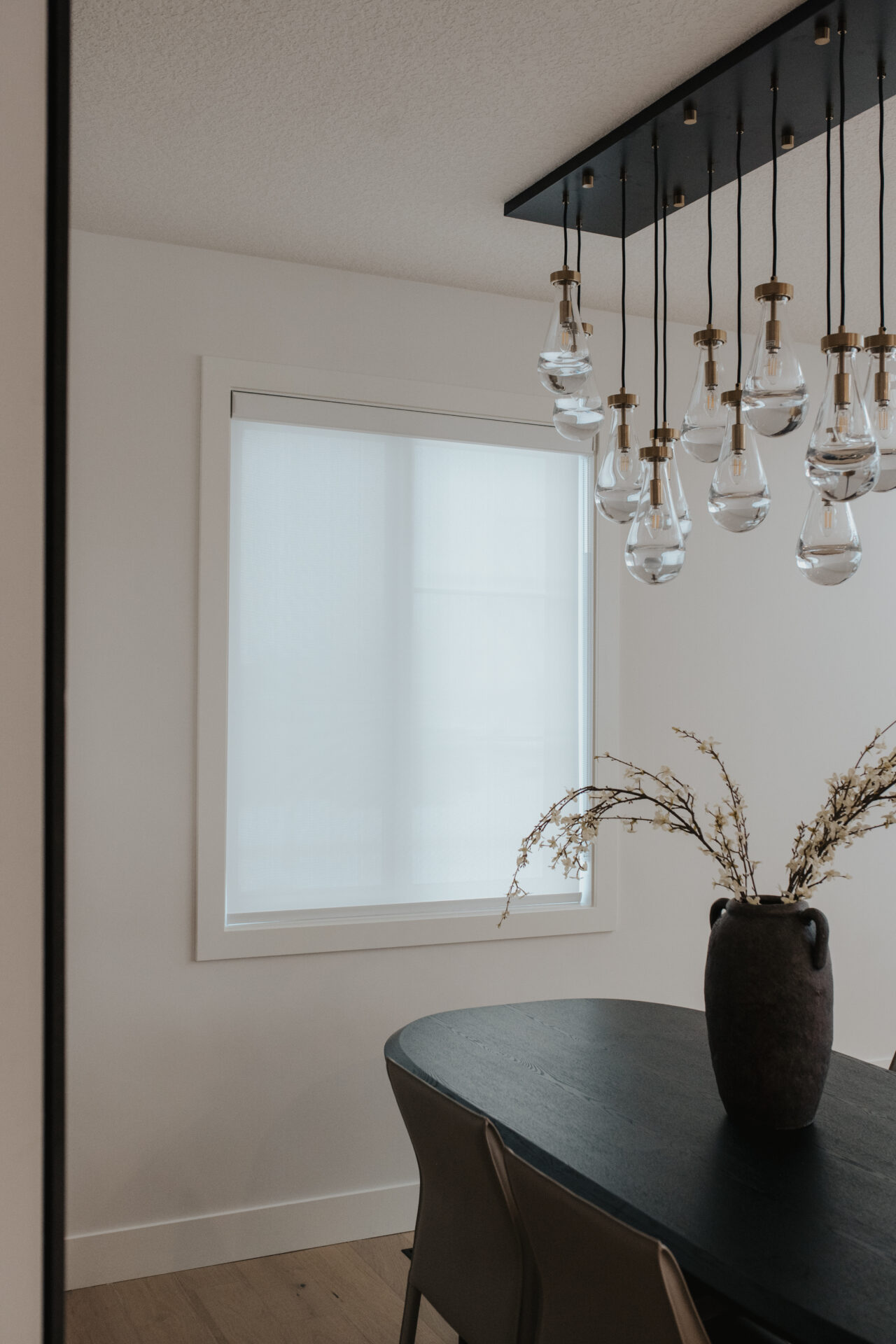
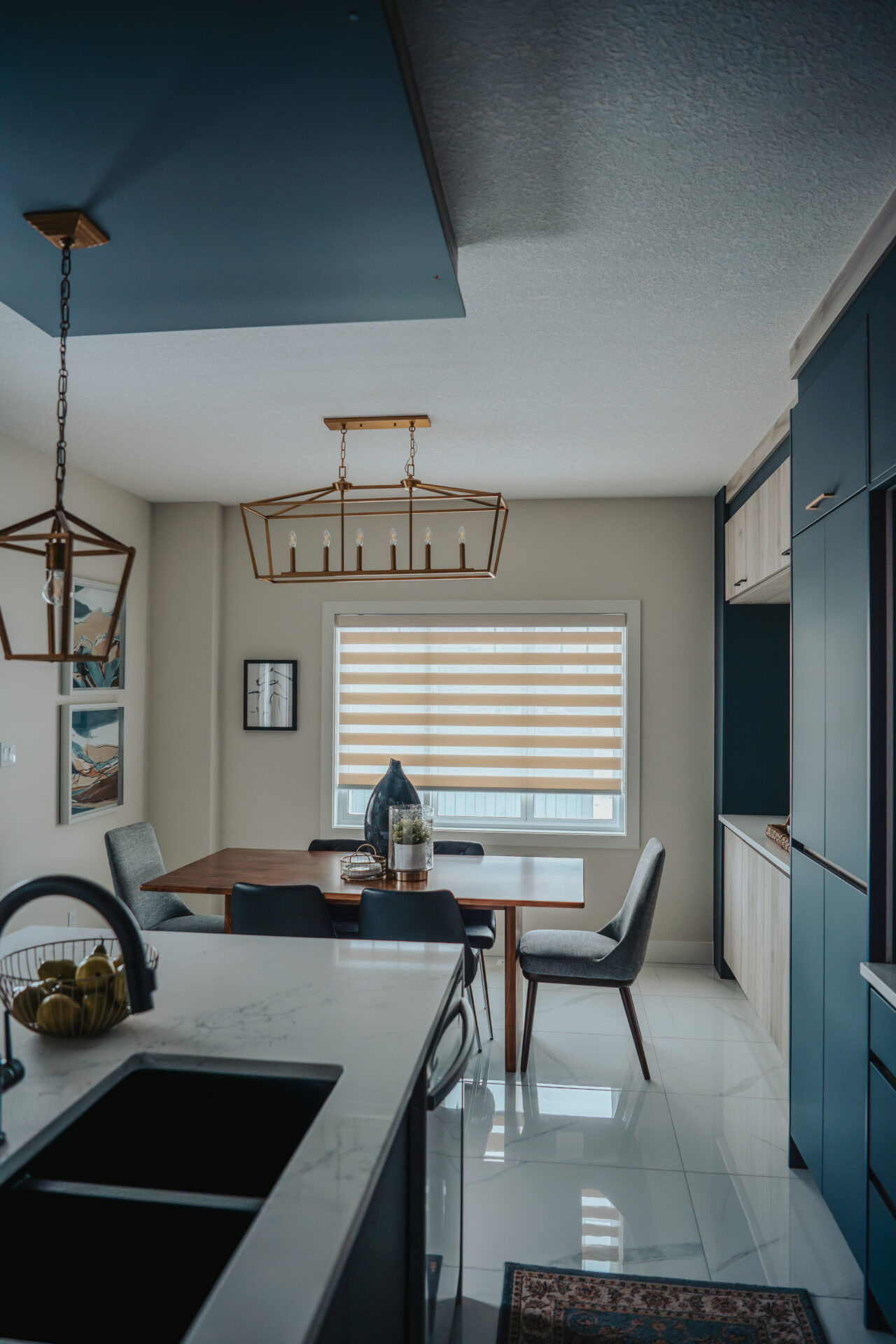
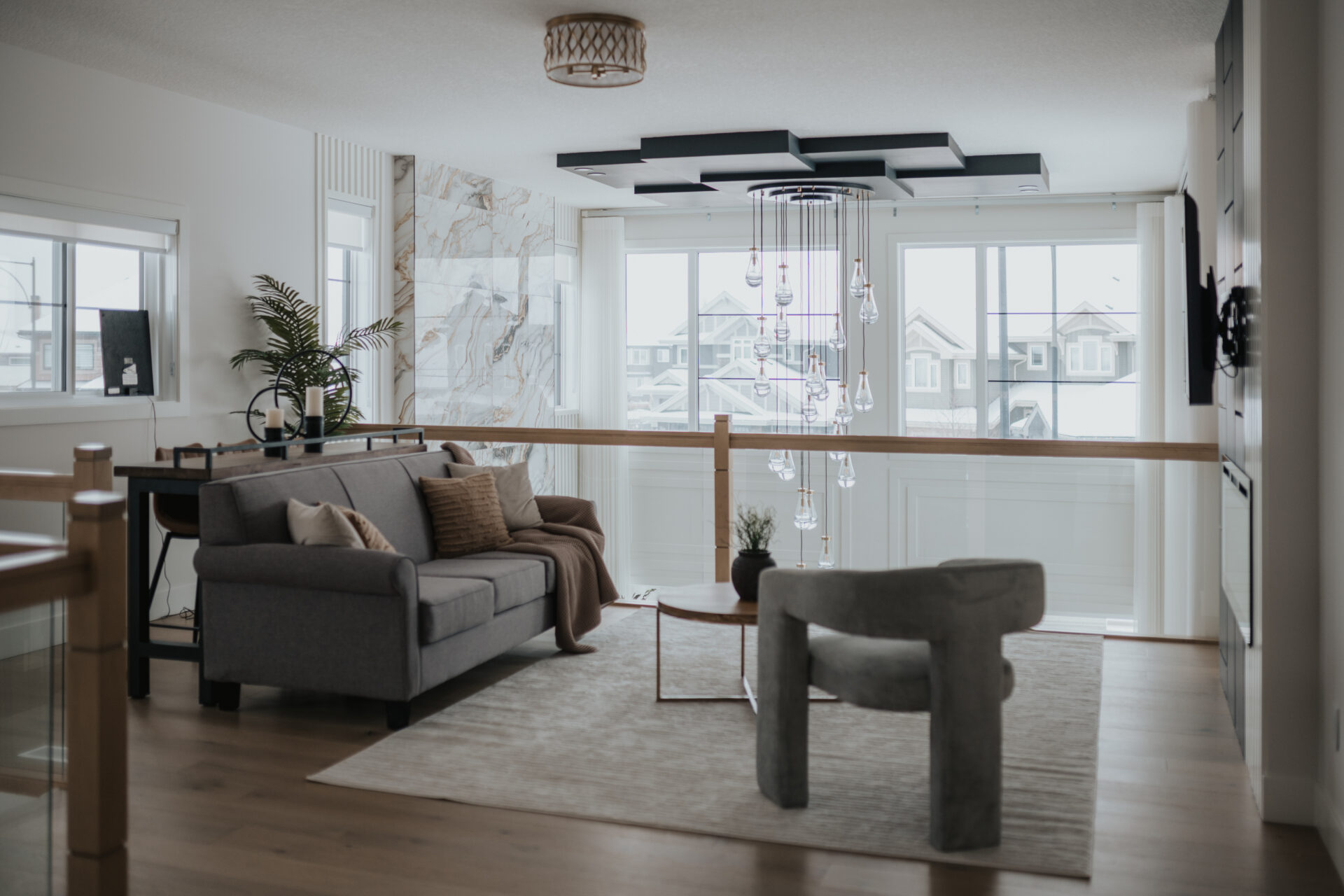
Three products, real installs
Sun control across Edmonton homes.
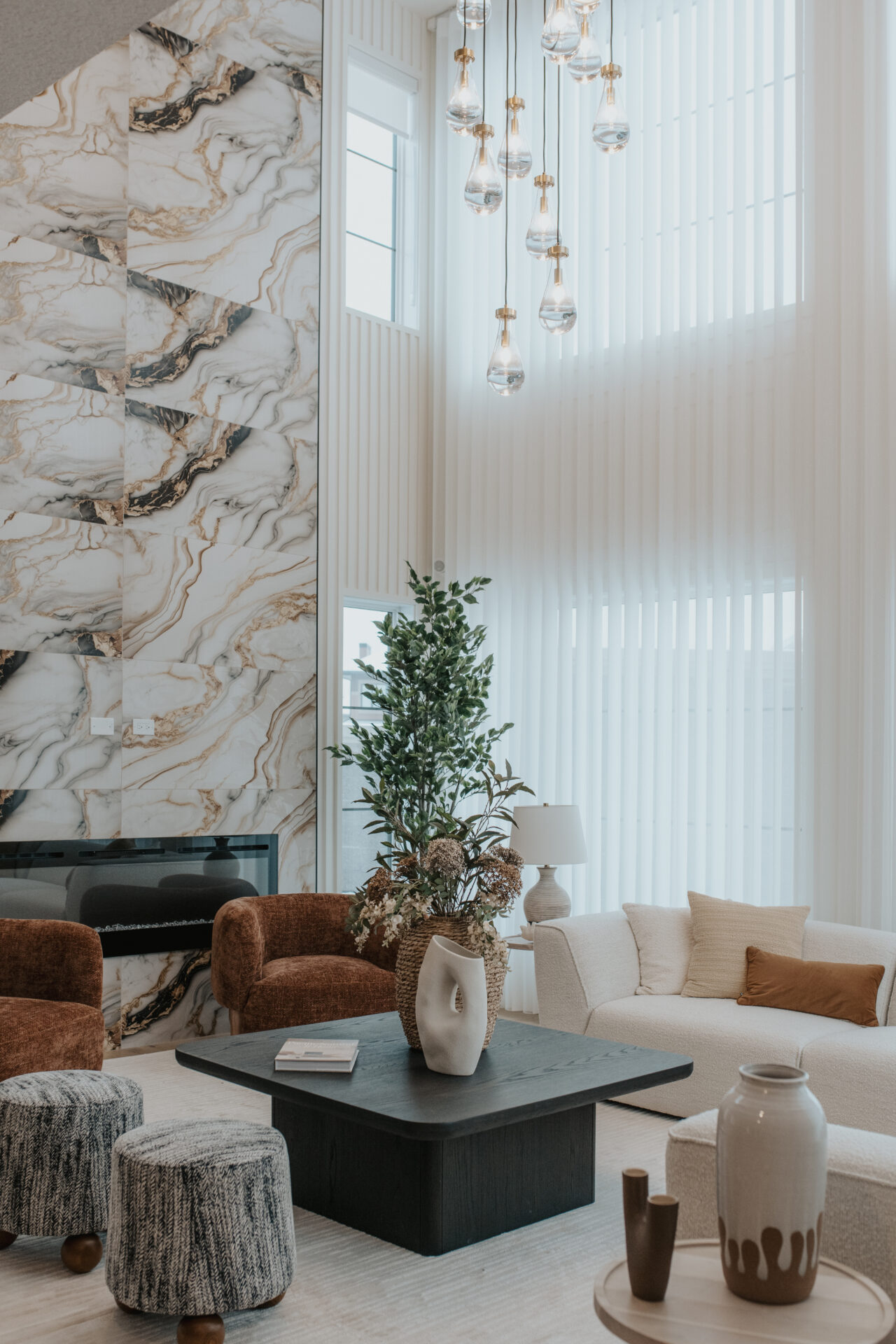
Room by room — what we’d actually pick
- South-facing living room with a TV: zebra blinds. Tune through the day, dim for movie nights, fully open when the family room mode is “view the backyard.”
- West-facing living room: solar shades layered with drapery panels. Solar handles UV and heat during the day; drapery handles after-dark privacy and looks good closed.
- Primary bedroom (any orientation): zebra for the everyday + blackout drapery for true sleep darkness. Or double-cell cellular shades layered with drapery if thermal performance matters more than aesthetics — see our cellular shades for Edmonton winters deep dive.
- Kid’s bedroom: plain blackout roller. Cheap, simple, blackout when needed, fully open the rest of the day.
- Home office (west-facing): solar shade in 5% openness, charcoal fabric. Stops glare without making the room dim. Full breakdown in our home office guide.
- Home office (any other orientation): zebra blinds. Tune for camera glare during calls, open for view between meetings.
- Bathroom: plain blackout roller. Privacy is the only requirement; texture and view don’t matter.
- Kitchen over the sink: plain motorized roller for hard reach + dishwasher heat tolerance. Or zebra if the kitchen window is decorative more than functional.
- Basement family room: plain roller in light-filtering for the daytime, blackout for the secondary windows you don’t use.
- South-facing dining room with a view: zebra blinds. The same logic as the living room.
The Edmonton angle — UV exposure here is unusual
A south-facing Edmonton window gets direct sun for 6 to 8 hours per day from late May through August. We sit at 53° north latitude, which means the summer sun comes in at a steeper-than-average angle and stays high in the sky for nearly 12 hours of the day. UV index regularly hits 7 to 8 on clear July days.
That’s enough UV exposure to fade hardwood floors visibly within 18 months without protection, fade upholstery within 24 months, and cause measurable heat damage to artwork or instruments stored near south or west windows. Edmonton homes that lean into solar shades on the bad-side windows extend furniture and floor lifespan by years.
The other Edmonton angle: our hard winters mean the same windows that fry the room in July leak heat in January. Pairing a solar shade with a cellular shade (or layering drapery) gives you a year-round window solution rather than a single-season one. We covered the broader winter strategy in reduce winter heat loss with window coverings.
Common sun-control mistakes
- Solar shade alone on a primary bedroom window. UV great, view great during the day — but no after-dark privacy. Pair with drapery or skip in the bedroom.
- Plain roller on a living-area window where you want a view sometimes. You’ll either keep it open (no privacy or sun control) or keep it closed (no view). Zebra solves the toggle.
- White solar shade on a west-facing window. Reflects light back into the room, which makes the heat problem worse. Go charcoal or espresso on the west side.
- Zebra on a window that needs blackout. Zebras leak light around the bands and at the side rails — they’re not a blackout product. Pair with a blackout roller or drapery if you need full darkness.
- Mounting the shade too narrow. Any product mounted same-width-as-glass leaves slivers of bright light around the edges. Outside-mount with 1 inch of overlap on each side, or full-frame inside-mount.
- Picking the cheapest option for the worst window. A west-facing master bedroom is your worst window. Spending the budget on the best product there matters more than upgrading the easy north-facing windows.
Final take — what we’d actually install in a typical Edmonton home
If you handed us the budget for a full-house sun-control upgrade and asked us to optimize for impact per dollar:
- West-facing windows (3–5 of them): solar shades in 5% openness, charcoal fabric, motorized. The single highest-impact upgrade.
- Living room, dining room, family room (south or east-facing): zebra blinds, mid-grade fabric, cordless. The everyday workhorse.
- Primary bedroom: zebra plus blackout drapery layered. Or double-cell cellular plus blackout drapery if thermal performance matters more than aesthetics.
- Kid’s bedroom, bathroom, basement utility: plain blackout rollers, cordless. Cheap, simple, durable.
- Home office: solar shade if west-facing; zebra otherwise.
A typical 1,800-square-foot Edmonton home gets full sun-control coverage for $3,500 to $6,000 depending on motorization choices and fabric tier. That’s per-room comfort improvement on day one, every summer for the life of the products.
Drop any of these into your room with the free room visualizer before you commit — it’s the easiest way to see how a darker solar shade or a zebra in privacy mode actually looks.
Ready to compare in your own home?
Book a free in-home consultation across Edmonton, Sherwood Park, St. Albert, Leduc, Spruce Grove, Fort Saskatchewan, Beaumont, Stony Plain, Grande Prairie, and Red Deer. We bring fabric swatches, demonstrate all three products on your actual windows, and send a written quote within 48 hours. Book your consultation or call 780-245-0190. Browse the photo gallery for finished installs across the metro region.
If you’re trying to decide between two specific products for one specific window, that’s exactly what the in-home consultation is for. We’ll bring samples of both and show you the difference.
Frequently Asked Questions
What is the difference between solar shades and roller shades?
Solar shades are a specialized type of roller shade made from technical fabric with an engineered openness factor (typically 3% to 14% open). They block UV and reduce solar heat gain while preserving view through the fabric. Plain roller shades use opaque or light-filtering fabric without engineered openness — they’re either fully down (no view) or fully up (full view). Solar shades cost about 30% to 50% more than plain rollers but win decisively on UV blocking and daytime view-through.
Are zebra blinds better than solar shades?
For different jobs. Zebra blinds are better for living areas where you want to tune privacy and light through the day — they have a clear “view” mode, a “privacy with light” mode, and a “fully closed” mode. Solar shades are better for west-facing windows where UV blocking and heat reduction matter most, since they preserve the view while blocking 90%-plus of UV. Many Edmonton homes use both products on different windows.
What openness percentage should I choose for solar shades?
For Edmonton homes, 3% to 5% openness is the standard recommendation. 3% gives the strongest UV and heat blocking with a slightly more obscured view; 5% gives 90% UV blocking with a clearer view. 10% to 14% openness is mostly used in commercial settings or homes where view-through is the dominant priority over heat blocking. For west-facing windows in particular, go to 3% or 5% in a darker fabric (charcoal, espresso, deep grey).
Do solar shades give privacy at night?
No, not on their own. After dark when interior lights are on, you become the brighter side and people outside can see in more than you can see out. Solar shades give reasonable daytime privacy from a sidewalk view, but they’re not a nighttime privacy product. Pair with drapery panels, a blackout roller, or move to zebra blinds in privacy mode if after-dark privacy matters.
How much do solar shades cost in Edmonton in 2026?
A custom 60-inch by 60-inch solar shade in 5% openness fabric runs $200 to $360 cordless or $340 to $560 motorized in 2026 Edmonton pricing. Pricing varies with fabric tier, openness factor (lower openness in same fabric runs slightly more), and motor option. A typical west-facing wall has three to five windows, so a full west-side upgrade lands $700 to $1,500 cordless or $1,200 to $2,500 motorized.
Can I mix solar shades and zebra blinds in the same room?
Yes, and it’s common. A west-facing wall with two windows might get solar shades for UV/heat blocking, while the south-facing wall in the same room gets zebra blinds for living-area light control. Match the fabric tones across both products so they read as a coordinated set rather than a patchwork. Our consultants bring swatches that pair well across product types.
Are solar shades worth it in a north-facing room?
Generally no. North-facing windows don’t get direct sun in Edmonton (or anywhere in Canada) so the UV and heat-blocking benefit of solar shades is wasted there. North-facing rooms benefit more from zebra blinds (for occasional privacy) or cellular shades (for thermal insulation in winter). Save the solar shade budget for the south and west windows where it actually moves the needle.
Compare all three on your own windows.
Free in-home consultation. We bring fabric swatches, demonstrate every product, and send a written quote within 48 hours.
Book free consultationServing