

Novo Blinds · Edmonton
Vertical Sheers vs Roller Shades vs Drapery for Patio Doors (2026 Guide)
Comparing vertical sheers, roller shades, and drapery for Edmonton patio doors. Stacking clearance, insulation, cost — which one fits your sliding door best?
500+
Patio Doors Done
3–5 wk
Lead Time
4.8★
Google Rating
Your patio door is probably the single largest glass surface in your home — six feet wide, floor to ceiling, and facing straight into an Edmonton afternoon that can swing from –35°C in January to full-blast UV in July. Most homeowners we visit know they need something on that door. What they don’t know is which patio door window covering option actually works once the door starts sliding open and closed twenty times a day. We’ve installed hundreds of patio door treatments across the Edmonton metro, and the answer depends on three things: how much light you want, how much wall space you can spare, and what you’re willing to spend. Short answer: If you want soft filtered light and a high-end look, go with vertical sheers. If you want clean lines, full blackout capability, and the lowest maintenance, go with roller shades. If you want maximum insulation and a traditional feel, drapery still holds its own — but it comes with tradeoffs most people underestimate.
What Are We Actually Comparing?
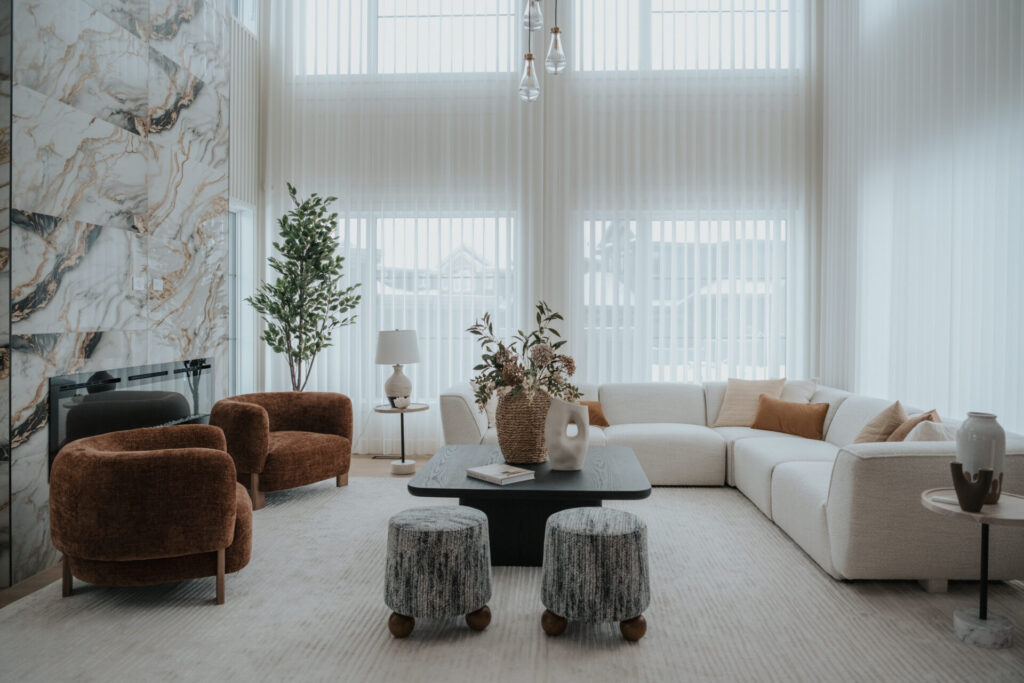
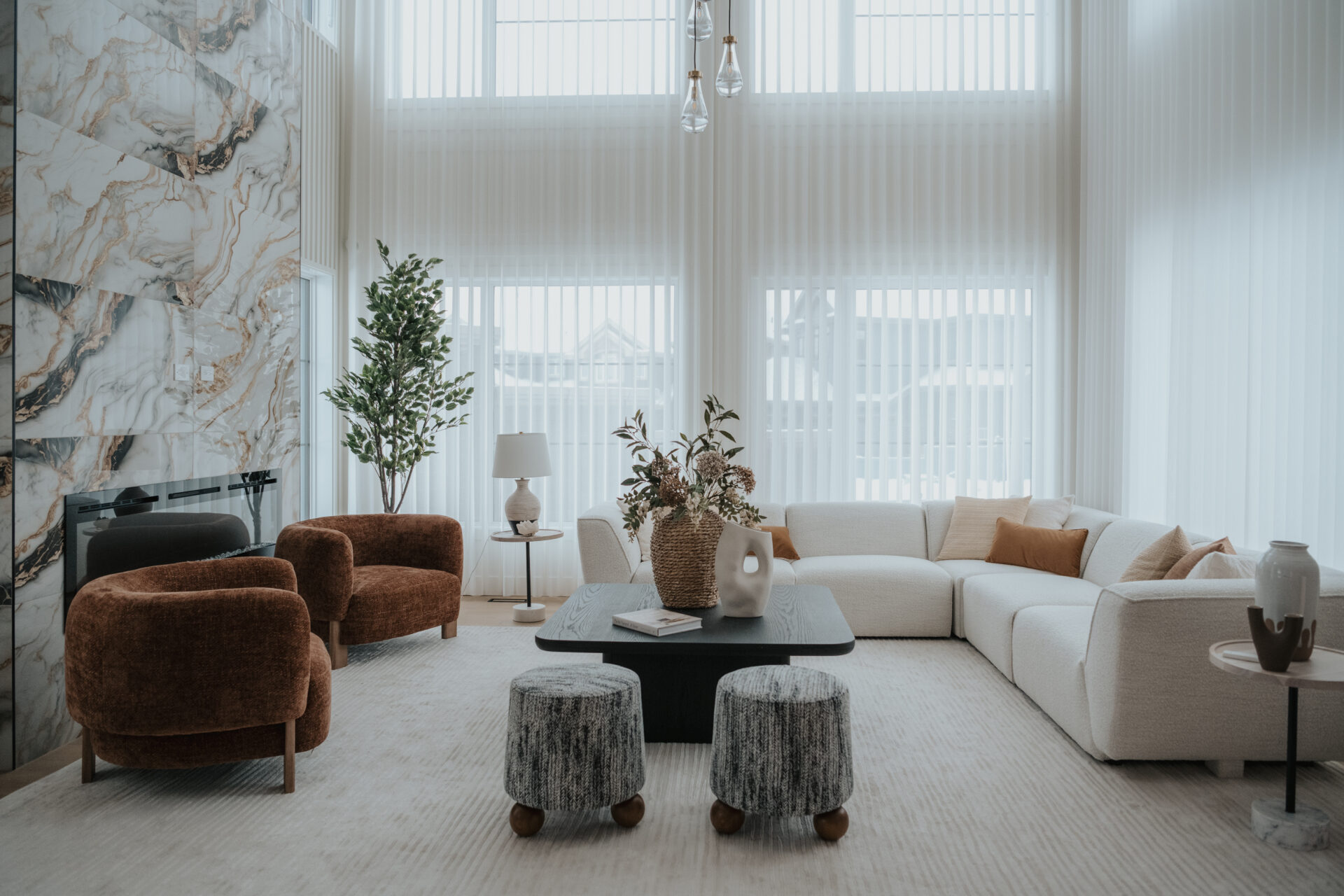
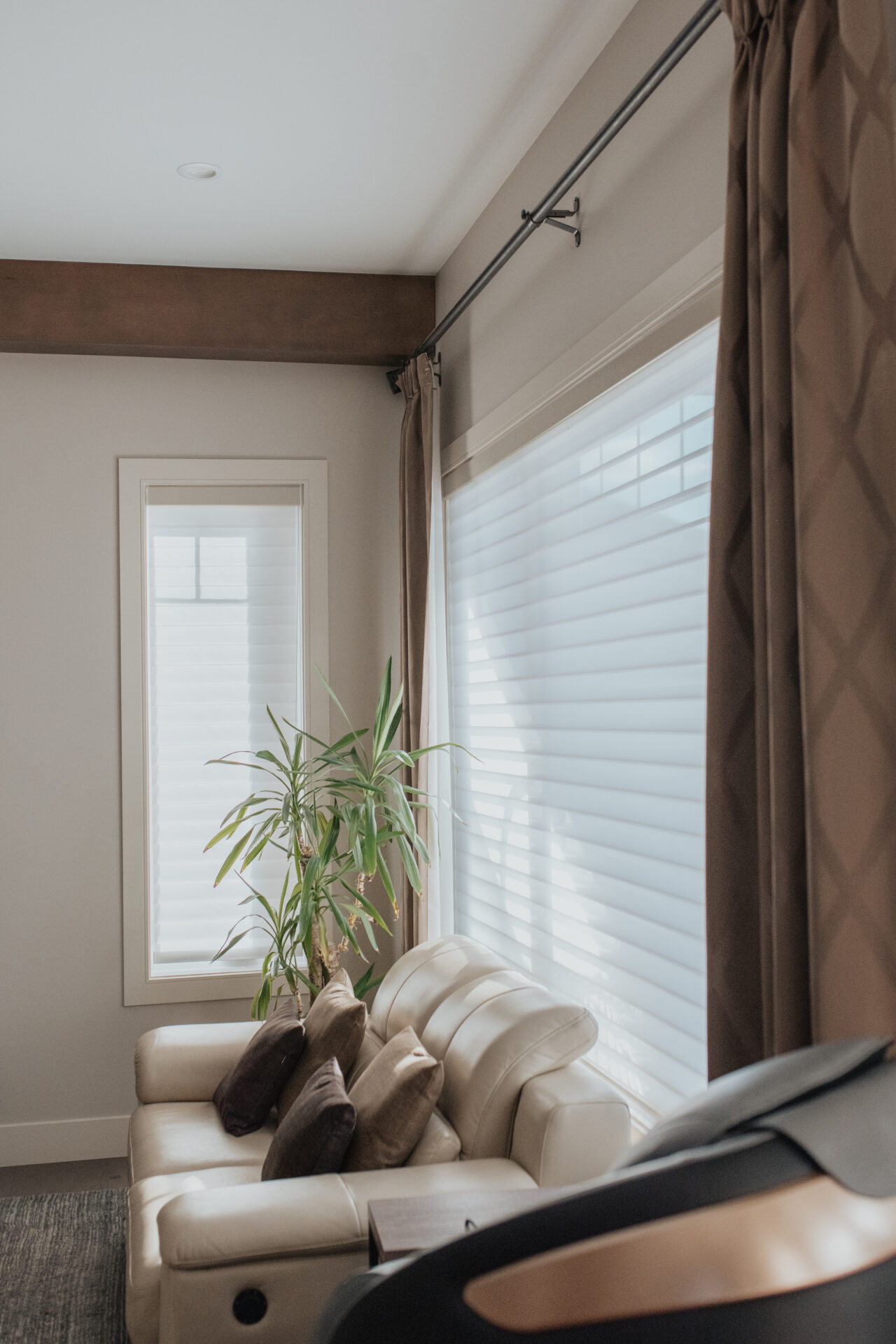
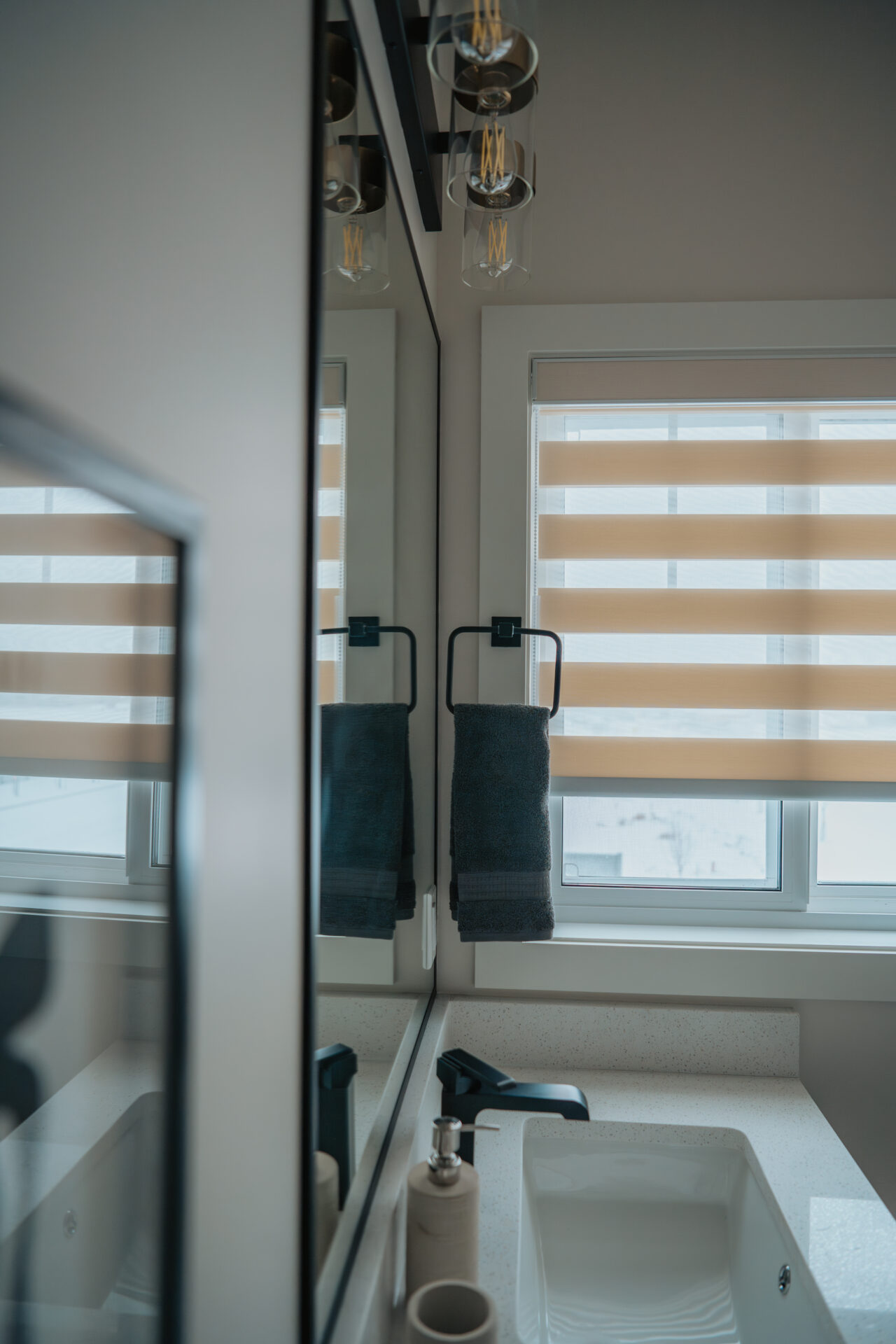
Let’s define the three contenders plainly before we start picking winners. Vertical sheers are a hybrid — sheer fabric vanes suspended between two layers of soft voile, hanging from a headrail. They operate like vertical blinds but look nothing like the clunky plastic slats from the 1990s. The vanes rotate to control light, and the whole panel glides sideways for door access. Think of them as the modern replacement for vertical blinds on sliding doors. Roller shades are a single panel of fabric that rolls up into a cassette or open tube at the top. For patio doors, you’re typically looking at a wide single shade or a split configuration — two shades side by side — depending on the door width and whether you need walk-through access from one side. Fabric choices range from light-filtering to full blackout. Drapery is the classic: fabric panels hanging from a traverse rod or decorative pole, drawn open and closed by hand or with a baton. Pinch pleat, ripplefold, grommet — the style varies, but the mechanics are the same. Fabric pools or stacks to one side (or both) when open. Each one handles patio doors differently. Here’s where the real differences show up.Light Control: Who Wins When the Sun Hits?
Verdict: Roller shades give you the most precise light control, especially in blackout fabrics. Vertical sheers filter light beautifully — the rotating vanes let you dial between soft glow and near-privacy without fully closing. On a west-facing patio door in Edmonton’s summer, that adjustability matters. You’re not choosing between “open” and “closed.” You’re choosing a gradient. Roller shades, though, can go darker. A 1% solar screen blocks most glare while keeping outward visibility. A blackout roller — especially paired with side channels — can turn a bright patio opening into a pitch-dark media room. That’s a level of control vertical sheers and drapery simply can’t match. If you’ve ever tried to nap in a south-facing living room in June when sunset doesn’t happen until 10 p.m., you already know why this matters. For more on the blackout and solar shade comparison, we covered that in a separate guide. Drapery falls in the middle. Lined drapery blocks a lot of light, but light leaks around the edges — especially at the top and where the panels meet in the centre. Blackout lining helps, but it adds weight and cost, and it still won’t seal the way a cassette-mounted roller does.Stacking and Clearance: The Patio Door Problem Nobody Talks About
Verdict: Vertical sheers stack the tightest. Drapery is the worst offender. This is the tradeoff that catches most homeowners off guard. Your patio door needs clear access — you’re walking through it, the dog’s running through it, and the kids are hauling pool toys in and out all summer. Whatever you put on that door has to get out of the way. Vertical sheers stack to roughly 8–12 inches when fully open. That’s tight. On a standard 72-inch patio door, you’re losing maybe 15% of your opening — manageable for most families. Roller shades stack vertically, not horizontally. The fabric rolls up into the headrail, so you lose zero floor or wall space. The tradeoff is that if you have one continuous shade across a 6-foot door, you have to raise the entire shade to walk through. A split roller setup solves this — raise one side, leave the other down — but now you’ve got a centre bracket and two separate controls. Drapery is where stacking gets painful. A pair of pinch-pleat panels on a 72-inch door can eat 10–14 inches per side when stacked open. That’s 20–28 inches of your door width gone. On a 6-foot slider, you might be squeezing through a 44-inch gap. Ripplefold stacks a bit tighter, but it’s still bulkier than vertical sheers by a wide margin. If door access is your top priority, vertical sheers or a split roller setup are the way to go.Insulation and Energy: What Matters in an Edmonton Winter
Verdict: Drapery insulates best — if it’s lined and properly fitted. Roller shades are close behind with the right fabric. Edmonton’s climate is the real test for any window covering. We see –30°C cold snaps in January, and a standard patio door — even a decent double-pane unit — radiates cold like nobody’s business. The right covering can cut heat loss at that door by 30–40%, and that shows up on your ATCO bill. Drapery, when it’s floor-length and lined with thermal or blackout fabric, creates a dead-air pocket between the glass and the room. That trapped air is the insulation. The wider the gap, the better — which is why ceiling-mounted drapery that puddles slightly at the floor outperforms every other option in raw R-value terms. Roller shades with a cassette headrail and side channels come close. The sealed edges reduce convection — cold air can’t spill into the room around the sides. A dual-layer shade (sheer in front, blackout behind) gives you daytime light and nighttime insulation in one unit. Vertical sheers are the weakest insulator of the three. The vanes and voile layers trap some air, but the headrail opening and the gaps between vanes let cold draft through. They’re noticeably better than bare glass, but they won’t match lined drapery or sealed rollers when the temperature drops below –20°C. For homes in Sherwood Park, St. Albert, or anywhere on Edmonton’s outskirts where newer builds often have oversized patio doors, insulation should rank high on your list.Aesthetics: What Actually Looks Good on a Big Door?
Verdict: This is personal — but vertical sheers photograph the best, and drapery adds the most warmth to a room. Vertical sheers have a contemporary, architectural quality. The soft vanes diffuse light evenly, and when they’re partially open, you get this layered depth that flat blinds or shades can’t replicate. They suit modern and transitional homes well. In newer builds across Beaumont, Leduc, Cavanagh, and south Edmonton, vertical sheers are the most-requested patio door treatment we install. Roller shades are minimal. They disappear when raised — literally nothing visible but a slim cassette. If your patio door has a nice view and you want the covering to vanish when not in use, rollers are the answer. The tradeoff is that when lowered, a single-fabric roller can look flat. Choosing a textured weave or linen-look fabric helps. Drapery makes a statement. Floor-to-ceiling panels frame the door, add softness to hard-edged rooms, and can carry colour or pattern into the space. But drapery also dates faster than the other two options. The ripplefold that looks perfect in 2026 may feel heavy by 2032. Sheers and rollers tend to age more quietly.Our Work
Custom patio door installations across Edmonton.
Cost: What You’ll Actually Pay in 2026
Verdict: Roller shades are the most affordable. Vertical sheers sit in the middle. Drapery ranges wildly. For a standard 72″ × 84″ patio door in Edmonton, here’s what custom-made, professionally installed treatments typically run in 2026 CAD:- Roller shades: $450–$850 depending on fabric and whether you go single or split. Add $300–$600 for motorization.
- Vertical sheers: $900–$1,500 for quality custom vanes with a smooth-operating headrail. Motorized vertical sheers run $1,400–$2,200.
- Drapery: $800–$2,500+ depending on fabric, lining, and hardware. A simple grommet panel on a pole is at the low end. Custom pinch-pleat with blackout lining and a ceiling-mounted traverse rod is at the high end.
Best Patio Door Covering by Use Case
Not every patio door serves the same purpose. Here’s how we’d guide you based on what the room actually needs:- Living room with a west-facing slider — Vertical sheers. You’ll use the light-filtering daily, and the stacking keeps the door accessible for evening patio traffic.
- Bedroom or media room — Roller shade in blackout fabric, ideally with side channels. Nothing else seals light as well. If the door faces east, you’ll thank yourself every sunrise from May through August.
- Kitchen patio door — Roller shade, single panel if the door isn’t your primary exit, split if it is. Easy to wipe, no dangling fabric near the stove or sink.
- Formal dining room — Drapery, if you want the room to feel intentional and you’re not opening that door daily. Lined panels in a heavier fabric anchor the space.
- Walkout basement — Roller shade with blackout. Basements are already dim — you want the shade to disappear when raised and block fully when lowered. Motorization is worth it here since basement headers can be hard to reach.
- Sunroom or three-season room — Vertical sheers or solar rollers. These rooms get hammered by UV. A 3% solar shade cuts glare without killing the view. Vertical sheers keep airflow options open if you’ve got the door cracked.
The Edmonton and Alberta Angle
Edmonton’s latitude — 53.5°N — means extreme swings in daylight. In December, you’re getting about 7 hours of weak, low-angle sun. By June, you’re dealing with 17+ hours of daylight and a sun angle that pours directly through south- and west-facing patio doors. That seasonal swing changes what your patio door covering needs to do. In winter, you need insulation and the ability to let in every photon of natural light during those short days. In summer, you need UV protection and glare reduction without living behind a wall of fabric. Vertical sheers handle the summer side well — rotating vanes give you real-time control as the sun moves. Roller shades with a dual-bracket setup (solar screen plus blackout) cover both seasons. Drapery works for winter insulation but tends to stay closed too much in summer because opening and closing heavy panels multiple times a day is a chore. Alberta’s dry climate also matters. Static electricity in winter can make lightweight sheers cling and attract dust. Roller shade fabrics — especially PVC-free woven screens — handle the dry air better. Drapery fabrics with synthetic blends resist static better than pure cotton or linen. For homeowners across Spruce Grove, Fort Saskatchewan, Stony Plain, and the greater Edmonton area, these aren’t abstract considerations — they’re the difference between a covering that works year-round and one that frustrates you half the year.Common Mistakes We See on Patio Door Installations
- Choosing standard vertical blinds instead of vertical sheers. Old-style PVC verticals are cheaper, but they clatter, yellow, and break within a few years. Vertical sheers cost more and last dramatically longer. The materials aren’t comparable.
- Mounting a single roller shade on a door you walk through daily. If you’re raising and lowering a 6-foot shade every time the dog needs out, you’ll resent it within a month. Split the shade or go with vertical sheers for high-traffic doors.
- Ignoring the stack-back on drapery. Homeowners pick gorgeous fabric, install the panels, and then realize they’ve lost a foot of door access on each side. Measure the stack before you commit.
- Skipping motorization on wide or hard-to-reach doors. A 72-inch roller shade is heavy. A motorized lift — especially with a remote or smart-home integration — costs $300–$600 and saves your cord mechanism from premature wear. On patio doors, motorization is a practical upgrade, not a luxury.
- Buying stock-size shades for a non-standard opening. Canadian patio doors come in 60″, 72″, and 96″ widths, and the actual glass-to-frame measurement varies by manufacturer. A shade that’s even half an inch too narrow leaves a visible light gap. Custom sizing eliminates this.
- Forgetting about the floor track. Patio doors have a raised track at the bottom. Drapery that puddles on the floor will catch on it. Roller shades need to clear it. Vertical sheers hang above it. Factor the track into every measurement.
What We’d Recommend
If you want the best all-around patio door covering for an Edmonton home — vertical sheers. They balance light control, stacking clearance, and aesthetics better than any other single option. They’re the most versatile choice for living spaces where the door gets daily use. If light control and budget matter most — roller shades. Go split if you need walk-through access, and add blackout fabric if the door faces east or west. Pair with motorization if the door is wider than 72 inches. If the room is formal and the door is mostly decorative — drapery. Lined, floor-length, ceiling-mounted. Accept the stack-back, plan for it, and enjoy the warmth it brings to the space. If you’re not sure — that’s what the in-home consultation is for. We bring samples, measure the door, check the sun angle, and walk you through every option on the spot. You can also try configurations in our room visualizer before booking.Book Your Free Patio Door Consultation
Choosing the right patio door window covering is easier when you can see the options in your own space. We offer free in-home consultations across Edmonton and surrounding areas — Sherwood Park, St. Albert, Leduc, Spruce Grove, Beaumont, Fort Saskatchewan, Stony Plain, and beyond. Call us at 780-245-0190, book online, or browse our full product lineup to see what’s possible. If you want to test how vertical sheers, rollers, or drapery would look on your actual patio door, try the Novo Visualizer — it takes about two minutes.FAQ
What is the best window covering for a sliding patio door?
For most Edmonton homes, vertical sheers offer the best balance of light control, door access, and appearance. They stack tighter than drapery, filter light better than rollers, and hold up well in daily-use spaces. If blackout is the priority, a split roller shade in blackout fabric is the better pick.Are vertical sheers better than vertical blinds for patio doors?
Yes — by a wide margin. Traditional vertical blinds use rigid PVC or vinyl slats that clatter, collect dust, and yellow over time. Vertical sheers use soft fabric vanes between voile layers, which means quieter operation, better light diffusion, and a significantly more modern look. The price difference is real, but so is the quality gap.Can you put roller shades on a patio door?
Absolutely. Roller shades work well on patio doors — you just need to plan the configuration. A single roller covers the full width but requires raising the entire shade for door access. A split configuration with two shades side by side lets you raise one panel independently. For high-traffic doors, the split setup is almost always the right call.How much do patio door blinds cost in Edmonton?
In 2026, custom patio door coverings in Edmonton typically range from $450–$850 for roller shades, $900–$1,500 for vertical sheers, and $800–$2,500 for drapery — all professionally installed. Motorization adds $300–$600 depending on the system. These are custom-fit prices for a standard 72″ × 84″ patio door.Do patio door coverings help with Edmonton’s cold winters?
They do — more than most people expect. Lined drapery and sealed roller shades can reduce heat loss through a patio door by 30–40%. The key is coverage: the treatment needs to seal tightly at the edges to trap a dead-air layer between the fabric and the glass. Vertical sheers help but insulate less because of the gaps between vanes.Should I motorize my patio door blinds?
If the door is wider than 60 inches, motorization is worth serious consideration. Wide roller shades and vertical sheers are heavy — manual operation wears out lift mechanisms faster on large coverings. Motorized systems also integrate with smart-home platforms, which means you can automate your patio door shade based on time of day or sun position. For basement walkouts and hard-to-reach doors, motorization goes from nice-to-have to near-essential.Ready to cover your patio door the right way?
Free in-home measurement and quote. We bring samples, measure every angle, and manufacture in Edmonton.
Book free consultationServing