

Novo Blinds · Edmonton
Motorized Blinds in Alberta: Battery Life, Cold Weather, and What to Expect
Will motorized blind batteries die in Alberta’s -30°C winters? Real data on battery life, recharge cycles, and why window-adjacent cold matters less than you think.
Motorized
Specialist
3–5 wk
Lead Time
4.8★
Google Rating
“Will the motor die in January?” It’s the single most common question we hear from Edmonton homeowners considering motorized blinds. And it’s a fair one. Alberta hits -35C regularly, your windows frost over by December, and the blind motor sits right next to that glass. If the battery can’t handle it, you’re stuck with a shade that won’t move when you need it most. Here’s what actually happens — and what the numbers say. The short version: Indoor temperature at the blind is what matters, not outdoor temperature. Even next to a cold window, the motor stays above 10C in a heated home. Battery life runs 6–12 months per charge with daily use, and slightly less in winter due to increased cycling. It’s not the cold that drains the battery faster — it’s the fact that you open and close your blinds more often when you’re managing heat and light through a Prairie winter.
How Motorized Blind Batteries Work
Most rechargeable motorized blinds run on lithium-ion or lithium-polymer battery packs. The battery is built into the headrail or the roller tube — you don’t see it once the blind is installed. A USB-C cable plugs into a small port at one end of the headrail for recharging. The battery powers a small DC motor that turns the roller tube. Each full open-to-close movement counts as one cycle. A typical battery holds enough charge for 600–800 cycles before it needs a top-up, though this varies by window width and blind weight. Wider windows and heavier fabrics draw more power per cycle. Recharging takes 4–6 hours from empty. You can charge in place — just reach the cable up to the port — or on some systems, pop the battery pack out and charge it at a desk. The battery itself is rated for 500+ full recharge cycles before capacity degrades noticeably, which translates to roughly 8–10 years of normal use.The Cold-Weather Question
Here’s where most people’s assumptions go sideways. They picture -35C outside and imagine the motor sitting in that temperature. It’s not. Outdoor temp vs. indoor temp at the glass. Even on the coldest Edmonton nights, the indoor surface of a standard double-pane window sits around 5–15C. Triple-pane performs better — typically 12–18C on the interior surface at -30C outside. The motor doesn’t touch the glass. It sits 2–3 inches back from the window surface, inside the headrail, in air that’s closer to room temperature. We’ve measured headrail temperatures in Edmonton installs during January cold snaps. With the thermostat set at 21C and exterior temps at -30C to -35C, the headrail reads 14–18C. That’s well above the operating minimum for lithium-ion batteries, which is typically 0C. What actually matters: Lithium-ion batteries lose capacity temporarily in cold — about 10–15% at 10C compared to 25C. But 14–18C is close enough to room temperature that the performance hit is negligible. You might lose one or two cycles per charge in the dead of winter. You won’t notice. The real issue isn’t temperature. It’s cycling frequency.Battery Life in Alberta: Realistic Expectations
Here’s what typical battery life looks like in Edmonton homes, based on our installs: Summer (May–September):- Average daily cycles: 2 (open in the morning, close at night)
- Battery life per charge: 10–12 months
- Recharging: once a year, maybe twice
- Average daily cycles: 3–4 (morning open, midday adjustment for solar gain, afternoon close, possibly a privacy close at dusk)
- Battery life per charge: 4–8 months depending on the household
- Recharging: two to three times over the cold season
Battery vs. Hardwired: An Honest Comparison for Alberta
Both options work in our climate. The question is which tradeoff fits your home. Battery motorized blinds:- Install in under an hour per window — no electrical work
- Recharge every 4–12 months depending on use
- Easy to move if you rearrange rooms or sell the house
- Work during power outages (the motor runs on stored charge)
- Best for: retrofits, rentals, homes where you don’t want to open walls
- Never need recharging — connected to your home’s electrical system
- Require an electrician or low-voltage wiring run during install
- Higher upfront cost ($80–$200 more per window for wiring)
- Tied to the window — moving them means re-wiring
- Best for: new construction, major renovations, homes with 10+ motorized windows
Extending Battery Life Through an Alberta Winter
A few straightforward habits that stretch time between charges:- Use schedules instead of manual control. A programmed schedule runs the motor once at exactly the right time. Manual users tend to fiddle — open halfway, close, reopen, close again. Each partial cycle still counts. Set it and forget it. If you’ve paired your blinds with a smart home setup, automations handle this naturally.
- Group your windows. If you have four windows in the living room, group them on one command so they all move together. Four individual taps means four separate motor activations at slightly different times — grouped control fires them simultaneously and efficiently.
- Skip unnecessary midday adjustments. If a window faces north, it’s not getting meaningful solar gain in winter anyway. Let it stay closed. Save the active management for south- and west-facing glass.
- Close blinds before bed, not at bed. If you close honeycomb blinds at 5 PM when the sun sets instead of 11 PM when you turn in, you get 6 extra hours of insulation — and you avoid a cycle you’d otherwise add at night.
- Keep the charging cable accessible. Tuck a USB-C cable behind the window trim so recharging takes 30 seconds of effort. If the cable is buried in a drawer, you’ll procrastinate and run the battery lower than you need to.
Our Work
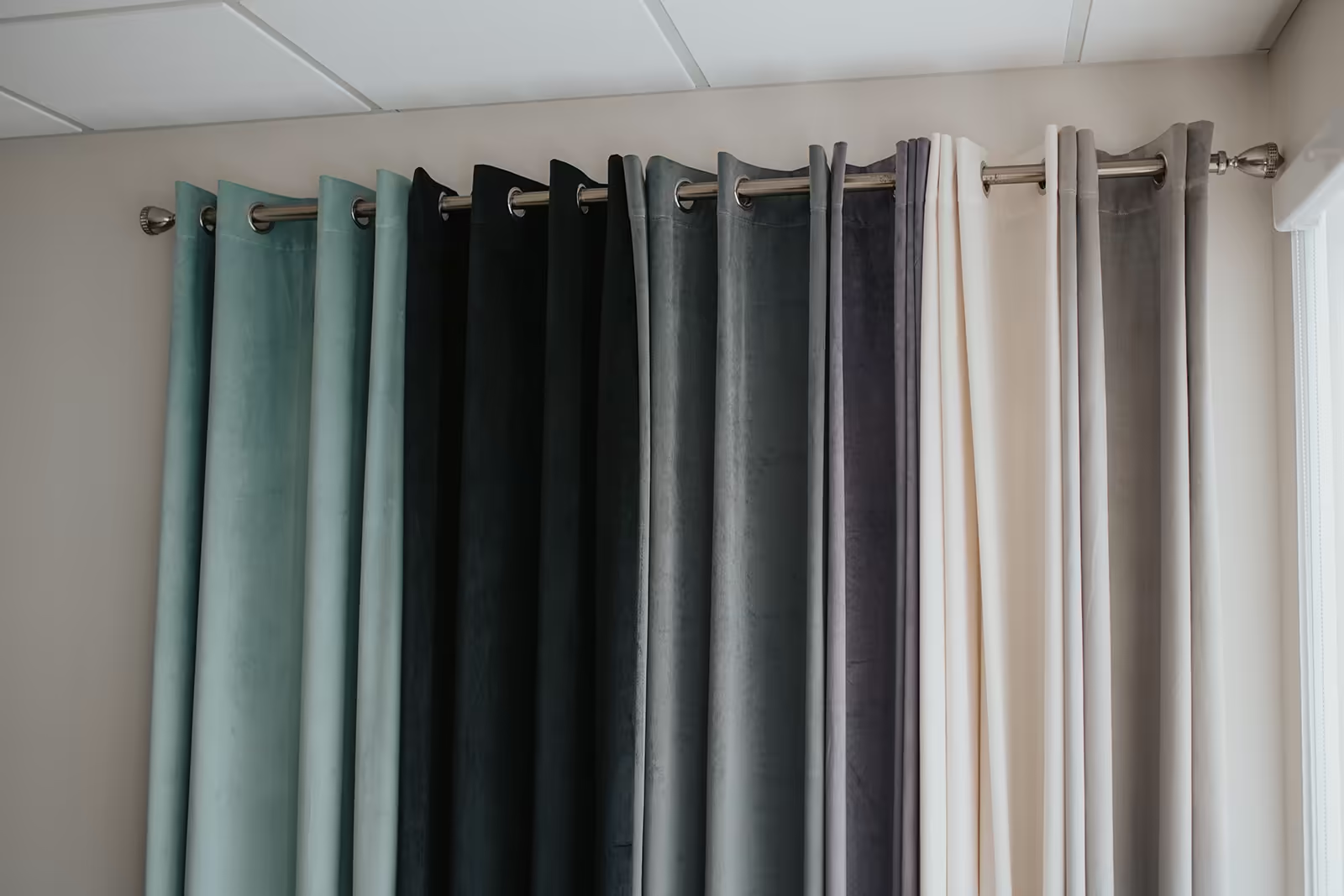
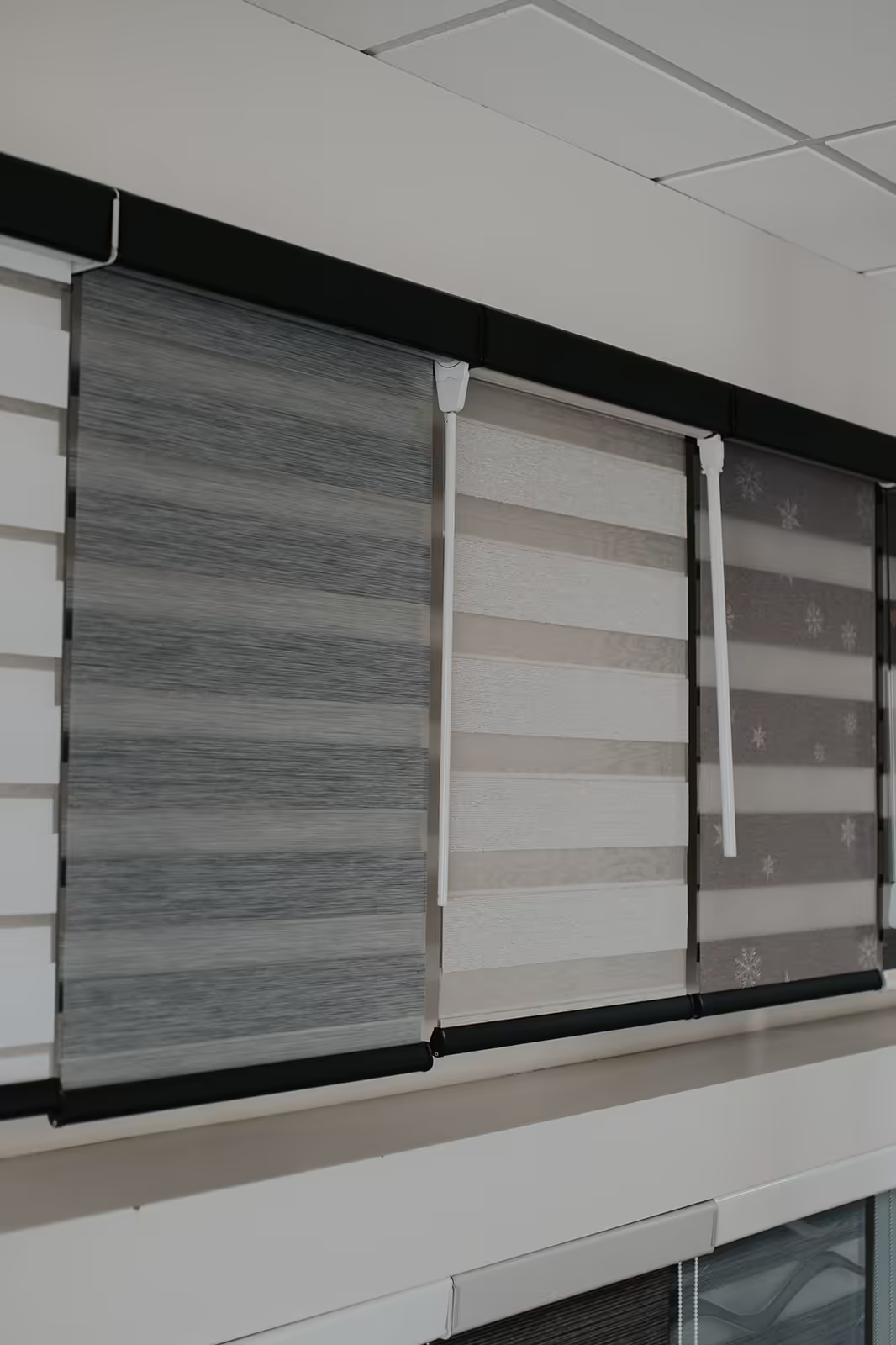
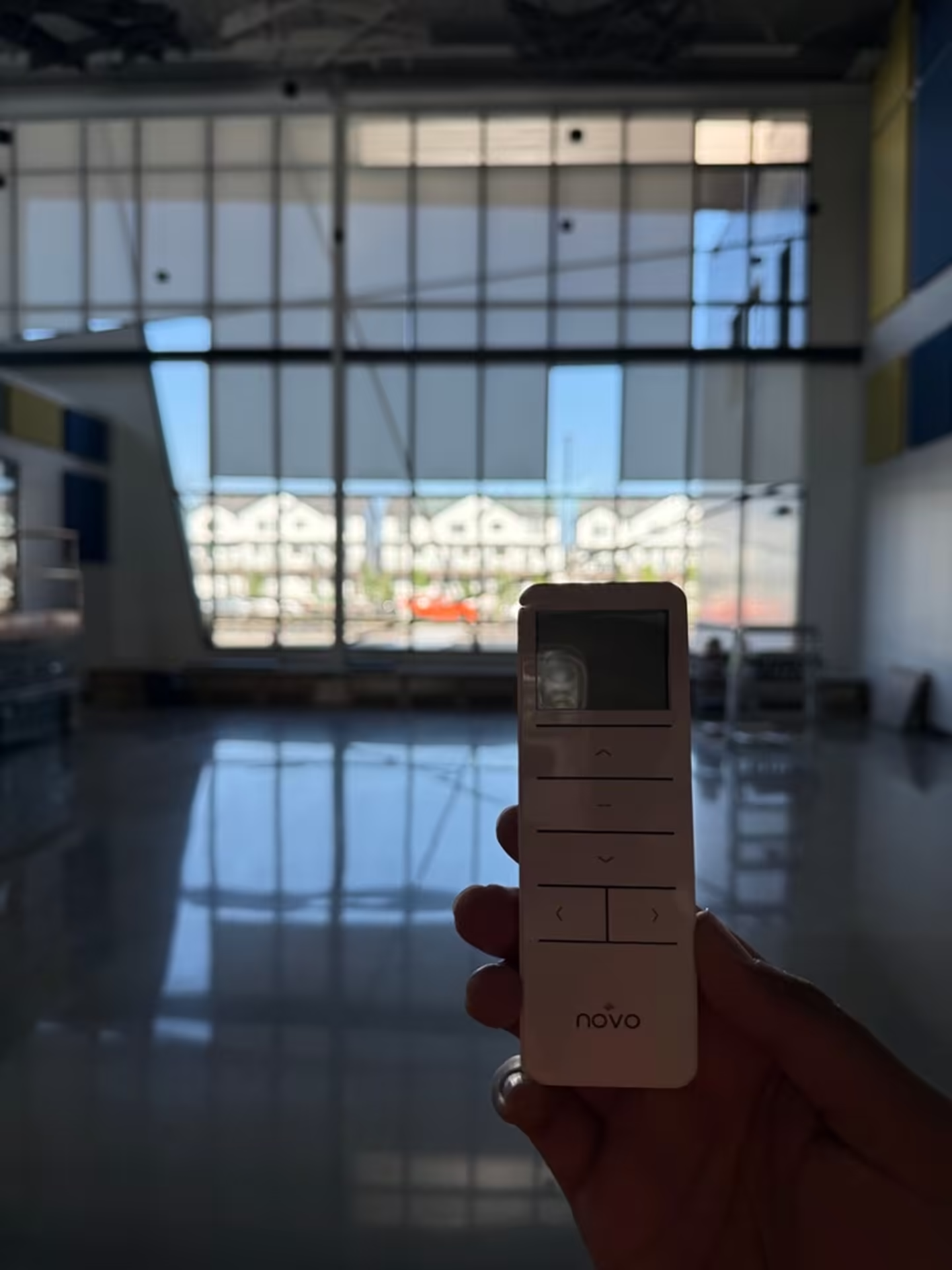
Motorized installations across Edmonton.

What We See in Edmonton Installs
After hundreds of motorized installs across the Edmonton metro — Sherwood Park, St. Albert, Beaumont, Spruce Grove, and everywhere in between — here’s the honest picture: What works well:- Battery blinds on bedroom windows run the longest between charges because bedrooms typically cycle just twice a day — open in the morning, close at night. We regularly see 10–12 month intervals.
- Living rooms with south-facing glass cycle more but homeowners don’t mind the extra recharge because they’re already active with those windows.
- The USB-C recharge is genuinely simple. We were skeptical early on that homeowners would keep up with it, but compliance is near-universal. It’s less effort than changing a smoke detector battery.
- Your first winter will feel like the battery drains faster than advertised. It does — because you’re using the blinds more than you did in summer. By year two, you calibrate your expectations and it feels normal.
- Large windows (over 72 inches wide) with heavy fabrics pull more power per cycle. If you’re motorizing a wide blackout blind on a patio door, expect the shorter end of the battery range.
- If your home has single-pane windows (older Edmonton homes, some heritage properties), the headrail does get colder — potentially down to 8–10C in extreme cold. Still within operating range, but you may see a slightly larger winter performance dip.
Common Mistakes
- Assuming the battery will die in cold weather. It won’t. The motor operates in a heated interior. This fear stops homeowners from going motorized when they’d genuinely benefit from it.
- Ignoring window orientation when estimating battery life. A north-facing bedroom window cycles twice a day year-round. A south-facing kitchen window might cycle 4 times daily in winter. Same motor, same battery, very different recharge intervals.
- Running the battery to zero before recharging. Lithium-ion batteries last longer when you top them up at 20–30% rather than draining completely. If your app or remote shows low battery, plug in — don’t wait for it to stop moving.
- Choosing hardwired just to avoid recharging on 3 windows. The wiring cost for 3 windows ($240–$600) buys you years of USB-C cables you’ll never need. Battery is almost always the smarter call for small installations.
- Forgetting to factor in how blinds help keep your home cool in summer. Motorized blinds on a schedule reduce solar heat gain, which reduces AC cycling — the energy savings offset the (minimal) recharge effort many times over.
What We’d Recommend
For most Edmonton homes (1–6 windows going motorized): Go battery. Pick a rechargeable system with USB-C, set up daily schedules, and expect to recharge 2–3 times per year. The convenience of automated blinds far outweighs the 20 minutes per year you’ll spend plugging in cables. For whole-home motorized (8+ windows): Consider hardwired for the main living areas — living room, primary bedroom, kitchen — and battery for secondary rooms. A hybrid approach keeps the wiring cost reasonable while eliminating recharge management on the windows you use most. For new construction or major renos: Hardwire everything. The incremental cost during construction is minimal compared to retrofitting later, and you’ll never think about batteries again. Not sure which direction fits?Book a free in-home consultation and we’ll walk through your windows, orientation, and usage patterns. We install across Edmonton, Sherwood Park, St. Albert, Leduc, Spruce Grove, Fort Saskatchewan, Beaumont, Stony Plain, Grande Prairie, and Red Deer. Call us at 780-245-0190 or request a quote online — written estimates within 48 hours. You can also try our free room visualizer to see motorized options in your own space before we visit.Frequently Asked Questions
Will motorized blind batteries die in Alberta’s -30C winters?
No. The battery sits inside your heated home, not outside. Even next to a cold window, headrail temperatures stay between 14–18C in a properly heated house. That’s well above the 0C minimum operating temperature for lithium-ion batteries. You’ll see slightly more battery drain in winter, but it’s from increased usage — not from the cold itself.How long do rechargeable motorized blind batteries last per charge?
With typical daily use (2 cycles per day), expect 6–12 months per charge. In winter, increased cycling can bring that down to 4–8 months. Battery life also depends on window width and fabric weight — wider, heavier blinds draw more power per cycle.How do you recharge motorized blind batteries?
A USB-C cable plugs into a port at one end of the headrail. Recharging takes 4–6 hours from empty. You can charge in place without removing the blind. We recommend keeping a cable tucked behind the window trim for easy access.Are hardwired motorized blinds better for cold climates?
Not for temperature reasons — both battery and hardwired motors operate in the same indoor environment. Hardwired eliminates recharging, which is the main advantage. For homes with 8+ motorized windows, hardwired reduces maintenance. For 1–6 windows, battery is usually the better value.How much do motorized blinds cost in Edmonton?
Motorized roller blinds typically run $350–$650 per window installed, depending on size, fabric, and whether you choose battery or hardwired. Hardwired adds $80–$200 per window for electrical work. We provide written quotes within 48 hours of an in-home measurement.Can motorized blinds work during a power outage?
Battery motorized blinds work normally during outages — they run on stored charge, not house power. Hardwired blinds will not operate during an outage unless they have a battery backup. This is actually a practical advantage of battery systems in Alberta, where winter storms can knock out power.Thinking about going motorized?
Free in-home consultation. We match the right motor to your window, your climate, and your routine.
Book free consultationServing